
Key Takeaways
- Professional home CCTV installation cost in Australia ranges from $1,200 to $4,500 in 2025.
- A four-camera system installed in Newcastle NSW or Adelaide SA typically costs $2,200–$2,800.
- Cabling runs, camera quality, NVR storage and roof access are the biggest price drivers.
- Licensed installers must hold a security licence under NSW and South Australian law.
- Wired systems have no mandatory monthly fees — cloud plans are optional extras.
What does professional home CCTV installation cost in 2025?
A professionally installed home CCTV system in Australia costs between $1,200 and $4,500 in 2025. The short answer: a typical four-camera setup on a single-storey Newcastle or Adelaide home lands around $2,200–$2,800 including equipment, cabling and labour. Prices vary with camera count, cable runs, roof access and recording storage, so a free on-site quote is the only way to lock down an exact figure for your property.
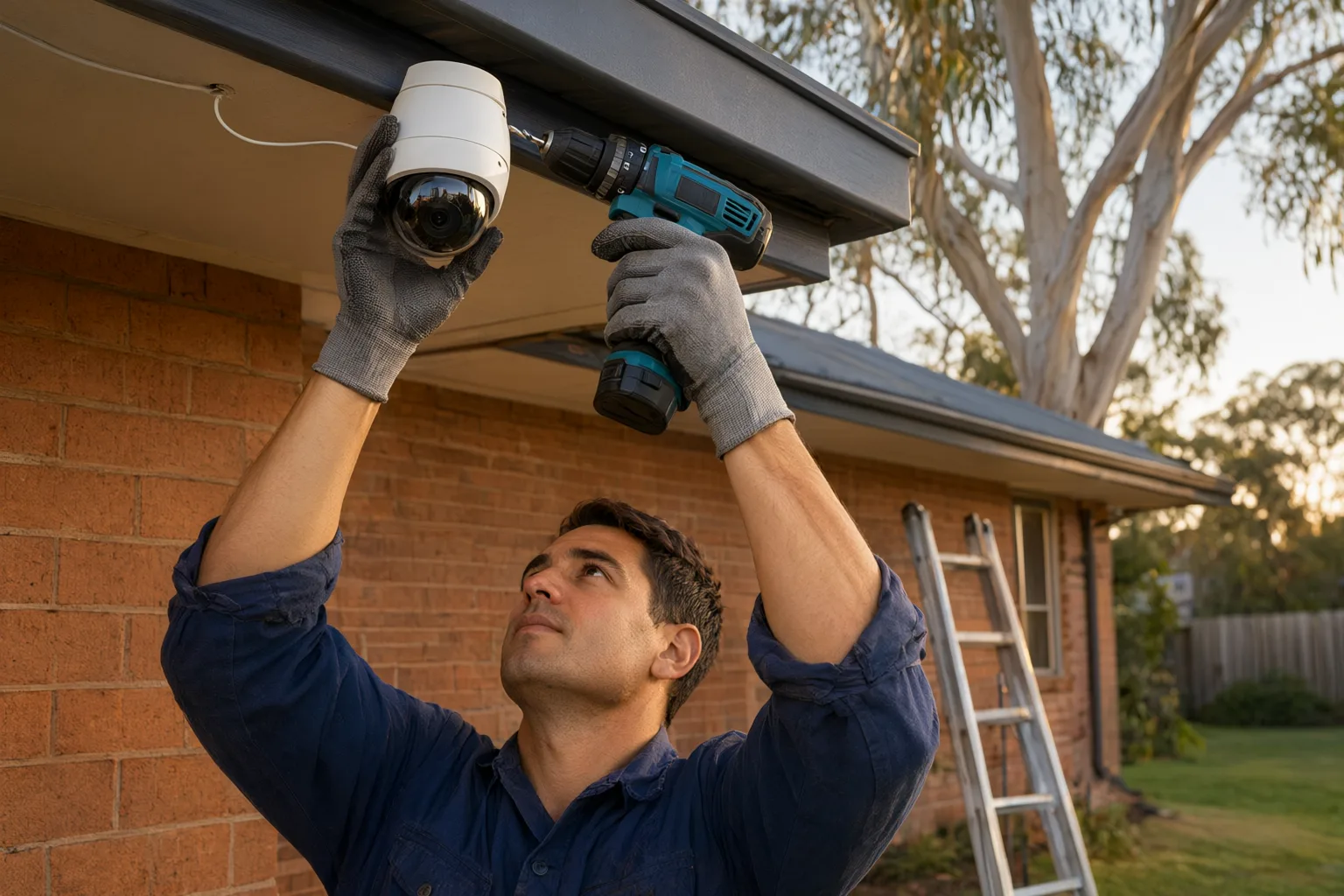
That figure covers more than just cameras bolted to a wall. It includes commercial-grade hardware, cabling run neatly through your roof and wall cavities, a network video recorder (NVR), motion detection zones configured to your property, remote viewing set up on your phone, and a proper handover so you actually know how to use the system.
At the budget end of that range sits a two- or three-camera setup on a compact single-storey home with simple cable runs. At the top end, you are looking at six to eight cameras across a larger two-storey property, with premium features such as colour night vision and smart human-and-vehicle detection, plus more demanding wiring work through tight roof spaces.
Pricing varies because no two homes present the same challenges — which is exactly why any installer worth hiring will want to walk your property before committing to a number.
Which average CCTV prices apply by system size?
To help you benchmark quotes before you even pick up the phone, here is how installations typically break down by scale. A unit or townhouse needing basic coverage of entries and driveways sits at the lower end, while acreage properties or complex two-storey layouts with eight or more cameras push toward the ceiling of the range.
Keep in mind these are installed prices — hardware, labour, configuration and training bundled together — not shelf prices for equipment alone. If a quote you receive falls well outside these bands, it is worth asking why before signing anything.
Why do CCTV installation prices go up or down?
Every property is different, but after years of quoting homes across New South Wales, the same handful of variables keeps appearing on every invoice. Knowing them helps you compare quotes like-for-like and spot when something looks suspiciously cheap.
Here are the factors that matter most:
Number of cameras is the most obvious one — every extra camera means additional hardware, more cable and more labour hours on the roof ladder.
Camera technology matters just as much. Entry-level 4MP cameras are considerably cheaper than 4K models with ColorVu colour night vision or AcuSense detection that can tell the difference between a person, a car and a possum triggering false alerts at 2am.
Property layout drives labour time. Double-storey homes, cramped roof cavities, long cable runs to detached garages and hard-to-reach eaves all add hours to the job.
Storage requirements affect the NVR specification. Footage retention of 30-plus days needs a bigger hard drive than a standard 14-day setup, and that difference shows up in the quote.
Networking conditions play a role too. Homes with patchy Wi-Fi or unreliable NBN connections may need extra network hardware to guarantee smooth remote viewing from your phone.
Australian conditions deserve special mention. Coastal properties exposed to salt air, bushfire-zone homes and sites with extreme heat exposure may need higher-rated housings and connectors to survive our climate — cutting corners here shortens the life of the whole [[the-hidden-costs-of-cheap-cctv-systems-and-why-they-fail|system]].
Should you buy a $500 DIY kit instead of professional installation?
It is a fair question. Big-box retailers sell four-camera DIY kits for $400 to $700, so paying two to four times as much for a professional job needs justification.
The gap comes down to reliability, image quality and lifespan. Consumer kits generally rely on Wi-Fi connections that drop out when you least want them to, plastic housings that fade and crack under the harsh Australian sun, and lower-resolution sensors that produce footage too blurry to identify a face or plate. Many also lock your own recordings behind monthly cloud subscriptions.
Professional systems take a different approach. We install wired Power over Ethernet (PoE) hardware from Hikvision, Dahua, Uniview and Axis — a rock-solid connection that does not depend on your home Wi-Fi holding up. Technologies like ColorVu and Starlight deliver genuinely usable colour footage at night rather than grainy silhouettes, and everything records locally to your own NVR with zero ongoing fees.
Longevity seals the argument. In our experience, a professionally installed system runs seven to ten years with minimal maintenance, whereas DIY kits commonly need replacing within two to three years. Spread over its life, the professional option often works out cheaper per year — and the footage is actually worth having if you ever need it for police or insurance purposes.
Can a licensed installer deliver better value than a retail kit?
When you engage a licensed and insured installer, the money buys a structured process, not just a drill and some brackets.
It starts with an on-site consultation: we walk the property with you, listen to what worries you — package theft, carport break-ins, blind spots along the side of the house — and map the vulnerable entry points. From there we design a camera layout engineered to eliminate those blind spots and capture footage with real evidentiary value, not just general views of the driveway.
[[how-much-does-professional-cctv-installation-cost-in-australia|Installation]] day involves running cables cleanly through roof cavities and wall spaces, mounting each camera securely, and connecting everything back to the NVR. Then comes the configuration work most DIY owners never get right: tuning motion detection zones so trees and passing traffic do not spam your phone, setting recording schedules, and getting remote viewing working properly on every device in the household.
Finally, we hand over with a full training session so everyone who lives there knows how to pull up live feeds, review recorded clips and export footage if they ever need to. That thoroughness is a significant part of what separates a professional job from a weekend project — and a major reason the systems we install keep working years later.
Is there ongoing cost after CCTV installation?
One of the genuine advantages of a wired, professionally installed system is that running costs are close to nothing. There are no mandatory subscriptions to access footage you already own — everything lives on your local NVR.
Budget for a few predictable expenses over the system's life, though. NVR hard drives typically last three to five years and cost $150 to $300 to replace. An annual service check is optional but worthwhile: lenses stay clean, firmware stays current and connections stay secure. And because the cabling infrastructure is already in place, adding cameras down the track — say, ANPR coverage for your driveway — is straightforward and far cheaper than starting from scratch.
We also back every installation with lifetime support, so if you need help retrieving footage or advice on an upgrade years from now, you speak to the same team that did the original work.
How to get an accurate CCTV quote for your home
The only way to know precisely what your property will cost is a free, no-obligation site assessment. A reputable installer will visit, assess the layout, discuss your concerns and issue an itemised written quote separating hardware, labour and optional extras.
Treat certain red flags seriously. Any company willing to quote sight-unseen over the phone, or offering a price dramatically below the ranges in this guide, is cutting corners somewhere — unlicensed operators, inferior gear or hidden charges that surface later. Always confirm your installer holds a current NSW [[solar-powered-security-cameras-are-they-worth-it-for-australian-conditions|security]] licence and carries public liability insurance; that paperwork protects you if anything goes wrong during or after the job.
With an itemised quote in hand and a licensed team on the tools, you will know exactly what you are paying for — and have a system that earns its keep for the next decade.
Are there legal requirements for home CCTV in Australia?
Typical professional home CCTV installation costs in Australia, 2025
| System size | Best suited to | Installed price range (AUD) |
|---|---|---|
| 2 cameras | Units, townhouses, apartment entries | $1,200 – $1,600 |
| 4 cameras | Standard suburban homes (front, rear, driveway, side) | $2,200 – $2,800 |
| 6 cameras | Larger homes, dual-storey builds | $3,000 – $3,800 |
| 8 cameras | Family homes, small retail or warehouse sites | $3,500 – $4,500 |
| 10+ cameras | Farms, commercial and industrial properties | $5,000+ |