
Key Takeaways
- Professionally installed pet monitoring CCTV systems in Australia typically cost $1,500–$4,000 with no ongoing cloud fees.
- Two-way audio lets you calm a barking dog remotely, but test your pet's response first as some animals find it stressful.
- Custom motion detection zones prevent alert fatigue, filtering out normal pet movement while flagging doorways and off-limits areas.
- The Surveillance Devices Act regulates recording inside homes in most Australian states, so avoid cameras in private zones like bedrooms.
- NVR-based systems record locally even if your NBN drops out, unlike cloud-only pet cameras that stop capturing footage entirely.
- Indoor cameras should sit 1–2 metres high angled downward over pet beds and feeding stations, avoiding direct window glare.
Can You Really Watch Your Pets From Work Using CCTV?
Yes – a modern pet monitoring CCTV system lets you view live video of your dogs or cats from your smartphone anywhere in Australia, so you can check on them throughout the workday. Beyond live viewing, today's cameras offer two-way audio to speak to your pet, customisable motion alerts that skip routine movement, and infrared night vision for after-dark checks if you work late shifts.
For most Australian households, leaving a dog or cat alone during working hours is unavoidable. Separation anxiety, destructive behaviour and general worry about a pet's wellbeing are common concerns. A properly designed CCTV system addresses these worries by giving you eyes (and ears) on your home whenever you want them, without relying on a neighbour to pop in.
This guide explains how pet monitoring with CCTV works, which features genuinely matter, where cameras should be placed in an average Australian home, and why a professionally installed system typically outperforms the consumer pet cameras sold at pet retailers.
What CCTV Features Matter Most for Pet Monitoring?
Pet ownership in Australia is among the highest in the world, and with most households having two working adults, pets regularly spend long stretches home alone. Cameras have shifted from a novelty to a practical tool of everyday pet care: owners use them to confirm their dog has settled after they leave, to spot signs of distress early, and to verify that a doggy door or backyard access point is being used safely.
Unlike single-purpose pet gadgets, a full [[the-hidden-costs-of-cheap-cctv-systems-and-why-they-fail|CCTV system]] covers more than one room. You can monitor the lounge room, kitchen and backyard simultaneously, receive alerts when something unusual happens, and review recorded footage later. The same infrastructure also protects your property against break-ins, lets you confirm whether tradespeople arrived as scheduled, and can capture emergencies such as smoke or flooding while nobody is home.
The technology itself has matured considerably. Professional-grade brands commonly installed in Australia – including Hikvision, Dahua and Uniview – deliver sharp high-definition video, dependable remote viewing over NBN or mobile data, and intelligent analytics that make day-to-day pet monitoring genuinely useful rather than frustrating.
How Should You Place Cameras for Monitoring Pets?
Not every security camera is equally suited to keeping an eye on animals. A handful of features separate a system you'll actually use daily from one that ends up ignored in a drawer.
- Two-way audio for speaking to and hearing your pets
- Customisable motion detection zones to reduce false alerts
- Night vision for low-light and after-dark monitoring
- Wide-angle lenses to cover entire rooms with fewer cameras
- High-definition video (at least 1080p, preferably 4MP or higher)
- Reliable remote viewing app for iOS and Android
- Local recording to NVR so footage is saved even if internet drops out
Which Is Better: Dedicated Pet Cameras vs Full Home CCTV Systems?
Two-way audio is arguably the single most valuable feature for pet owners. A built-in microphone lets you hear barking, meowing or general household noise, while a speaker lets you talk back through the camera. If your dog is barking continuously at the window or your cat is scratching furniture, your voice can calm or redirect them from your desk.
Many pets respond positively to hearing their owner's voice, even through a small speaker. That said, responses vary by animal – some become confused or anxious when they hear you but can't find you. It's worth testing how your particular pet reacts before relying on it as a regular behaviour-management tool.
Do You Need Two-Way Audio and Night Vision for Your Pets?
A pet moving around the house all day could trigger hundreds of notifications on a basic camera. Quality systems solve this with customisable detection zones and sensitivity settings. Rather than alerting on every movement, you define the areas that matter: the front door, the couch that's off-limits, or the hallway near the doggy door.
Configured well, this means your phone stays quiet unless something genuinely requires attention – your dog jumping onto forbidden furniture, movement near an entry point suggesting someone has arrived, or activity at an unusual hour. This balance between awareness and alert fatigue is what makes CCTV sustainable as a long-term pet monitoring tool rather than a source of constant interruption.
Is Remote Viewing Reliable on Australian NBN Connections?
If you work evening shifts, travel home late, or simply want a quick look after dark, night vision is essential. Standard infrared night vision produces clear black-and-white footage without any visible light disturbing sleeping pets. Higher-end cameras with ColorVu-style technology go further, capturing full-colour images in very low light, making it much easier to see exactly what your pet is doing and where.
Are There Australian Laws on Recording Inside Your Own Home?
Placement determines whether your system genuinely helps or frustrates you with blind spots and poor angles. The goal is to cover the spaces where your pets actually spend their time while still maintaining security coverage of doors and entry points.
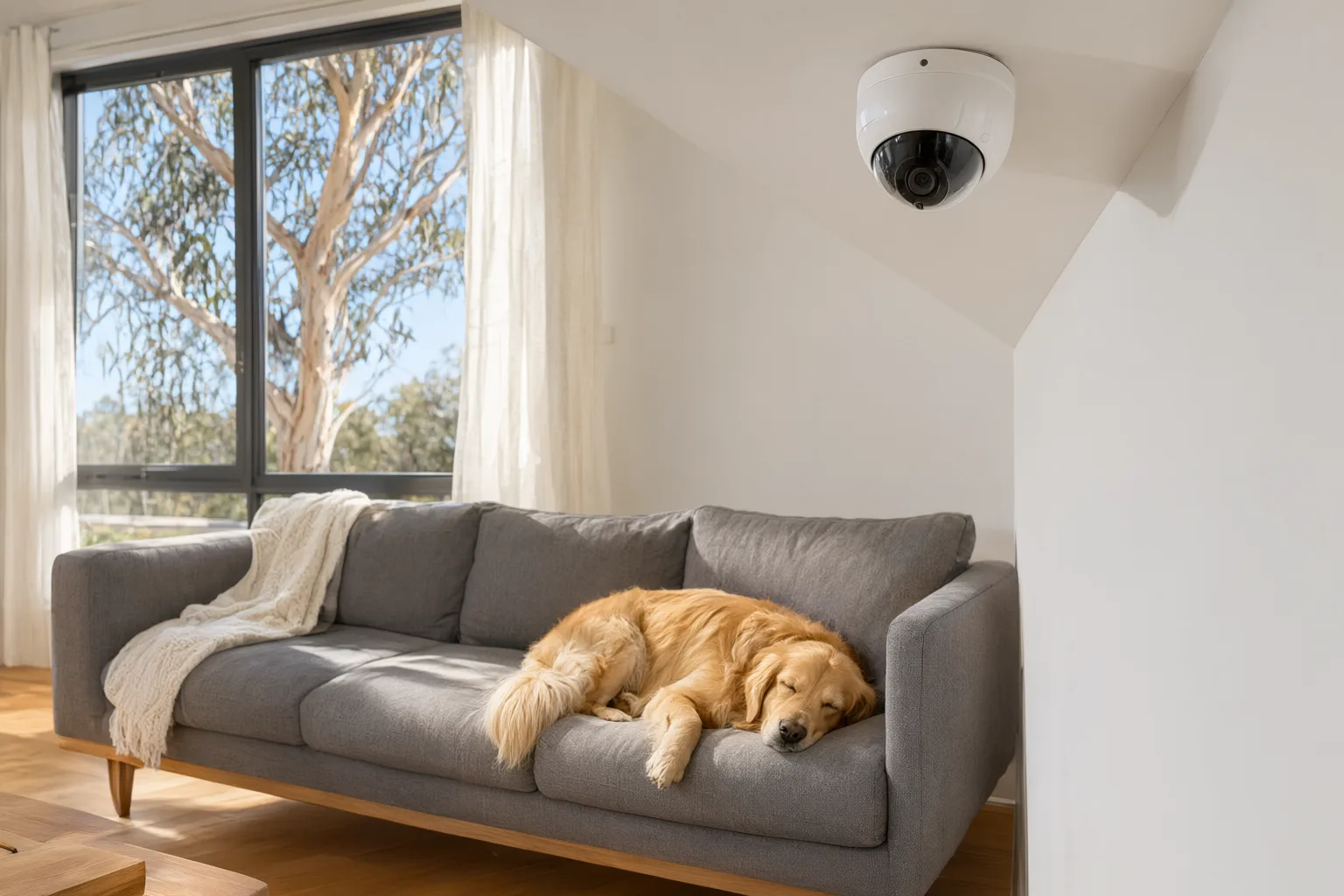
Indoors, mount cameras roughly one to two metres high, angled slightly downward. This height captures your pet's activities clearly while keeping the camera out of reach of curious noses and paws. Prioritise main living areas – typically the lounge room, kitchen, and any rooms containing pet beds or feeding stations.
If your pets can reach the backyard through a doggy door, an outdoor camera covering that area is essential. It lets you confirm they're safe outside, see whether they're barking at passers-by, and keep an eye on weather exposure. Australian conditions demand outdoor cameras with IP66 or IP67 weather ratings to handle heat, storms and rain, plus corrosion resistance in coastal salt-air environments.
Avoid aiming cameras directly at windows, where sunlight creates glare and silhouettes your pets. Also be mindful of privacy obligations: cameras should monitor your own pets and property, not neighbouring yards or public footpaths. A professional installer will ensure compliance with NSW privacy regulations while maximising coverage of your own property.
Why Does Professional Installation Beat DIY for Pet Owners?
When researching pet monitoring, you'll meet two very different products: dedicated pet cameras sold through pet retailers, and properly installed [[what-does-a-professional-home-cctv-installation-cost-in-2025|home CCTV]] systems. Knowing the difference helps you spend money wisely.
Pet cameras are consumer gadgets built around novelty features like treat dispensers and laser pointers. They can be fun, but they generally offer lower video quality, WiFi-only connectivity prone to dropouts, cloud storage locked behind subscription fees, and almost no genuine security capability. They solve one problem – seeing your pet – and little else.
A professionally installed CCTV system delivers superior image quality, stable wired connections, local recording with no ongoing subscription fees, and real security benefits for the whole property. You're investing in durable infrastructure that protects your home while also letting you check on your pets, backed by professional support if anything goes wrong.
How Much Does Pet Monitoring CCTV Cost in Newcastle and Adelaide?
Remote viewing is what connects your cameras to your phone, tablet or computer over the internet, allowing live viewing and push notifications from anywhere with coverage. Modern systems use peer-to-peer (P2P) technology, which removes the need for complicated network configuration or static IP addresses – once set up, you simply open the app, log in securely and watch your cameras over NBN, 4G or 5G.
Reliability is where consumer WiFi cameras often fall short, suffering delayed notifications and apps that fail to connect. Professional-grade systems use wired PoE (Power over Ethernet) connections for stable, consistent performance. Your installer connects the NVR to your router, configures secure remote access, and tests everything thoroughly before handover.
[[how-much-does-professional-cctv-installation-cost-in-australia|Installation]] should also include hands-on training: viewing live footage, playing back recordings, adjusting motion zones and managing notifications, so you're confident using the system from day one.
Practical Tips for Getting the Most From Pet Monitoring
Once installed, a few habits help pet monitoring stay useful rather than becoming a distraction or an anxiety amplifier.
Resist checking constantly. Watching your pets all day hurts productivity and can fuel your own separation anxiety. Instead, check at logical points – mid-morning, lunchtime and mid-afternoon – and let targeted motion alerts notify you only when something specific happens, such as barking or entry to a restricted area.
Use two-way audio judiciously. Some pets become stressed hearing their owner's voice without physical presence, so test the response first. For many animals, simply seeing them relaxed on camera provides all the reassurance needed.
Finally, review recorded footage occasionally. You may discover your pet sleeps most of the day – completely normal – or identify specific triggers behind anxiety or destructive behaviour. That insight is valuable for adjusting routines, modifying the environment, or discussing concerns with your vet.
- Check in at set times rather than constantly monitoring
- Use motion alerts for specific concerns, not general activity
- Test your pet's response to two-way audio before relying on it
- Review recordings to understand behaviour patterns
- Ensure pets have comfortable spaces visible to cameras
- Keep cameras clean and unobstructed for clear footage
Why Professional Installation Beats DIY in Australian Homes
Consumer pet cameras are marketed as simple DIY solutions, but there are clear advantages to professionally installing a proper CCTV system, especially given Australian building styles and climate.
Professional installers assess your property's layout, your pets' habits and your specific concerns to design optimal camera placement. They ensure reliable power and network cabling, configure motion detection zones sensibly, and establish secure remote access with weatherproof connections for any outdoor cameras.
Australian homes present unique challenges: brick veneer walls, Colorbond roofing and harsh conditions demand correct installation techniques and equipment rated for local environments. Professional-grade cameras from Hikvision, Dahua and Uniview withstand Australian heat, storms and coastal air far better than consumer electronics.
Most importantly, professional installation comes with ongoing local support. Whether you need help adjusting settings, have questions about the app, or hit a technical issue, you have experts to call – meaning your investment keeps working reliably for years as your needs change.
Dedicated Pet Cameras vs Professional Home CCTV Systems
| Feature | Dedicated Pet Cameras | Professional Home CCTV |
|---|---|---|
| Video Quality | Typically 720p-1080p | 1080p to 4K (8MP+) |
| Recording | Cloud storage (subscription fees) | Local NVR storage (no ongoing fees) |
| Two-Way Audio | Yes | Yes (on selected cameras) |
| Motion Detection | Basic, often delayed | Advanced with customisable zones |
| Night Vision | Basic infrared | Advanced IR or ColorVu full-colour |
| Weather Resistance | Indoor only | IP66/IP67 rated outdoor cameras available |
| Connectivity | WiFi only (prone to dropouts) | Wired PoE (reliable, stable) |
| Security Features | Minimal | Comprehensive home security coverage |
| Installation | DIY | Professional with training |
| Ongoing Support | Limited manufacturer support | Local lifetime support |
| Typical Cost | $50-$300 per camera + subscriptions | $1,500-$4,000+ installed (multi-camera system) |