
Key Takeaways
- The Surveillance Devices Act 2007 makes unconsented covert recording a criminal offence in NSW.
- NSW employers must give written notice under the Workplace Surveillance Act 2005 before camera surveillance.
- Lawful overt CCTV packages typically cost $1,500–$3,500 installed for a 4-camera Australian home system.
- Recording private conversations without all-party consent is illegal even on your own property in Australia.
- Courts or the Industrial Relations Commission can authorise covert workplace surveillance for suspected theft.
- Privacy masking lets compliant systems cover your driveway while legally excluding neighbours' windows.
Is Hidden CCTV Legal in Australia?
In most cases, no. Across Australia, covert CCTV is only lawful where every person recorded has consented or police hold a warrant. In NSW, the Surveillance Devices Act 2007 makes unconsented optical surveillance an offence carrying fines and imprisonment. Overt CCTV — visible cameras on your own property with signage — is broadly legal and is the recommended approach for homes and businesses nationwide.
What Is Covert CCTV vs Overt CCTV in Australia?
Overt CCTV refers to cameras that are clearly visible and, ideally, supported by signage letting people know they are being recorded. This is the standard approach for Australian homes, shops, warehouses, offices and construction sites — and for good reason. Visible cameras act as a deterrent before a crime happens, they keep you firmly on the right side of [[recording-your-neighbours-where-the-legal-line-sits-for-home-cctv|privacy]] law, and footage obtained lawfully is far more likely to be accepted as evidence by police and courts.
Covert CCTV, by contrast, means hidden or disguised surveillance — cameras concealed inside smoke detectors, wall clocks, garden lights, phone chargers or other everyday objects, installed without the knowledge of the people being filmed. While the idea of catching a thief or dishonest employee in the act is appealing, covert surveillance occupies a far more complicated legal position in Australia. Getting it wrong can expose you to criminal charges, civil claims from people whose privacy was invaded, and evidence that is thrown out of court precisely because it was gathered unlawfully.
It is worth understanding that the distinction is not merely about visibility. The law cares about whether the people being recorded know about and consent to the recording, whether the activity captured is 'private', and whether the recording serves a legitimate purpose. A visible camera can still be unlawful if it films into a neighbour's bedroom window; conversely, some limited covert uses may be defensible. Context, consent and purpose drive legality — not simply whether the device is hidden.
Do You Need Signage for Overt CCTV in Newcastle and Adelaide?
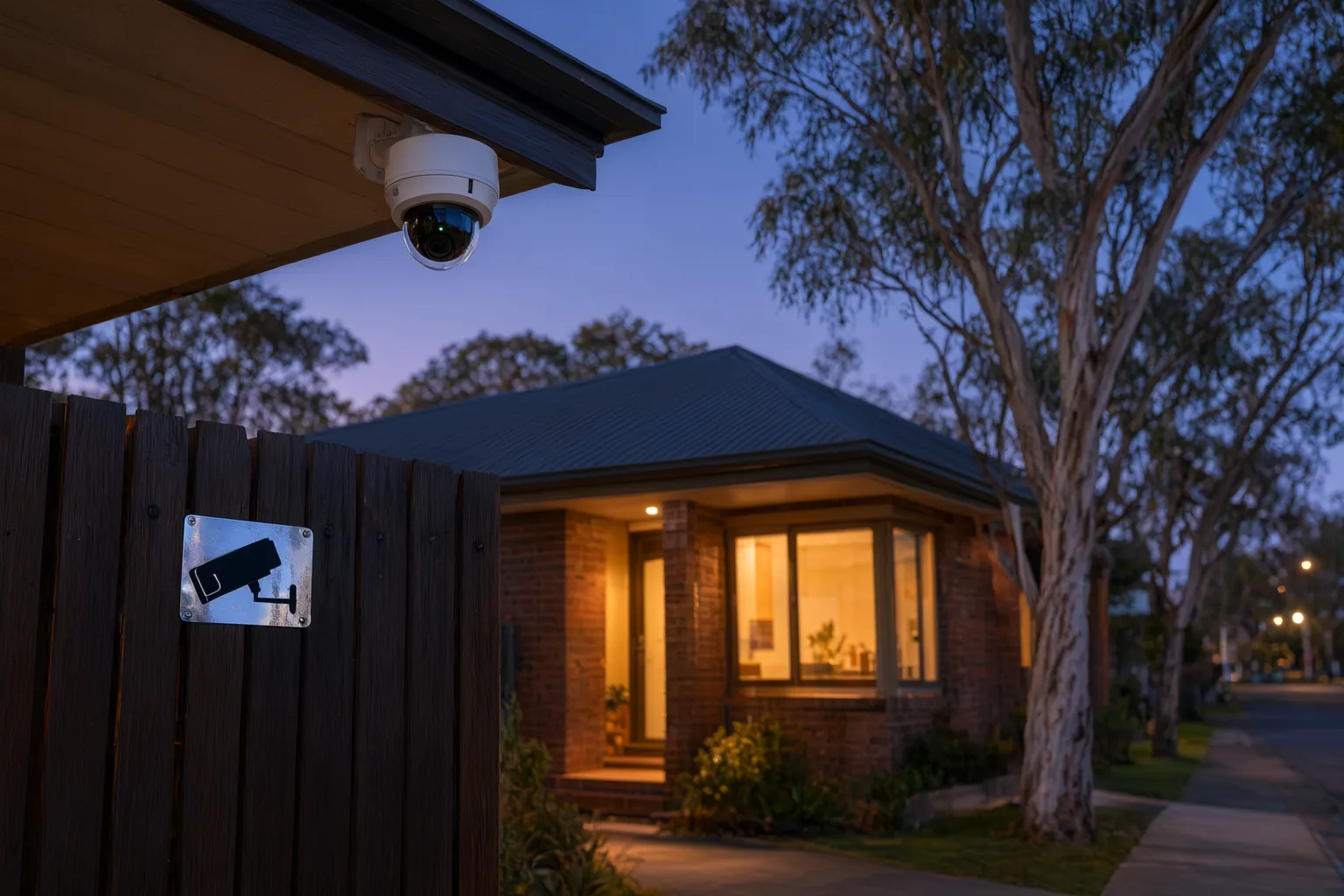
For most property owners, overt CCTV is straightforward and lawful. You are generally entitled to install visible cameras on your own property to protect your home, business, staff and assets. The governing principles are reasonableness and transparency: cameras should serve a genuine security purpose, be positioned to avoid filming beyond your boundaries — such as into a neighbour's bedroom, bathroom or backyard entertaining area — and be accompanied by clear signage in workplaces and commercial premises.
In NSW workplaces, the [[workplace-surveillance-act-compliance-what-employers-must-do-before-installing-c|Workplace]] Surveillance Act 2005 requires employers to notify staff in writing before camera surveillance begins, including details of how and where monitoring occurs. Cameras must never be placed in private areas such as toilets, change rooms or bathrooms — this prohibition applies in every setting, residential or commercial, and breaching it is a serious offence regardless of whether the camera is visible or hidden.
For homes, the rules are less formal but the same common-sense principles apply. Angle cameras toward your own entry points, driveway and yard, and use privacy masking features — standard on professional systems from Hikvision, Dahua and Uniview — to digitally block neighbouring windows from the frame. Incidental capture of public spaces such as footpaths and roads is generally acceptable, but deliberately monitoring a neighbour's comings and goings can invite complaints, civil action and police attention.
Different states and territories approach surveillance through their own statutes — Victoria's Surveillance Devices Act 1999, Queensland's Invasion of Privacy Act 1971 and Western Australia's Surveillance Devices Act 1998, among others — so if you operate across borders, compliance requirements can vary. The consistent theme nationwide: transparency and reasonable positioning keep you safe. [[/newcastle|Newcastle]]'s coastal salt winds and [[/adelaide|Adelaide]]'s intense summer heat mean camera eaves-mounting and UV-stable cable sheaths are essential for longevity.
Can Covert Surveillance Ever Be Permitted Under Australian Law?
Covert surveillance in NSW is governed primarily by the Surveillance Devices Act 2007, with similar legislation in other states and territories. In broad terms, it is an offence to install, use or maintain a listening or optical surveillance device to record a private conversation or private activity without the consent of the parties involved. Penalties can include substantial fines and imprisonment, so this is not an area for guesswork or internet forum advice.
There are limited circumstances where covert surveillance may be lawful. Law enforcement agencies can obtain warrants authorising covert devices during investigations. In some jurisdictions, a person who is a party to a conversation may record it to protect their lawful interests — though the rules on how such recordings may be used differ between states. Employers can apply to a court or the NSW Industrial Relations Commission for authorisation to conduct covert workplace surveillance where there are reasonable grounds to suspect serious wrongdoing such as theft or fraud — but self-authorised [[can-you-install-hidden-cameras-in-your-own-business-what-australian-law-says|hidden cameras]] in a workplace remain unlawful, no matter how strong your suspicions.
For a homeowner, hiding a camera inside your own house to monitor a cleaner, tradie or carer may feel reasonable, but if it records a private activity without consent, you could still be committing an offence — and if it captures audio, the legal risk multiplies significantly. Even a nanny cam in a living room can cross the line depending on what it captures and who is recorded. The safest path is always to obtain specific legal advice before installing any hidden device, and to consider whether an overt alternative would achieve the same outcome without the risk.
Why Does Audio Recording Make Hidden Cameras Illegal in NSW?
Many property owners focus entirely on the camera and forget the microphone. Under NSW law, recording a private conversation without the consent of all parties is generally illegal, even on your own property. This single point trips up more DIY installations than any other: a doorbell camera or dome camera with a live microphone can turn a lawful video setup into a criminal matter the moment it captures a private conversation on your porch or at your counter.
This is why most professionally installed CCTV systems in Australia either have audio disabled by default or are configured very carefully for specific contexts. If audio evidence genuinely matters to you — for example, at a retail counter, reception desk or intercom — signage stating clearly that audio recording is in progress can help establish implied consent in some contexts, but this remains an area where tailored legal advice is essential before you switch a microphone on.
Practical guidance: ask your installer to confirm audio is disabled across all channels, check firmware updates do not silently re-enable microphones, and treat any device marketed as a 'hidden camera with sound' as a red flag rather than a feature.
How Do Covert and Overt CCTV Laws Apply in Real Scenarios?
Scenario one — the retail owner losing stock. A shopkeeper suspects an employee of pocketting cash. Installing a hidden camera above the till is unlawful in NSW without authorisation. The lawful path: written notification under the Workplace Surveillance Act 2005, visible cameras covering the register and stock room, and — if suspicion persists — an application to the Industrial Relations Commission for covert authorisation. In practice, visible coverage alone usually resolves the problem.
Scenario two — the homeowner with repeated package theft. A concealed camera in a garden light aimed at the front porch records couriers and strangers alike. Because the porch is accessible to the public and the activity captured is not 'private' in the statutory sense, risk is lower here than indoors — but audio must still be off, and boundaries respected. A visible video doorbell plus a floodlight camera achieves deterrence and evidence with minimal legal exposure.
Scenario three — the landlord and the rental property. Landlords cannot install hidden cameras inside tenanted premises; doing so risks breaching surveillance laws and tenancy legislation simultaneously. Exterior, visible cameras covering common entry points, disclosed in the lease, are the compliant approach.
Scenario four — the neighbour dispute. A resident aims a camera at the adjoining fence line to document ongoing vandalism. Capturing your own boundary is fine; continuously filming the neighbour's yard, windows or daily movements invites civil claims for breach of privacy and nuisance. Privacy masking solves this cleanly.
Which CCTV Type Wins on Deterrence: Covert or Overt?
Even setting the law aside, overt systems outperform covert ones on nearly every measure that matters. Deterrence is the biggest difference: a visible camera stops an offence occurring, while a hidden camera merely documents it after the fact. Evidence quality also favours overt installs — professional-grade cameras such as Hikvision ColorVu models record full-colour footage at night, paired with AcuSense human and vehicle detection that filters false alarms, whereas consumer spy devices typically offer low resolution, poor low-light performance and no reliable analytics.
There are trade-offs to acknowledge honestly. Visible cameras can be vandalised, spray-painted or stolen, which is why professional installs use anti-tamper mounts, housings and elevated positioning. Some offenders may avoid covered areas and seek blind spots — mitigated by overlapping fields of view and good lighting. And there are rare investigative situations where covert capture is genuinely valuable — which is exactly why the law provides warrant and commission-based pathways, ensuring those cases proceed with oversight rather than vigilante recording.
Cost-wise, a professionally installed overt system is comparable to or cheaper than piecing together covert gadgets, delivers remote viewing via apps, cloud or NVR storage options, and comes with support — none of which applies to a disguised camera bought online with no warranty recourse.
Are There Compliance Rules for CCTV Installation in Adelaide SA?
Compliance starts at the design stage, not after installation. Camera placement should map every entry point, driveway, till, stock room and carpark while respecting boundary lines and avoiding neighbours' private spaces. Modern systems make this easier than ever: privacy masking lets you draw digital blackouts over specific zones within a camera's frame, so a camera covering your driveway can legally ignore the neighbouring kitchen window behind it.
Signage is a practical requirement for businesses and strongly recommended for homes. Signs should be legible, placed at entrances, and state that CCTV (and audio, if enabled) is in operation. For workplaces, written employee notification must precede monitoring — a policy document distributed to staff satisfies the Workplace Surveillance Act 2005 requirement and should be retained on file.
Retention settings matter too. Configure recorders to store footage for a defined period appropriate to your risk profile — commonly 30 days for retail and residential — and restrict access to exported clips so evidence chains stay clean. A licensed and insured installer handles all of this through a structured process: consult, design, install, configure and handover with training, including camera positioning that respects boundary and privacy rules, privacy masking setup, signage guidance and retention configured to your needs, backed by lifetime support.
Should You Choose Visible Cameras Over Hidden Ones for Evidence?
If you are dealing with repeat theft, vandalism or suspected staff dishonesty, there are lawful ways to build a strong evidence trail. Position visible cameras to cover every entry point, stock room, till and carpark with no gaps. Use ANPR (automatic number plate recognition) cameras to log vehicle plates at gates and driveways — invaluable for repeat-offender patterns and insurance claims. Enable smart motion detection so you receive instant alerts on your phone rather than trawling through hours of footage after an incident.
In a workplace, combine clear written surveillance notification with well-placed overt cameras covering high-risk zones. Experience shows dishonesty frequently stops on its own once monitoring becomes obvious. If wrongdoing continues despite overt measures, escalate properly: report to police, and where warranted, pursue court or Industrial Relations Commission authorisation for covert steps. That pathway preserves both your legal position and the admissibility of whatever evidence results.
Finally, document everything — incident dates, footage exports, witness details. Well-maintained overt systems generate evidence that police accept readily; improvised covert setups often generate evidence nobody can legally use.
Covert vs Overt CCTV in Australia: Key Differences
| Factor | Overt CCTV (Visible) | Covert CCTV (Hidden) |
|---|---|---|
| General legality | Lawful on your own property with reasonable positioning | Heavily restricted; consent or court authorisation usually required |
| Workplace use | Permitted with written staff notification (NSW) | Only with court or Industrial Relations Commission authorisation |
| Crime deterrence | High — visible cameras discourage offending | None — offenders are unaware they are filmed |
| Audio recording | Still restricted; consent or clear signage needed | Almost always illegal without all-party consent |
| Evidence admissibility | Generally admissible when lawfully obtained | Risk of exclusion if recorded unlawfully |
| Equipment quality | Professional-grade analytics, night colour, remote apps | Often low-resolution consumer gadgets with poor support |
| Best use case | Homes, retail, warehouses, construction sites | Narrow exceptions, typically law enforcement or court-approved investigations |