
Key Takeaways
- Doorbell cameras are legal across Australia when pointed at your own property, per state surveillance device acts.
- The Surveillance Devices Act 2007 (NSW) prohibits recording private conversations you are not part of.
- Unlawful audio recording in NSW can attract penalties of up to five years imprisonment for individuals.
- Keep doorbell footage for 30–90 days before automatic deletion to balance security and privacy.
- No council approval is needed in Newcastle or Adelaide unless strata by-laws require owners corporation consent.
- Signage stating 'Video surveillance in use' is not mandatory but establishes implied consent from visitors.
Are Doorbell Cameras Legal in Australia?
Yes — doorbell cameras are legal throughout Australia when they are used to monitor your own property for legitimate security purposes. Homeowners are entitled to record activity at their front door, porch, driveway and other areas within their boundary lines, provided they follow state surveillance device legislation and audio consent rules.
Legality depends entirely on how the device is used. Australian law balances your right to protect your home against other people's reasonable expectation of privacy. Trouble arises when a camera deliberately captures a neighbour's private spaces, records conversations without consent, or monitors areas where people expect not to be filmed.
The guiding principle is straightforward: you may record what happens on your land and what is visible from public spaces, but you cannot intentionally surveil your neighbours' private areas or capture private conversations without permission.
Which Laws Govern Doorbell Cameras in Australia?
Two layers of legislation are relevant to residential doorbell [[can-you-install-hidden-cameras-in-your-own-business-what-australian-law-says|cameras]]: federal privacy law and state-based surveillance device statutes.
The [[recording-your-neighbours-where-the-legal-line-sits-for-home-cctv|Privacy]] Act 1988 is the Commonwealth framework that regulates how organisations handle personal information. It generally applies to businesses with an annual turnover of more than $3 million, or those that trade in personal information. Ordinary household use of a video doorbell falls outside its scope, so homeowners are rarely bound by it directly.
For residents, state and territory surveillance legislation matters far more. In New South Wales, the Surveillance Devices Act 2007 regulates optical and listening devices and makes it an offence to record private conversations or activities without appropriate consent. Comparable laws exist in every state and territory, so the same principles apply whether you live in Sydney, Melbourne, Brisbane or Perth.
A 'private activity' is one where those involved would reasonably expect privacy. Your front yard, visible from the street, is not private. Your neighbour's enclosed backyard or pool area is. Filming visitors at your front door who can clearly see the camera is generally acceptable; capturing audio of a conversation inside a neighbour's home through an open window is not.
Where Can You Legally Point a Doorbell Camera?
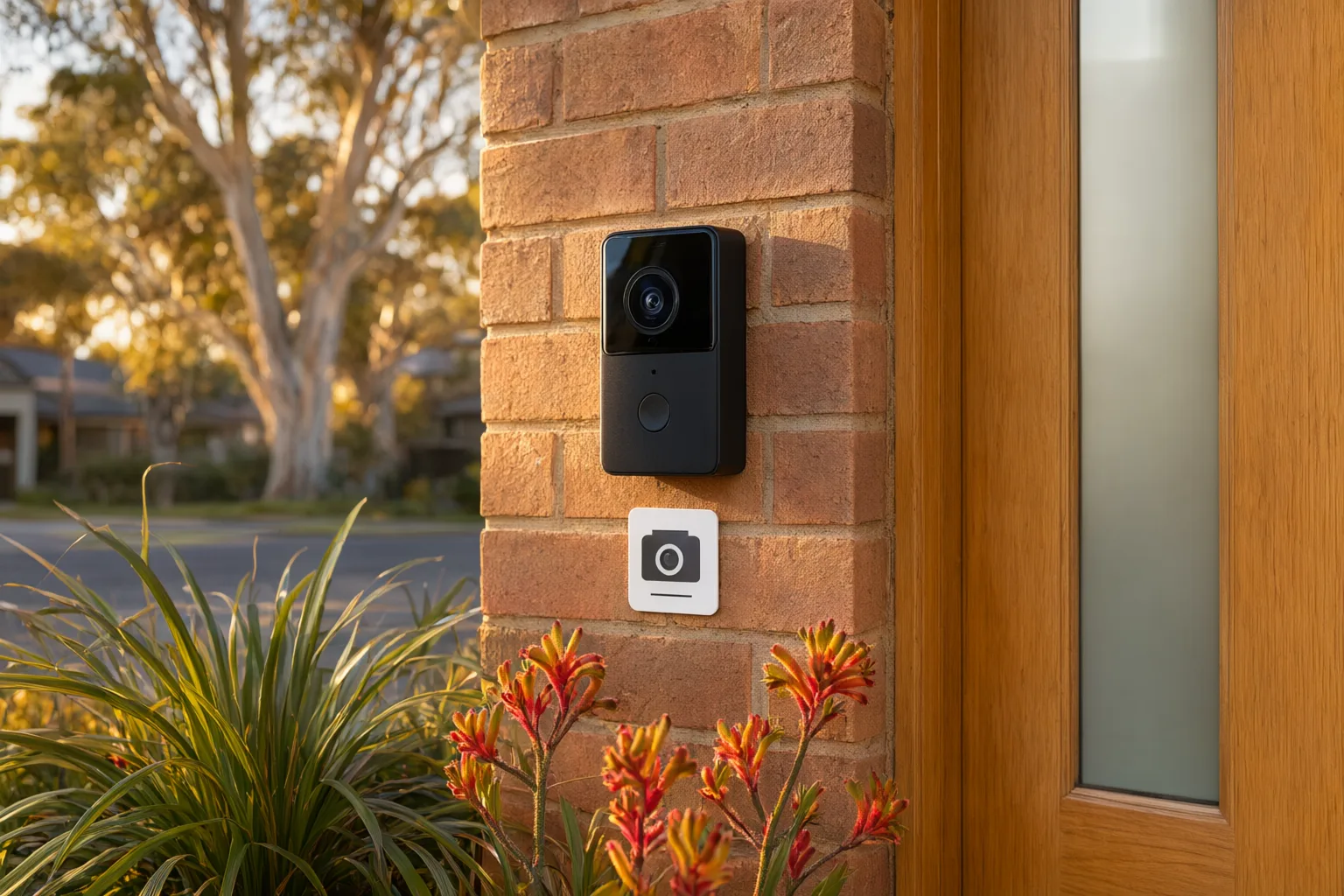
Doorbell cameras are designed to cover your front door, entryway, porch and driveway, and positioning them this way is entirely lawful. Because modern units use wide-angle lenses, some incidental capture of the footpath, nature strip or street is normal and acceptable — these are public spaces where nobody holds a reasonable expectation of privacy.
Difficulties begin when a camera is angled to deliberately observe neighbouring properties. If your field of view includes your neighbour's front entrance, living room windows or backyard entertaining area, you risk breaching their privacy even if your intention was purely security-related.
During installations across Sydney and regional NSW, technicians position doorbell cameras to maximise coverage of the client's own property while respecting boundary lines. Adjustable mounting brackets, combined with privacy masking features found in professional-grade Hikvision, Dahua and Uniview systems, allow neighbouring windows to be digitally excluded from the recorded area altogether. Australia's bushfire smoke, coastal storms, and summer heat require cameras with IP66 or higher ingress protection and UV-stabilised cable runs.
How Do Audio Recording Rules and Consent Requirements Work?
Audio is where most legal risk sits. Video recording of publicly visible areas is broadly tolerated, but sound is treated differently under surveillance legislation. Most Australian states require the consent of all parties before a private conversation may be recorded. Under the Surveillance Devices Act 2007 (NSW), recording a conversation you are not part of is generally prohibited.
When a visitor approaches your door and speaks with you through the doorbell, you are a participant in that conversation, so recording it is typically lawful. The position becomes murky when your microphone picks up exchanges between neighbours on their own land, or between people who do not know they are being recorded.
Many homeowners simply disable [[is-it-legal-to-record-audio-on-cctv-in-australia-state-by-state-breakdown|audio recording]] to sidestep these complications. Video-only footage still delivers strong security evidence without any consent issues. If you prefer to keep audio enabled, prominent signage reading 'Audio and video recording in use' helps establish that visitors have been notified, supporting implied consent through their continued presence at your door.
Should You Tell Your Neighbours About Your Doorbell Camera?
There is no legal obligation to notify neighbours before installing a doorbell camera that captures only your own property. That said, if any part of their land falls within the camera's view, a friendly conversation is both courteous and legally prudent.
Disputes over security cameras are increasingly common across NSW. Community Justice Centres report growing demand for mediation relating to camera placement, and most conflicts stem from cameras that appear to monitor neighbouring homes, even when that was never the owner's intention.
A short chat explaining the camera's purpose — ideally showing the neighbour exactly what it records — prevents most disagreements. If a neighbour raises concerns, adjusting the angle or activating privacy zones demonstrates good faith and usually resolves the matter quickly.
If you live in a strata scheme, townhouse complex or community title development, check your by-laws first. Some owners corporations require approval before external cameras are installed, and unapproved devices can be ordered removed.
Do Signage, Footage Storage and Responsible Use Matter?
While signage is not legally mandatory for residential properties, it is strongly recommended. A discreet sign near your front door stating 'Video surveillance in use' achieves three things at once: it deters would-be intruders, notifies visitors that recording occurs (reinforcing implied consent), and shows you operate the camera transparently for genuine security reasons.
How footage is stored and used also carries legal weight. Recordings should be kept secure, accessed only when genuinely needed, and deleted after a reasonable period unless required as evidence of an incident. Most modern NVR systems and doorbell cameras automatically overwrite footage after 30–90 days, which is widely regarded as reasonable retention.
Never publish footage of identifiable individuals on social media without their consent, even if they were on your property at the time. Providing recordings to police investigating a crime is appropriate and lawful. Using footage to harass, embarrass or intimidate anyone is not, and could expose you to civil liability.
Households that employ domestic staff — cleaners, gardeners, nannies or carers — should note that workplace surveillance laws may apply, requiring notification that cameras are operating during work hours.
What Happens If You Breach Surveillance Laws?
Breaching surveillance device legislation can carry serious consequences. In NSW, unlawfully recording private conversations attracts maximum penalties of up to five years imprisonment for individuals. Civil claims are also possible where someone suffers harm as a result of unlawful surveillance.
In practice, however, most privacy disputes stay well short of criminal charges. They typically surface as neighbourhood friction, formal complaints to police, or requests for mediation. Police may direct you to reposition or remove cameras that inappropriately overlook neighbouring properties, and strata schemes can require removal of devices installed without approval.
The Office of the Australian Information Commissioner handles privacy complaints nationally, though residential disputes are usually resolved through state-based services. Community Justice Centres in NSW provide free mediation for neighbour conflicts, including camera disputes. The overwhelming majority of cases end with a simple adjustment — a shifted angle, a tightened field of view or an activated privacy zone — rather than court proceedings.
Can Common Doorbell Camera Scenarios Stay Legal?
Because the rules depend heavily on context, it helps to think through everyday situations before installation. Recording your own front door and driveway is lawful and uncontroversial. Capturing the public footpath is equally fine, since public spaces carry no expectation of privacy.
Grey areas emerge when a neighbour's front yard drifts into frame. The sensible response is to minimise capture, enable digital privacy zones and speak with the affected neighbour. Deliberately monitoring a neighbour's backyard, by contrast, is likely unlawful because it invades a space where privacy is reasonably expected.
On the audio side, recording your own conversation with a visitor at the door is generally legal because you are a party to it. Recording neighbours chatting on their property is likely unlawful without consent. Sharing footage with police investigating crime is appropriate; posting identifiable people on social media is risky and should only be done with consent or after faces are blurred.
Why Does Professional Installation Help You Stay Compliant?
Licensed CCTV installers understand Australian privacy law and design camera layouts that deliver strong security without crossing legal boundaries. At Aussie CCTV Cams, our licensed and insured technicians complete a site assessment during the design phase, identifying potential privacy concerns before a single bracket is mounted.
We configure privacy masking zones that digitally block neighbouring windows or sensitive areas from the camera's field of view. This capability, standard in professional Hikvision, Dahua and Uniview equipment, lets you monitor your entire property comprehensively while protecting the privacy of everyone around you.
Our five-step installation process finishes with a handover and training session covering your legal obligations, how to adjust settings, and best-practice guidance on signage and data management. We supply compliant signage, advise on strata by-law requirements where relevant, and back every installation with lifetime support — so if a privacy question arises months later, help is only a phone call away.
Doorbell Camera Scenarios and Their Legal Standing in Australia
| Scenario | Legal Status | Key Considerations |
|---|---|---|
| Recording your front door and driveway | Legal | Primary intended use; no consent required for video |
| Capturing the public footpath and street | Legal | Public spaces carry no reasonable expectation of privacy |
| Camera view includes neighbour's front yard | Grey area | Minimise capture; enable privacy zones; talk to your neighbour |
| Deliberately monitoring a neighbour's backyard | Likely unlawful | Breaches reasonable expectation of privacy; reposition the camera |
| Recording audio of your conversation with a visitor | Generally legal | You are a party to the conversation; signage recommended |
| Recording audio of neighbours talking on their property | Likely unlawful | Consent required under the Surveillance Devices Act 2007 (NSW) |
| Sharing footage with police | Legal | Appropriate cooperation with crime investigation |
| Posting identifiable people on social media | Risky | May breach privacy; obtain consent or blur faces |