
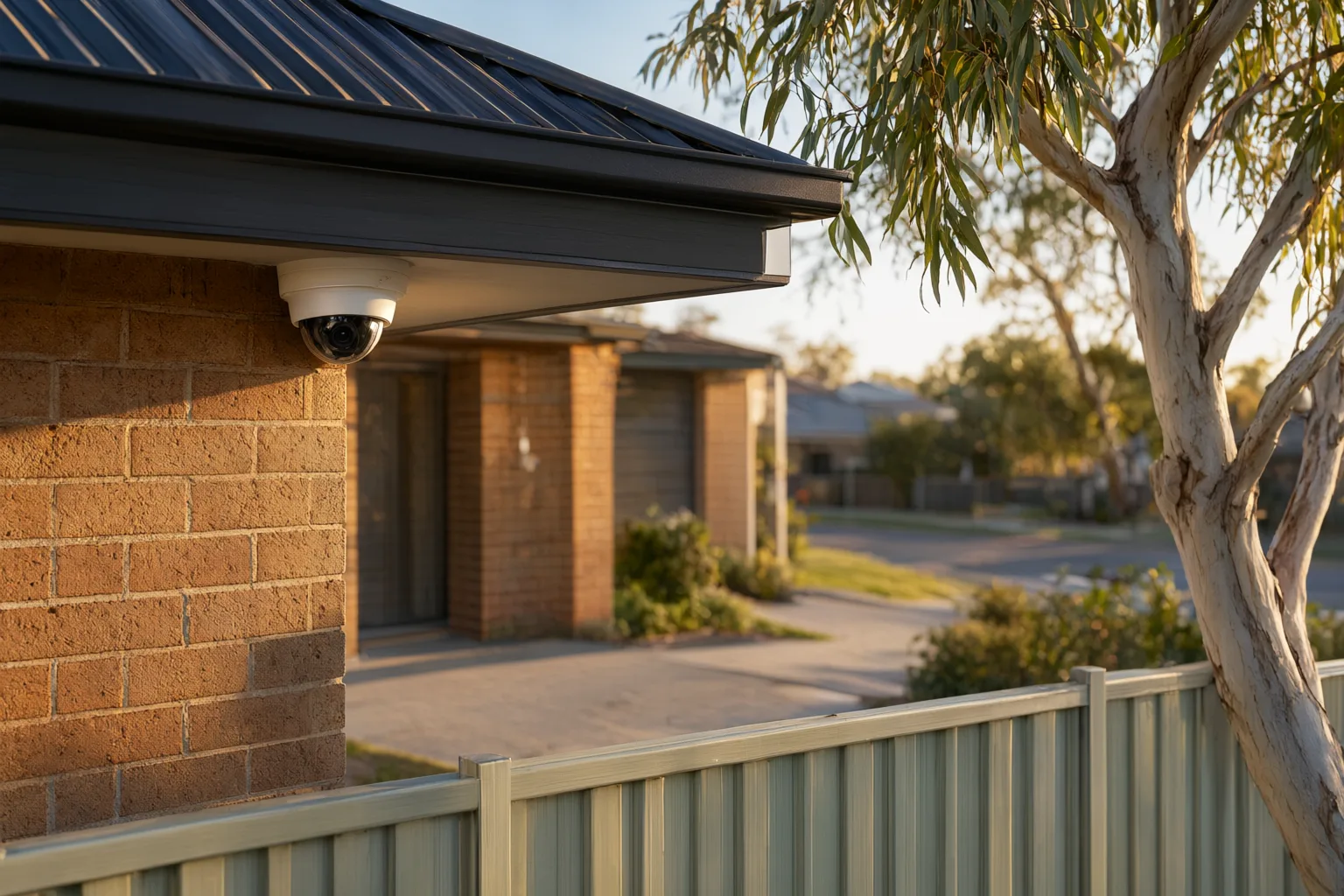
Key Takeaways
- A camera deliberately aimed at a neighbour's backyard or windows can breach NSW surveillance laws, while incidental overspill is lawful.
- Recording private conversations without consent breaches the Surveillance Devices Act 2007 (NSW) — penalties include fines and imprisonment.
- Free mediation through Community Justice Centres NSW resolves most neighbour CCTV disputes without court costs.
- Signage isn't legally required for NSW homes, but it deters thieves and proves your recording isn't covert if a dispute escalates.
- Privacy masking blacks out neighbouring windows or yards so wider angles stay compliant with Australian privacy expectations.
- Professional compliant CCTV installation in Adelaide SA typically costs $1,500–$3,500 depending on camera count and cabling.
Can Your Camera Legally See the Neighbour's Yard Under Home CCTV Privacy Laws NSW?
Yes — under home CCTV privacy laws NSW, you can legally film your own property even if your camera incidentally catches part of a neighbour's yard. The law cares about intent: a camera focused on your driveway, door or gate is lawful, while one deliberately aimed at a neighbour's backyard, pool or bedroom window can breach surveillance laws and trigger complaints or mediation.
That distinction — incidental versus deliberate — is the thread that runs through this entire guide. Get it right at the design stage and you'll never have to think about it again. Get it wrong and you could be refitting cameras after receiving a solicitor's letter.
Which Laws Actually Govern Home CCTV Privacy in Australia?
Many homeowners assume there's one national rulebook for [[how-to-position-cameras-to-comply-with-australian-privacy-expectations|security]] cameras. There isn't. Instead, several overlapping frameworks apply, and which ones matter depends on where you live and how the dispute plays out.
In New South Wales, the Surveillance Devices Act 2007 (NSW) is the key statute, particularly around audio recording. Beyond legislation, common-law privacy principles apply, local councils have planning considerations, and if a neighbour dispute escalates, the torts of nuisance or trespass to land can come into play. The Privacy Act 1988 (Cth) generally doesn't apply to individuals acting in a personal capacity — but it does apply if you operate a business from home, because then you're handling footage of customers, couriers and staff.
Through all of these frameworks, courts and tribunals keep returning to one test: reasonableness. Covering your own entry points is reasonable. Persistent surveillance of spaces where neighbours reasonably expect privacy — inside their home, an enclosed backyard, a bathroom window — is not.
What Separates Incidental Capture From Deliberate Surveillance?
Every working CCTV system captures some area beyond its owner's boundary. If your front-yard camera takes in the nature strip, the footpath or the street beyond, that's normal and generally acceptable — public spaces carry no reasonable expectation of privacy, and a sliver of neighbouring land caught at the edge of frame is incidental, not surveillance.
Problems begin when someone else's private space becomes the primary subject of a camera. Under NSW law, a neighbour may have grounds for complaint if your system amounts to ongoing monitoring of areas where they reasonably expect privacy: the interior of their home, an enclosed yard, a pool area or a bathroom window. Serious cases can escalate to Apprehended Personal Violence Orders, civil claims, complaints to NSW Fair Trading, or police involvement.
In practice, most [[how-cctv-can-help-with-neighbourhood-disputes-and-boundary-issues|disputes]] we encounter start with something mundane — a poorly angled eave camera whose wide lens sweeps across two backyards. The fix is usually simple: reposition the unit, fit a narrower lens, or apply a privacy mask. But redesigning after a complaint costs far more than designing correctly from day one. In Newcastle's coastal environment and Adelaide's hot summers, camera housings rated IP66 or higher resist UV, heat, and salt-laden humidity.
Is Recording Audio on Security Cameras Legal in NSW?
Video is comparatively forgiving; audio is not. Under the Surveillance Devices Act 2007 (NSW), it is generally an offence to record a private conversation without the consent of the parties involved — and that applies on your own property, not just in public. Penalties for serious breaches can include fines and even imprisonment.
This matters because many modern cameras ship with built-in microphones enabled by default. Popular brands like Hikvision and Dahua routinely capture ambient audio alongside video, meaning an unconfigured system could be recording conversations between visitors, delivery drivers or family members without anyone's consent.
Our standard practice is straightforward: disable audio recording on residential cameras unless there's a specific, lawful reason to retain it. Video alone provides everything needed for deterrence and evidence, with none of the legal exposure.
How Should You Design Camera Placement to Stay Compliant?
A well-designed system achieves two goals simultaneously: maximum coverage of your own assets, and minimum overspill onto adjoining properties. These aren't competing aims — they're solved together during design.
During our consult and design steps, we walk the property and map sightlines before a single cable is run. Small adjustments make enormous differences to what ends up in frame: dropping a camera 300mm lower, swapping a 2.8mm wide-angle lens for a 4mm, or tilting the field of view down toward your own fence line rather than over it.
- Aim cameras at your own entry points: front door, driveway, side gates, garage and rear access.
- Use privacy masking zones in the NVR to black out any part of the frame covering a neighbour's windows or yard.
- Mount cameras at 2.4–3 metres — high enough to resist tampering, low enough to capture faces rather than rooftops beyond the fence.
- Choose cameras with smart detection such as Hikvision AcuSense, so alerts trigger on people and vehicles within your zones, not movement next door.
- Avoid pointing cameras at shared driveways or strata common areas without body corporate approval.
Do You Need Signage for Home CCTV in NSW?
For private homes in NSW, signage is not strictly required by law — but we recommend it regardless. A simple 'CCTV in operation' sign at your front boundary performs three jobs at once. It deters opportunistic thieves, who would rather move to an easier target than risk being recorded. It removes any claim that your recording was covert, which matters if a dispute ever reaches a tribunal. And it reassures neighbours that your system is a legitimate security measure rather than snooping.
If you run a business from home, signage shifts from recommended to effectively essential. The Privacy Act's transparency obligations can apply to footage of customers, couriers and staff, and visible notices are the simplest way to meet them.
Should You Worry About a Complaint About Your Cameras?
Most CCTV disputes between neighbours end with a conversation, not a courtroom. If someone raises a concern about your cameras, the best first move is transparency: show them the live view on your phone or monitor. Nine times out of ten, once they see the camera covers your driveway and not their yard, the issue evaporates.
If the complaint has merit, act quickly and document it in writing: adjust the angle, add a privacy mask, or relocate the camera entirely. Should the disagreement continue, Community Justice Centres NSW offer free mediation that resolves the vast majority of these matters without legal costs.
And if the shoe is on the other foot — a neighbour's camera pointing into your property — the same sequence applies in reverse. Start with a polite conversation, move to free mediation if needed, and only escalate to police or legal advice if the surveillance is deliberate and persistent.
Why Professional Design Ensures CCTV Compliance in Newcastle and Adelaide?
The gap between a compliant system and a legal headache usually comes down to design, not equipment. DIY kits from hardware stores tend to get bolted wherever the ladder reaches, with wide-angle lenses sweeping across three backyards and microphones left running. Nobody intends to break the law — the kit was simply never designed around it.
A professional approach starts with your security goals: deterring break-ins, covering the ute in the driveway, watching the back gate. Coverage is then built around those goals, camera by camera, with sightline checks confirming exactly what each unit sees.
Our licensed and insured NSW installers manage the full process: an on-site consult, a camera-by-camera design, clean [[what-does-a-professional-home-cctv-installation-cost-in-2025|installation]], NVR configuration including privacy masks and detection zones, and a handover showing you precisely what every camera captures. We back it with lifetime support, so if a neighbour raises a question years down the track, we can adjust angles or masks for you. Planning a new system, or want an existing one checked? Get in touch for a free quote — it's the simplest way to protect your home and stay on the right side of the law.
Compliant vs Risky Camera Setups: Quick Reference for NSW Homeowners
| Practice | Generally Legal | Legally Risky |
|---|---|---|
| Camera covering your own front door and driveway | Yes — standard practice | No |
| Incidental capture of street, footpath or a sliver of neighbouring land | Yes — public or incidental view | No |
| Camera aimed primarily at a neighbour's yard, pool or windows | No | Yes — privacy breach risk |
| Recording audio of private conversations without consent | No | Yes — offence under NSW law |
| Using privacy masking on your NVR to block neighbouring areas | Yes — best practice | No |
| Covert cameras hidden to watch a neighbour | No | Yes — potential criminal offence |