
Key Takeaways
- NSW tenants can install non-permanent CCTV without landlord approval under the Residential Tenancies Act 2010.
- Drilling, cabling through cavities, or hardwiring requires written landlord consent before work begins.
- The Surveillance Devices Act 2007 restricts recording neighbours and private conversations — disable audio by default.
- No-drill wireless systems now deliver near-professional performance for Australian rental homes.
- Remove all gear and repair surfaces before the final bond inspection to protect your deposit.
Can a Tenant Install CCTV in a Rental Property in NSW?
The short answer: rental property CCTV installation is legal for NSW tenants as long as the setup is non-permanent. Freestanding and adhesive-mounted tenant security cameras can be installed without asking anyone, while anything involving drilling, cabling, or hardwiring needs written landlord consent first. This guide walks you through what you can do, what needs approval, and how to protect your bond in Newcastle and across Australia.
Two pieces of legislation shape what you can do. The Residential Tenancies Act 2010 (NSW) protects both your right to quiet enjoyment of the home and the landlord's right to keep their property free of unauthorised alterations. The Surveillance Devices Act 2007 (NSW) controls what you're allowed to record — particularly audio — regardless of who owns the building.
The practical dividing line is permanence. If you can take the camera down at the end of your lease and leave no holes, marks or cables behind, you're almost always within your rights. If installation involves a drill, screws into brickwork, or new wiring, you've crossed into alteration territory and written consent becomes mandatory.
Which Cameras Can Renters Install Without Asking Permission?
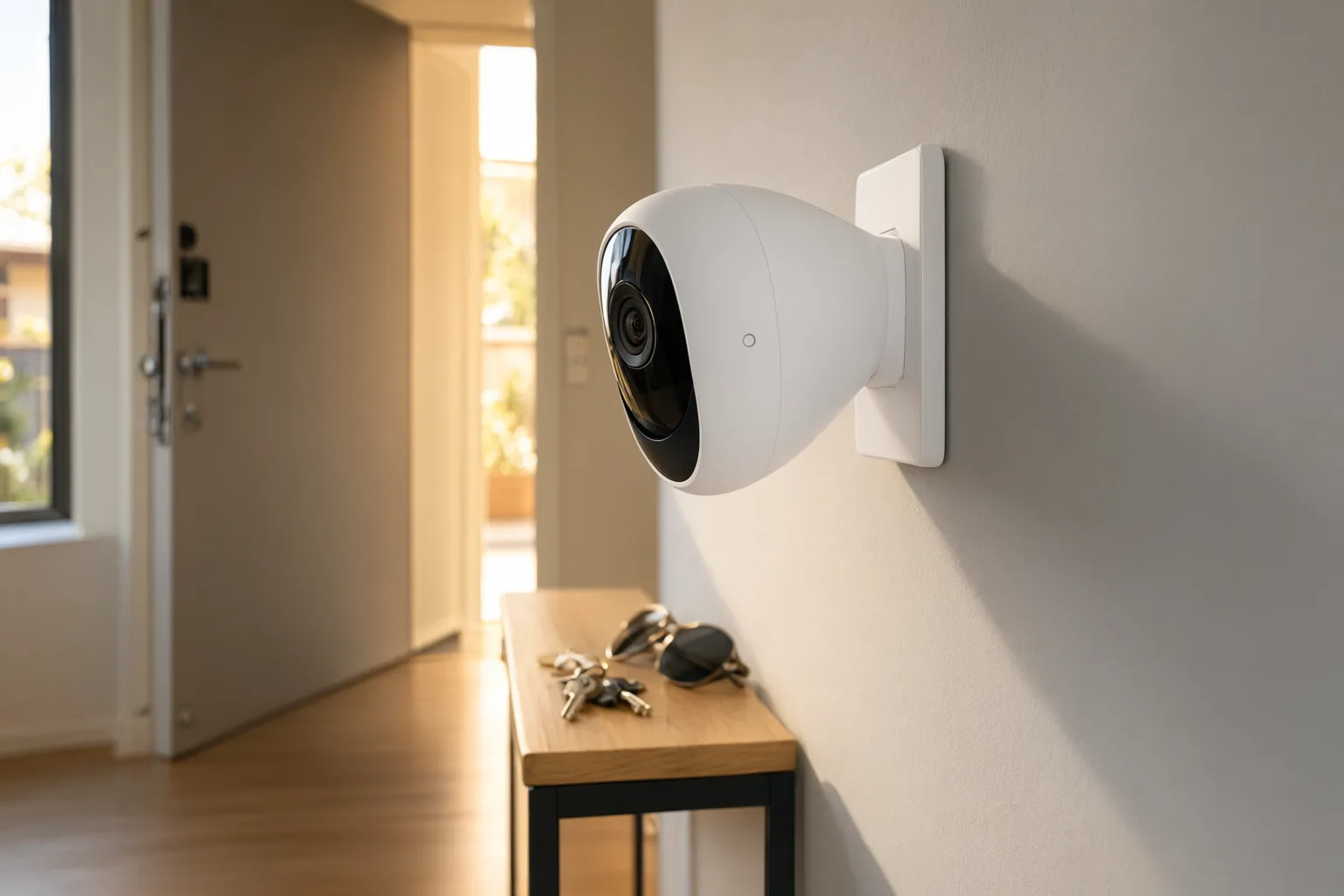
Anything non-permanent is fair game inside your rental. That means freestanding cameras on bookshelves and benches, units attached with removable adhesive strips, and plug-in Wi-Fi cameras that connect to power via an existing power point. Because nothing about these setups modifies the property itself, the Residential Tenancies Act doesn't treat them as alterations.
Outdoors, the rules tighten slightly but remain workable. Battery-powered cameras fitted with adhesive or magnetic brackets that leave no residue are generally acceptable, as are video doorbells that swap onto existing doorbell wiring without new drilling. Peephole cameras replacing the existing door viewer fall into the same category.
The test to apply before buying anything: can this be removed completely, with no trace, when I move out? If yes, you're unlikely to need formal approval. It's still good practice to give your landlord a courtesy heads-up — it costs you nothing and prevents misunderstandings during routine inspections.
- Freestanding indoor cameras placed on shelves, desks or furniture
- Wireless cameras using adhesive strips or magnetic mounts
- Battery-powered video doorbells running off existing doorbell wiring
- Peephole cameras that replace the current door viewer
- Window-mounted cameras held by suction cups or tension rods
What CCTV Work Requires Written Landlord Consent?
The moment your installation involves drilling, screwing brackets into walls or eaves, running cable through roof or wall cavities, or connecting to the property's electrical system, you need written approval from your landlord or managing agent. Proceeding without it exposes you to a breach notice, a deduction from your bond, or in serious cases termination of the lease.
This covers the professional-grade systems most homeowners choose: hardwired PoE [[solar-powered-security-cameras-are-they-worth-it-for-australian-conditions|camera]] networks, NVR kits with dedicated cabling, and fixed exterior cameras mounted on brick, Colorbond roofing or eaves. These systems deliver better image quality, reliability and coverage than battery alternatives — but legally they count as alterations to someone else's asset.
The upside is that landlords often say yes. A quality CCTV system adds value and deters break-ins, so many owners welcome a well-presented proposal. We've helped tenants across Sydney and regional NSW secure approval simply by supplying a clear plan: camera locations, cable routes, confirmation the installer holds a NSW licence and insurance, and a commitment to remove the system and make good at lease end.
How Do You Ask Your Landlord for CCTV Approval?
Presentation matters. A vague verbal request invites a cautious no; a documented proposal makes saying yes easy. Start with a written request — email or your property manager's maintenance portal both work — rather than a phone call.
Your request should spell out: how many cameras, exactly where each will go, what mounting hardware is involved, and whether any drilling or cabling is required. Attach the installer's licence and insurance details, and state clearly that you'll remove the equipment and patch any holes when the tenancy ends. Some landlords will even offer to let the system stay once installed, since it becomes a selling point for future tenants.
Frame the pitch around their interests, not yours. A professionally installed system deters burglary, reduces vandalism risk, and can support lower insurance premiums on the property. When landlords see the request as an improvement to their investment rather than a personal favour, approval rates rise sharply.
Is It Legal to Point Cameras at Neighbours Under NSW Privacy Law?
Landlord approval doesn't override privacy law. Under the Surveillance Devices Act 2007, it's an offence to record anyone in circumstances where they have a reasonable expectation of privacy — bathrooms, bedrooms and changing areas are the obvious examples. This applies even inside your own home.
For apartment, townhouse and duplex tenants, shared spaces are the main trap. Your cameras must not cover common driveways, hallways, shared gardens or any part of a neighbour's property. If your field of view catches a neighbour's yard or windows, reposition the camera or narrow its angle. Modern cameras with adjustable motion zones and privacy masking features make this straightforward to configure.
Audio deserves special attention. Recording a private conversation without the consent of every party is illegal in NSW in most circumstances, and many [[4k-vs-1080p-security-cameras-is-the-upgrade-worth-the-money|security cameras]] capture sound by default. Disable the microphone, or buy a model that lets you switch audio off independently of video. In our experience this is the single most common legal mistake renters make with DIY security cameras — and the easiest to avoid.
Are No-Drill CCTV Options Worth It for Australian Rentals?
Renters no longer have to pick between flimsy budget cameras and full hardwired systems. Several technologies now deliver near-professional performance in fully removable packages suited to Australian conditions.
Battery-powered [[wireless-vs-wired-cctv-which-is-right-for-australian-homes|wireless]] cameras lead the pack. Compact units from brands like Hikvision and Dahua offer Starlight or ColorVu night vision, producing full-colour footage in near-darkness without any wiring. Add a solar panel accessory and the camera can run indefinitely between charges — a genuine advantage given Australia's abundant sunlight.
If you want multi-camera coverage, consider a wireless NVR kit. Several cameras talk to a central recorder over Wi-Fi, so there's no cabling through walls. The recorder plugs in indoors, connects to your router, and gives you remote viewing on your phone from anywhere. At lease end, the whole kit packs up in minutes.
Video doorbells suit units and townhouses where the front door is the main entry point. Look for person-detection features similar to AcuSense-style analytics, which filter out false alerts from passing cars and animals — particularly valuable on busy suburban streets.
Should You Remove Your Cameras Before the Final Bond Inspection?
Plan your exit strategy before you install anything. Non-permanent gear is simple: peel off adhesive mounts, wipe away any residue, and take everything with you. Done properly, there should be nothing for the outgoing inspection to flag.
For landlord-approved hardwired installations, the arrangement should be documented in writing before work begins. Either you remove the system and repair all damage at your own cost, or the landlord agrees to keep it as an improvement to the property. Getting this in the lease agreement or a formal side letter protects your bond and prevents disputes at handover.
Whichever path applies, photograph the wall and mounting points before installation and again after removal. Those photos are your evidence if a bond dispute ever arises over property condition.
Why Do Renters Get Fined for Recording Audio on Security Cameras?
The most frequent error we see is leaving audio recording switched on. It feels harmless, but recording conversations without all parties' consent breaches NSW law, and housemates, visitors and neighbours are all potentially captured. Turn the microphone off unless you have a specific reason not to.
Second is camera angle creep. A camera installed to watch your own balcony slowly ends up covering the shared stairwell or next door's courtyard. Recheck your camera views after any furniture changes or seasonal adjustments, and use privacy masking zones where available.
Third is skipping the paper trail. Verbal approvals evaporate when property managers change or memories fade. Every consent, proposal and removal commitment should exist in writing — ideally email — so you have proof if questions arise at inspection time or bond release.
Do Landlords Need Consent Rules Too Under Australian Tenancy Law?
CCTV Options for Australian Rental Properties Compared
| Option | Typical Cost (AUD) | Landlord Consent Needed? |
|---|---|---|
| Freestanding indoor camera | $80–$250 | No |
| Adhesive/gutter-mounted wireless camera | $150–$450 | No (check strata) |
| Hardwired 4-camera system (licensed install) | $1,200–$2,500 | Yes, written |
| Solar-powered no-drill outdoor kit | $300–$700 | Usually not |