
Key Takeaways
- Overt CCTV is legal across Australia when employees get 14 days' written notice plus visible signage at every entrance.
- Covert surveillance in NSW workplaces requires a court order; unauthorised hidden cameras risk penalties up to $11,000 per offence for employers.
- Cameras are banned where staff reasonably expect privacy — change rooms, toilets, lactation rooms — in both NSW and South Australia.
- Audio recording triggers stricter consent rules under both state surveillance acts and the Privacy Act.
- Budget roughly $150–$400 per camera installed for compliant commercial systems in Newcastle or Adelaide; get a quote for multi-site warehouses or retail chains.
Can Australian Employers Legally Use CCTV at Work?
The short answer is yes — Australian employers can legally install CCTV in the workplace, provided they follow the workplace surveillance laws Australia applies in each state. In NSW that means the Workplace Surveillance Act 2005; in South Australia it means the Surveillance Devices Act 2016 plus the Privacy Act 1988. Overt cameras with written notice and clear signage are lawful almost everywhere except bathrooms and change rooms.
Legality depends on how surveillance is conducted rather than whether it happens at all. Although the detail varies between jurisdictions, three principles apply almost everywhere: employees must be told they are being recorded, cameras must not intrude on private areas, and footage must be stored and handled responsibly. New South Wales has the most prescriptive framework — the Workplace Surveillance Act 2005 (NSW) — and many other states reach similar outcomes through privacy legislation and common law duties.
If your business operates across multiple states, the practical approach is to design your system to the strictest applicable standard. In most cases that means adopting the NSW model nationwide.
What Does the Workplace Surveillance Act 2005 NSW Require?
The [[employee-monitoring-ethics-where-to-draw-the-line-with-workplace-cameras|Workplace]] Surveillance Act 2005 (NSW) is the central statute governing camera, computer and tracking surveillance of employees in New South Wales. It applies whenever an employer monitors an employee while at work, and it draws a sharp distinction between 'overt' surveillance, which is permitted with proper notice, and 'covert' surveillance, which is heavily restricted.
Before any camera surveillance commences, the employer must give written notice to every affected employee at least 14 days in advance. Staff hired after the system goes live must be notified before their first day. The notice must spell out the type of surveillance, how it will be carried out, when it will begin, whether it will run continuously or intermittently, and whether it will operate indefinitely or for a fixed period.
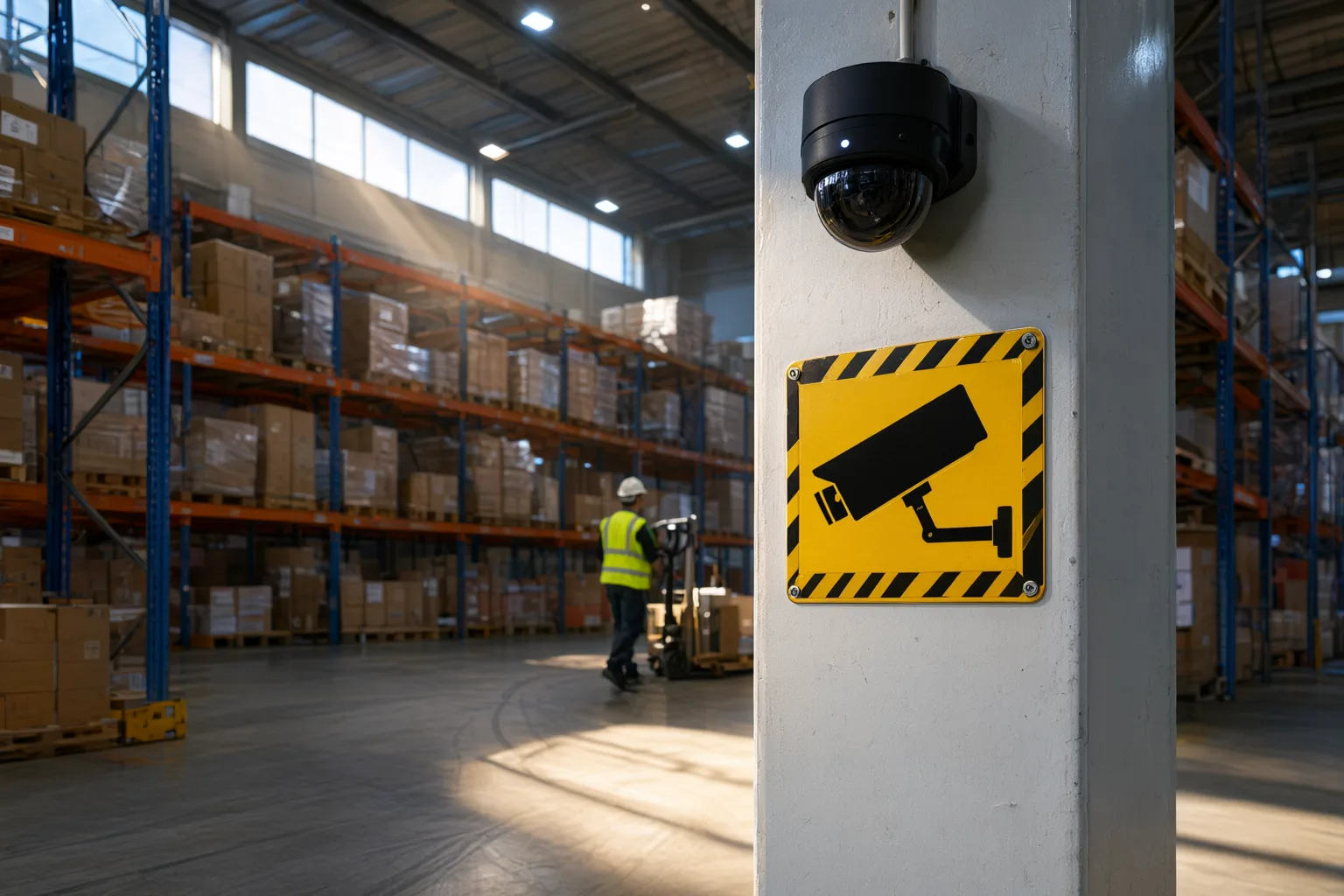
The Act also mandates visibility: cameras must not be concealed, and signs must be displayed at entrances advising that the premises may be under surveillance. Cameras are prohibited outright in toilets, change rooms, shower facilities and any other location where employees hold a reasonable expectation of privacy.
Is Covert Surveillance Legal in Australian Workplaces?
Overt surveillance is monitoring that employees know about: visible cameras, entrance signage and advance written notice. This is the standard, lawful model for business CCTV. Covert surveillance means recording staff without their knowledge using hidden or disguised devices.
In NSW, covert surveillance of employees is prohibited unless the employer holds a covert surveillance authority issued by a magistrate. Such authorities are granted only where there are reasonable grounds to suspect an employee is engaged in unlawful activity at work — theft or fraud being typical examples — and where covert monitoring is genuinely necessary to investigate. Even when granted, the authority is time-limited and narrowly scoped.
For most businesses, [[hidden-cameras-in-the-workplace-are-they-ever-legal-in-australia|hidden cameras]] are simply not worth the exposure. Unlawful covert surveillance attracts significant fines, and evidence gathered without authority may be ruled inadmissible. A well-designed overt system usually achieves the same deterrent effect and produces equally usable incident footage.
Where Should Workplace Cameras Be Positioned in Newcastle and Adelaide?
Camera placement is where many businesses unintentionally cross the line. The governing test is whether someone in that location would reasonably expect privacy. Work areas, entrances, loading docks, car parks, retail floors, warehouses and points where cash is handled are generally acceptable locations.
Bathrooms, toilets, showers, change rooms and dedicated spaces such as prayer or lactation rooms are strictly off-limits in all circumstances. Break rooms and other staff-only areas occupy a grey zone: surveillance there is not automatically illegal, but it demands stronger justification — documented theft from a staff kitchen, for instance — and the same notice [[do-you-need-to-tell-staff-theyre-on-camera-australian-notice-requirements-explai|requirements]] still apply.
Audio is a separate question altogether. In NSW, recording a private conversation without consent can breach the Surveillance Devices Act 2007, so the default position for workplace systems is video only. A professional installer will map camera positions against both your security objectives and these legal boundaries, giving you coverage of genuine risk areas without straying into prohibited zones.
Do Employers Need Written Notice Before Installing CCTV?
Compliance is as much about process as placement. Before activating a new system, issue written notice to all affected staff, update your workplace surveillance policy, and display signage at every entrance. Keep dated records of when notices were issued — if a dispute ever arises, this documentation is your evidence of compliance.
Footage itself is personal information under the Privacy Act 1988 (Cth) for businesses with annual turnover above $3 million, and treating it that way is good practice for everyone else. That means storing recordings securely, ideally on a network video recorder with password protection and user-level access controls; limiting who can view footage; maintaining an access log; and setting a defined retention period, commonly 30 to 90 days unless material relates to an incident.
Employees can generally request access to footage in which they appear. A clear, written procedure for handling those requests prevents significant friction later and demonstrates good faith if regulators ever ask questions.
Why Is Compliant System Design Critical for Business CCTV?
The smoothest route to compliance is building legal requirements into the system design from the outset rather than retrofitting them after installation. A structured process begins with a consultation to understand your risks and obligations, followed by a site design that maximises coverage of entries, stock areas and workspaces while excluding prohibited zones entirely.
Hardware choice matters too. Professional-grade platforms from Hikvision, Dahua, Uniview and Axis offer features that support both security and compliance: AcuSense cameras distinguish people and vehicles from false triggers, while ColorVu models capture full-colour footage at night for reliable identification. Recordings should land on a secured NVR with role-based access controls, and retention settings configured to match your stated policy.
At handover, management should receive a walkthrough of the system along with documentation that can be adapted into your surveillance policy and employee notices. Using fully licensed and insured installers also ensures the installation itself meets security industry licensing requirements.
Which Compliance Mistakes Do Australian Businesses Make?
Several avoidable errors account for most workplace surveillance breaches. The first is relying on signage alone: under the NSW Act, a sign at the door does not replace individual written notice to each employee, and skipping the 14-day lead time puts you out of compliance before recording even starts.
The second is scope creep — expanding a security system into break rooms, change rooms or office spaces without revisiting notice obligations and privacy expectations. The third is neglecting footage governance: unsecured recorders, shared passwords, unlimited access and indefinite retention all create privacy risk regardless of where the cameras point.
Finally, some employers enable audio recording by default without realising it can breach the Surveillance Devices Act 2007 (NSW). Reviewing your system against these four failure points annually is a simple way to stay ahead of problems.
How Do You Roll Out Workplace CCTV Safely?
A disciplined rollout keeps you compliant and avoids rework. Start with a documented purpose statement covering safety, theft deterrence and incident evidence. Next, commission a site assessment that maps camera positions against both risk areas and prohibited zones, and confirm the system records video only.
Then complete the administrative steps: draft or update your surveillance policy, issue written notice to all current staff at least 14 days before go-live, prepare induction notices for new hires, and install signage at every entrance. Configure the NVR with password protection, role-based access, an access log and automatic overwrite aligned to a 30–90 day retention window.
Finally, brief your team, publish the policy internally, and diarise an annual review. Businesses that follow this sequence rarely face disputes, because employees were informed, placement was defensible and footage handling was transparent from day one.
Costs matter to employers planning a compliant rollout. A professional four-camera overt system for a small [[/newcastle|Newcastle]] retail store typically costs $1,800–$3,500 installed, while larger [[/adelaide|Adelaide]] warehouses or commercial sites needing 16+ cameras, audio-free zones and network video recorders generally range from $6,000–$15,000. Because every site differs — coastal salt air near Newcastle Harbour demands marine-grade housings, and Adelaide's summer heat above 40°C calls for ventilated mounts under eaves or on brick walls — it pays to get a quote tailored to your property.
Beyond the hardware, documentation is your legal shield. Keep dated copies of the written notice issued to staff, minutes of any union or employee consultation, camera location maps and your retention schedule. If the NSW Industrial Relations Commission or a privacy regulator ever investigates a complaint, this paper trail demonstrates good faith compliance with workplace surveillance laws Australia-wide.
Employers should also review their systems annually. Business relocations, renovations or new hires can render old notices stale, and cameras installed near break rooms during a refit may now breach reasonable-expectation tests. A yearly audit by a licensed installer keeps your Newcastle or Adelaide premises compliant as both technology and surveillance law evolve.
For Newcastle businesses, practical compliance starts with a camera map signed off before installation. A typical retail store on Hunter Street might need four to eight cameras covering entries, registers and stockrooms, each mounted under eaves or on brick facades to handle coastal humidity and summer heat above 35°C. Every camera position should be documented against the reasonable-expectation-of-privacy test so you can show an auditor or Fair Work inspector exactly why each location was chosen.
Adelaide commercial operators face similar logic under South Australian law, though the state relies more heavily on the Privacy Act and consumer protection frameworks than NSW's prescriptive notice regime. A warehouse in Wingfield recording loading docks and yard gates still needs entrance signage, a documented policy and restricted footage access. Coastal suburbs like Port Adelaide add corrosion-resistant housings rated for salt air and storm exposure.
Costs matter to planning. Across Australia, professionally installed business CCTV typically runs $150–$400 per camera including cabling, NVR and commissioning; a six-camera retail fit-out lands around $1,800–$3,500, while larger warehouse or farm installations scale from $5,000 upward depending on cable runs and analytics. Always get a quote tailored to your floor plan rather than relying on online averages.
Retention and access policies complete the compliance loop. Most Australian businesses keep footage 30–90 days, auto-deleting after that to satisfy minimisation principles under the Privacy Act. Restrict playback to named managers, log every export, and have a written process for employee access requests — staff can ask to view footage of themselves, and refusing without reason invites complaints to the OAIC or the NSW Information and Privacy Commission.
Finally, treat surveillance as part of your broader duty of care rather than a standalone IT project. Combine cameras with lighting, alarm response and clear staff communication, review the system annually as laws and technology change, and brief new hires during induction. Businesses in Newcastle and Adelaide that document purpose, notice and retention from day one rarely face disputes — and their footage actually holds up when an incident, insurance claim or police request arises.
Comparison of workplace CCTV options for Australian employers
| Option | Legal Requirements | Best Suited To |
|---|---|---|
| Overt fixed CCTV | 14 days' written notice (NSW), entrance signage, documented policy | Retail stores, offices, warehouses in Newcastle & Adelaide |
| Overt CCTV with audio | All overt requirements plus listening-device consent and disclosure | Control rooms, high-risk cash handling |
| Covert surveillance | Court order required in NSW; strict justification elsewhere | Suspected serious misconduct investigations only |
| Monitored/alarm-linked CCTV | Standard notice plus licensed security provider | Commercial sites, farms, after-hours premises |