
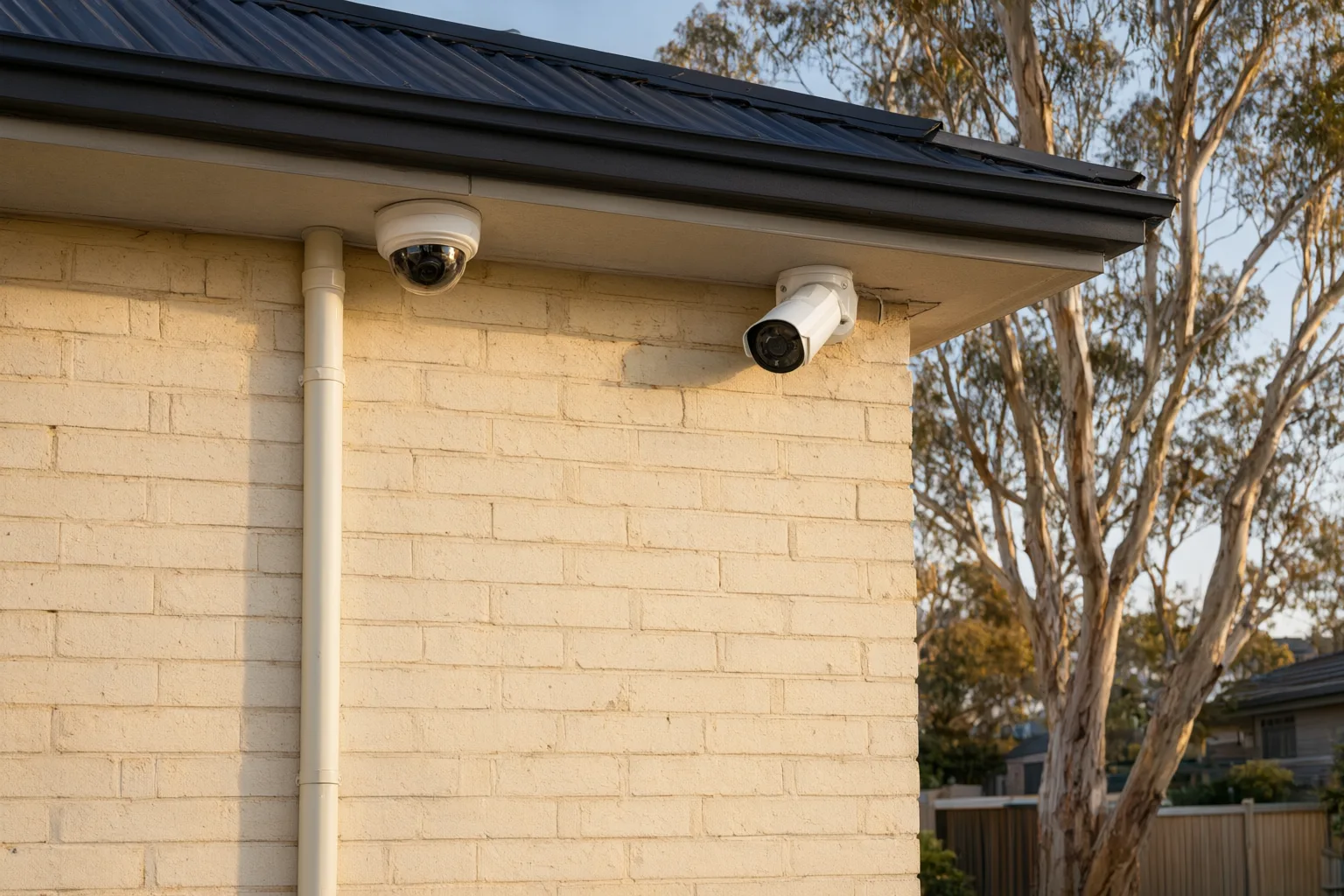
Key Takeaways
- Surface-mounted CCTV cabling in UV-rated conduit saves 20-40% on labour versus recessed work in existing homes
- Recessed wiring suits new builds and renovations where walls are already open
- Double-brick homes common in Adelaide make recessing far more expensive than in timber-frame Newcastle properties
- All external cable runs in Australia should use UV-stabilised conduit to survive harsh sun and coastal weather
- CCTV installation in NSW requires a security licence under the Security Industry Act
Are Surface-Mounted or Recessed CCTV Cables Right for Your Home?
The short answer: for most established Australian homes, surface-mounted CCTV cabling in UV-rated conduit is the faster, cheaper choice, while recessed cabling delivers a cleaner, invisible finish at a significantly higher price. Your decision typically hinges on three factors — your wall construction, your budget, and whether you're renovating. In this guide we break down real costs for Newcastle NSW and Adelaide SA homes so you can choose with confidence.
What Is Surface-Mounted CCTV Cabling and How Does It Work?
Surface-mounted cabling runs along the outside of your walls, eaves and ceilings rather than through them. The cable sits inside protective conduit — sometimes called trunking or ducting — made from plastic or metal. This outer layer shields the wiring from sun, rain, pests and accidental knocks while keeping everything tidy and accessible for future maintenance.
It's the go-to method for retrofitting CCTV into existing Australian homes, particularly double-brick and brick veneer properties where running cable through masonry means chasing channels into the wall and re-rendering afterwards. A skilled installer will paint the conduit to match your wall colour and follow natural architectural lines — downpipes, eave edges and corner joints — so the run blends into the building instead of drawing attention to itself.
Why Choose Recessed CCTV Wiring for Your Home?
Recessed cabling is completely concealed within wall cavities, ceiling spaces and under floors. The only things you ever see are the camera itself and a small, sealed penetration point where the cable exits the wall. It's the premium finish you'll find in new builds and high-end installations.
In timber-framed homes with plasterboard, weatherboard or cladding, a licensed installer can fish cables through the cavity using draw wires and access points in the roof space. The result is invisible infrastructure: no conduit, no exposed joins, and nothing an intruder could reach to cut. Concealed runs also shield cables from Australia's harsh UV, coastal salt air and storm damage for the life of the system.
Which Home Construction Types Suit Each Cabling Method?
Your building type is the single biggest factor in this decision. Double-brick and solid masonry homes, common throughout Sydney's older suburbs, make recessed cabling costly and disruptive — channels must be chased into the brickwork, then re-rendered and painted. For these homes, surface-mounted conduit painted to match is almost always the smarter investment.
Timber-framed homes are ideal candidates for concealed cabling because cables can be fished through cavities from above. And if you're building a new home, you have a golden opportunity: have your [[poe-vs-wi-fi-cameras-which-is-better-for-australian-homes|security]] installer rough-in all camera cabling before the plasterboard goes up. You'll get a fully recessed finish at a fraction of what a retrofit would cost later.
Apartments and townhouses often carry body corporate or strata rules about external conduit, so check before committing to any visible cable runs. Rural properties frequently suit a hybrid approach — recessed inside the main house, surface-mounted in galvanised conduit across sheds and outbuildings where weather and machinery exposure matter more than aesthetics.
- Double-brick or solid masonry: surface-mounted conduit is usually most practical
- Timber frame with plasterboard: recessed cabling is achievable and recommended
- New build or major renovation: always rough-in recessed cabling before walls close
- Apartments and townhouses: check strata rules before any external cable runs
- Sheds, garages and farm buildings: galvanised or UV-rated surface conduit for durability
How Does Australian Weather Affect Your CCTV Cabling Choice?
Australia's climate is brutal on exposed wiring. UV radiation degrades standard plastic conduit within a few years, leaving it brittle and prone to cracking. Any surface-mounted run should use UV-rated conduit — grey or white conduit marked for outdoor use — with sealed junction boxes at every join.
Coastal homeowners face an extra challenge: salt air accelerates corrosion on metal fittings, so stainless steel or plastic fixings are essential near the ocean. Storm season brings driving rain that exploits poorly sealed entry points, potentially tracking moisture into your roof space or wall cavity. Professional installers seal every penetration with silicone and fit drip loops so water sheds off the cable rather than travelling along it into the building.
In bushfire-prone areas, recessed cabling offers a genuine safety advantage: embers can't reach cables hidden inside walls, and there's no external conduit to melt or ignite. If your property falls within a BAL-rated zone, discuss fire-rated cable pathways with your installer during the design stage.
Can Modern PoE Cameras Run on a Single Cat6 Cable?
Modern IP camera systems typically need just one Cat6 ethernet cable per camera, carrying both power and data over Power over Ethernet (PoE). That's a huge simplification compared with older analogue setups that required separate power and [[cat6-vs-coax-choosing-the-right-cable-for-your-cctv-installation|coaxial]] runs. Whichever mounting method you choose, Cat6 should be kept clear of electrical interference — maintain at least 300mm separation from 240V power cables where they run parallel.
For long runs beyond 100 metres — common on acreage blocks — your installer may recommend fibre optic links or PoE extenders. Quality recessed installations also include conduit or a draw wire inside the wall cavity, so cables can be replaced or upgraded down the track without opening up plasterboard. Many budget operators skip this step; it's a hallmark of a properly engineered system.
Feature-rich cameras such as Hikvision ColorVu models for full-colour night vision, or AcuSense cameras with person and vehicle detection, draw more power and perform best on clean, well-planned runs with minimal joins. A properly designed cabling plan during the consult and design stage prevents voltage drop and reliability headaches later.
Should You Pay More for Recessed Cabling Costs and Resale Value?
Budget often settles the debate. Surface-mounted installations typically save 20-40% on labour compared with recessed work in an existing home, because there's no plastering, patching or repainting involved. On a standard four-camera home system, that can add up to several hundred dollars kept in your pocket.
Recessed cabling, however, adds genuine value at resale. Buyers notice visible conduit, and a clean, professionally hidden system signals quality workmanship throughout the property. If you plan to sell within a few years — or if exposed conduit would irritate you every time you walk outside — the extra outlay usually pays for itself in satisfaction alone.
The honest answer for most established Australian homes is a hybrid: recess cables wherever the building allows it cheaply (through the roof space into the eaves, for example), and use neatly painted surface conduit for unavoidable external runs. A good installer will map out exactly which runs can be hidden during the design consultation, before any drilling begins.
Do DIY CCTV Cable Installations Really Fail That Often?
Cabling is where DIY CCTV projects most commonly fail. Cables left loose in roof spaces get chewed by rodents, pinched by foot traffic, or degraded by extreme heat. Surface conduit installed without a UV rating can crack within two summers. Poorly sealed wall penetrations let water into cavities, causing mould and structural damage that costs far more than the original [[how-to-plan-cable-runs-for-a-clean-hidden-cctv-installation|installation]] would have.
There are also standards to consider: cable routes must avoid electrical interference, penetrations must be sealed against water and pests, and any electrical work must comply with Australian requirements. Getting these details wrong doesn't just shorten the life of your system — it can void warranties and create safety hazards.
Is Aussie CCTV Cams the Right Installer for Newcastle and Adelaide?
Aussie CCTV Cams is fully licensed and insured in NSW, and our five-step process — consult, design, install, configure, handover with training — means your entire cabling route is planned before a single hole is drilled. We use UV-rated conduit, seal every penetration, run draw wires for future upgrades, and back every job with lifetime support.
Whether your home suits recessed, surface-mounted or a hybrid approach, we'll design the cleanest, most durable solution for your budget. Contact us today for a free quote and a walkthrough of exactly how your cable runs would look on your property.
Beyond the headline figures, remember that cabling quality determines system reliability more than any camera spec. A $2,000 camera package installed with cheap, non-UV-rated cable will fail within a few summers of Australian sun, while a modest system on properly rated Cat6 inside quality conduit can run trouble-free for a decade. Always ask your installer what cable grade and conduit rating they use, and confirm it's documented on your quote.
It's also worth planning for the future. Running an extra conduit loop or spare draw-wire during installation costs very little now but makes adding cameras, upgrading to higher resolutions, or integrating intercoms and alarms far cheaper later. Homeowners in growth suburbs around [[/newcastle|Newcastle]] and [[/adelaide|Adelaide]] who plan for expansion typically save hundreds of dollars compared with retrofitting years down the track.
Surface vs recessed CCTV cabling: key differences for Australian homes
| Factor | Surface-Mounted | Recessed |
|---|---|---|
| Typical cost per camera (labour + materials) | $150-$250 AUD | $400-$700 AUD |
| Best suited to | Existing homes, brick veneer, quick installs | New builds, renovations, double-brick with open walls |
| Installation time (4-camera home) | Half day to one day | Two to four days incl. patching and painting |
| Appearance | Visible conduit along eaves and walls | Completely concealed; only cameras visible |
| Durability in Australian weather | Excellent with UV-rated conduit; easy to inspect | Protected from sun and rodents; harder to access for repairs |