
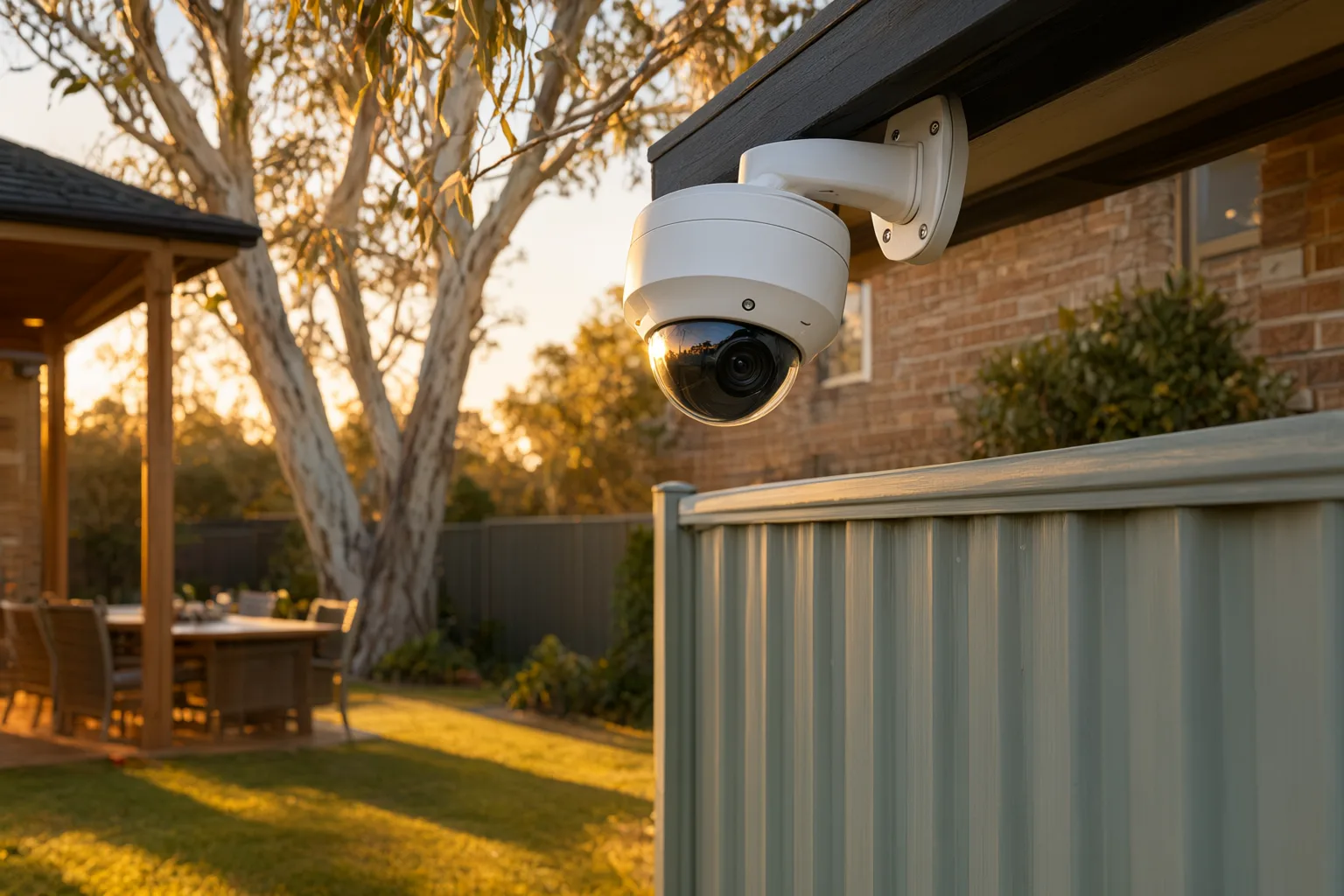
Key Takeaways
- NSW's Surveillance Devices Act 2007 governs when a neighbour's camera filming your backyard becomes unlawful surveillance.
- Free Community Justice Centres mediation in NSW resolves most neighbour CCTV disputes within weeks at no cost.
- Privacy masking digitally blocks neighbouring properties from recording, ending most complaints without losing security.
- Cameras deliberately filming bedrooms or entertaining areas may constitute common law nuisance in Australia.
- Screening plants like lilly pilly can block camera sightlines within months, subject to council height limits.
- Contact police immediately if a neighbour's camera is linked to stalking or voyeurism under state criminal law.
Is It Illegal for a Neighbour's CCTV to Film My Property in Australia?
In most cases, no — a neighbour's CCTV filming part of your property incidentally while monitoring their own home is not illegal in Australia. There is no federal statute banning residential cameras, and legitimate security coverage of driveways, gates and boundaries often catches adjoining land. It becomes unlawful only when footage deliberately targets private living areas.
However, the situation changes when a camera deliberately focuses on areas where you have a reasonable expectation of privacy: bedroom windows, bathrooms, pools, outdoor entertaining areas or children's play spaces. In those circumstances, state surveillance device legislation, common law privacy principles and nuisance claims can all come into play, giving you genuine grounds to demand change or seek remedies.
This guide walks you through exactly where the legal line sits, how it differs across Australian states and territories, and the practical steps — from a friendly chat through to tribunal action — that will give you the best chance of resolving the dispute without destroying the neighbourhood relationship.
What Laws Apply When a Neighbour's Camera Films Your Backyard?
Australia regulates neighbour-versus-neighbour camera disputes through a patchwork of laws rather than one dedicated statute. Understanding which layers apply helps you frame any complaint correctly.
The [[recording-your-neighbours-where-the-legal-line-sits-for-home-cctv|Privacy]] Act 1988 (Cth) is often assumed to cover this scenario, but it primarily governs organisations and government agencies — not individual homeowners. Its Australian Privacy Principles still matter indirectly, because they shape community expectations of reasonable privacy that courts and tribunals reference when weighing disputes.
The most relevant rules sit at state and territory level. New South Wales relies on the Surveillance Devices Act 2007, Victoria on the Surveillance Devices Act 1999, and Queensland on the Invasion of Privacy Act 1971. These Acts were largely written with [[is-it-legal-to-record-audio-on-cctv-in-australia-state-by-state-breakdown|audio recording]] and covert surveillance in mind, but their definitions of 'private activities' and consent requirements increasingly inform how visual surveillance of homes is judged.
Finally, common law nuisance offers a fallback protection. If a camera unreasonably interferes with your use and enjoyment of your land, you may be able to bring a nuisance claim. Courts weigh the field of view, whether intimate activities are captured, and whether less intrusive alternatives — such as repositioning or masking — would achieve the same security outcome.
How Far Is Too Far Between Reasonable Security and Unlawful Surveillance?
Not every pixel of your property caught on a neighbour's camera gives you a legal claim. The test courts and tribunals apply is essentially one of reasonableness and proportionality: does the surveillance serve a genuine security need, and could the same need be met in a less intrusive way?
A camera covering a driveway, front gate or side access path will almost inevitably include slivers of adjoining land. That incidental capture is generally lawful. What tips a camera into problematic territory is deliberate focus on your private living areas — an angle trained on bedroom windows, a bathroom, a spa or a space where your family regularly gathers away from public view.
Decision-makers consider several factors: whether the angle could be adjusted without sacrificing the owner's security goals, whether the neighbour has legitimate concerns such as break-in history, how long and how extensively recording occurs, and critically, whether the camera captures activity inside your home rather than just outdoors.
Technology strengthens your case here. Modern cameras equipped with features like Hikvision's AcuSense or Dahua's Smart Motion Detection support privacy masking — digital black boxes that exclude neighbouring properties from both live view and recordings. If your neighbour refuses to enable a feature that solves the problem at zero cost to their security, any complaint you lodge becomes considerably stronger. Australia's bushfire smoke, coastal storms, and summer heat require cameras with IP66 or higher ingress protection and UV-stabilised cable runs.
Should You Talk to Your Neighbour Before Filing a Complaint?
It sounds obvious, but a calm conversation resolves a large share of camera disputes. Many installations are simply angled badly by DIY owners who never realised the lens sweeps across next door. Assume ignorance rather than malice until proven otherwise.
Before you knock on the door, prepare. Take dated photographs from your own property showing the camera's position and approximate field of view. Keep a simple log noting times when you feel surveilled and anything said in conversations. If the matter later escalates to mediation, council or a tribunal, this contemporaneous record is worth far more than recollection alone.
When you raise the issue, frame it collaboratively rather than as an accusation. Explain what the camera captures, mention that modern systems offer privacy masking zones, and propose a solution that keeps their security intact. A neighbour who feels respected is far more likely to adjust the angle or enable masking than one who feels accused of spying.
Can Mediation Resolve a Neighbour CCTV Dispute in Newcastle or Adelaide?
If direct communication stalls, community mediation is the next sensible step. Most Australian states operate free or low-cost neighbourhood dispute resolution services — Community Justice Centres in NSW and the Dispute Settlement Centre of Victoria are prominent examples. A trained mediator helps both parties reach a practical compromise without lawyers or court fees.
Your local council is another avenue, particularly if the installation may breach planning regulations. Some councils impose conditions on structures near boundaries, and cameras mounted on fences or outbuildings can fall within those schemes. Council rangers or compliance officers can investigate and issue notices where a breach exists.
Formal legal action should be the last resort. Depending on your jurisdiction, options include applying to your state's civil and administrative tribunal for orders, seeking an injunction, or pursuing a common law nuisance claim. These routes carry real costs, take time, and — because you'll still live next door to this person — should only follow when the surveillance is clearly unreasonable, deliberately intrusive, and every reasonable solution has been refused.
Do Privacy Masking Features End Most Neighbour Camera Disputes?
Privacy masking deserves special attention because it resolves the vast majority of neighbour camera complaints without anyone losing security coverage. The feature lets specific zones inside a camera's field of view be digitally blocked from recording, playback and live viewing.
Professional CCTV installers configure these zones routinely during setup. Picture a camera that must monitor a driveway but whose wide-angle lens also sweeps across the adjoining entertaining area: the [[licensed-vs-unlicensed-cctv-installation-why-security-licensing-matters-legally|installer]] simply draws a mask over your space, and it appears as a solid black box in every frame thereafter.
Leading brands — Hikvision, Dahua, Uniview and Axis among them — pair privacy masks with configurable motion detection zones. That means movement inside a masked area won't even trigger a recording, delivering complete privacy rather than merely cosmetic blocking.
Positioning matters just as much as software. A camera mounted at the right height and tilt can cover an entire front yard without touching a neighbour's land, and experienced installers routinely find angles that DIY setups miss. If your neighbour's camera lacks masking altogether, it's likely an older consumer-grade model — suggesting an upgrade to equipment with proper privacy controls is a constructive offer that improves their security while restoring yours.
Why Do CCTV Rules Differ Across Australian States and Territories?
While the broad principles are consistent nationwide, the specific legislation varies enough that your exact rights depend on where you live.
New South Wales residents are covered by the Surveillance Devices Act 2007, which prohibits optical surveillance of private activities without consent. Although aimed primarily at covert recording, its definitions of private activities and reasonable expectations of privacy shape how camera disputes are assessed.
Victoria operates under the Surveillance Devices Act 1999, bolstered by the Charter of Human Rights and Responsibilities Act 2006, which treats privacy as a human right. Victorians also enjoy excellent free dispute resolution through the Dispute Settlement Centre of Victoria.
Queensland's Invasion of Privacy Act 1971 predates modern CCTV, yet Queensland courts have applied its principles to residential camera disputes, especially where footage captures activities inside a home. South Australia, Western Australia, Tasmania, the ACT and the Northern Territory each maintain their own surveillance device statutes with varying provisions — the common thread being that surveillance must be reasonable, proportionate and not deliberately intrusive.
Don't overlook local government either. Some councils require development approval for certain camera installations, particularly those fixed to structures close to boundary lines. Checking your council's planning scheme and local laws takes minutes and can reveal obligations your neighbour has overlooked.
Are There Practical Ways to Reclaim Your Privacy Without Starting a War?
Whatever happens legally, there are immediate physical steps you can take on your own land. Fast-growing screening plants such as lilly pilly or bamboo can block camera sightlines within months — just confirm plantings comply with council height limits and won't spark fresh disputes over overhanging branches or blocked light.
For instant results, privacy screens, shade sails and outdoor blinds shield specific zones like pools, spas and patios straight away. These let you reclaim key areas of your property while any negotiation or formal process runs its course.
Installing your own professionally configured camera system can also reset the dynamic. When both households run quality systems with proper privacy masking, each party understands the other's security needs and privacy rights, and the relationship tends toward mutual respect rather than suspicion.
If you do install cameras, engage licensed installers who understand privacy obligations. Professional placement ensures your system monitors your property effectively without capturing neighbouring yards — a proactive approach that prevents future disputes and demonstrates good faith if disagreements ever arise.
Above all, remember that most neighbours want security, not a window into your life. Approaching the problem with that assumption, armed with knowledge of your rights and the technical fixes available, gives you the strongest chance of a resolution that protects your privacy and preserves the relationship.
Surveillance Legislation and Dispute Options by Jurisdiction
| State/Territory | Primary Legislation | Key Provisions | Dispute Resolution Options |
|---|---|---|---|
| New South Wales | Surveillance Devices Act 2007 | Prohibits optical surveillance of private activities without consent; defines reasonable expectation of privacy | Community Justice Centres mediation; NSW Civil and Administrative Tribunal; Local Court |
| Victoria | Surveillance Devices Act 1999; Charter of Human Rights | Regulates optical surveillance devices; privacy recognised as a human right; covers private activities and conversations | Dispute Settlement Centre of Victoria; Victorian Civil and Administrative Tribunal |
| Queensland | Invasion of Privacy Act 1971 | General privacy protections applied by courts to residential CCTV; covers private property surveillance | Queensland Civil and Administrative Tribunal; community mediation services |
| South Australia | Surveillance Devices Act 2016 | Regulates installation and use of optical surveillance; consent required for private activities | South Australian Civil and Administrative Tribunal; community mediation |
| Western Australia | Surveillance Devices Act 1998 | Prohibits optical surveillance of private activities; defines private conversations and activities | Western Australian Magistrates Court; community mediation centres |
| Tasmania | Listening Devices Act 1991 | Primarily audio-focused, but principles extend to visual surveillance; common law privacy applies | Tasmanian Magistrates Court; community mediation services |
| ACT | Listening Devices Act 1992 | Audio surveillance focus; common law nuisance and privacy principles govern cameras | ACT Civil and Administrative Tribunal; Conflict Resolution Service |
| Northern Territory | Surveillance Devices Act 2007 | Regulates optical and listening devices; consent requirements for private surveillance | Northern Territory Civil and Administrative Tribunal; community mediation |