
Key Takeaways
- Silicone spray applied to camera housings every 2-3 months costs just $8-$15 per can at Bunnings and stops spiders anchoring webs.
- Hikvision AcuSense and Dahua WizSense AI filtering eliminates around 90% of gecko and spider false alerts on Australian CCTV systems.
- Cameras recessed under eaves attract more webs — professional installers in Newcastle NSW mount units with minimal overhang for natural rain clearing.
- Spider season runs September to April across most of Australia, requiring weekly web clearing during peak months.
- Geckos hunt insects around IR LEDs on summer nights, making warm housings in Adelaide SA prime false-alert zones.
- Monthly lens cleaning with a microfibre cloth prevents scratched coatings that void many Australian CCTV warranties.
How Do You Stop Spiders Triggering Your Outdoor Security Cameras?
The most reliable way to stop spiders triggering your outdoor security cameras is a three-part approach: apply silicone-based deterrents around the housing (never the lens), switch on AI-based detection such as Hikvision AcuSense so small creatures stop generating alerts, and mount cameras with minimal overhang so rain and wind naturally clear webs. Add a monthly cleaning routine and you'll eliminate most pest-related problems without replacing your system.
What Makes Australian Homes a Magnet for Spiders and Geckos on CCTV?
If you've opened your security app at 2am to find a gecko staring into the lens or a web draped across your driveway footage, you're dealing with one of the most common complaints we hear from Australian homeowners. These pests generate more nuisance motion alerts than almost anything else — and worse, they can block your view entirely when something genuine happens.
The root cause is infrared. Your camera's IR LEDs emit light that's invisible to humans but irresistible to moths, flies and midges. Spiders simply follow the food, spinning webs directly across the field of view to trap insects gathering at the lens. Geckos then arrive to hunt those same insects, camping out on warm housings where they trigger dozens of motion events in a single night.
Australia's climate compounds the issue. In most of NSW, spiders remain active year-round thanks to our mild winters, while coastal humidity creates ideal web-building conditions. [[weatherproofing-your-cctv-system-for-harsh-australian-summers|Cameras]] tucked under eaves, positioned beside outdoor lighting or overlooking garden beds offer shelter, warmth and food all in one spot — prime real estate from a spider's perspective.
Can Silicone Sprays Really Keep Webs Off Camera Housings?
The single most effective DIY deterrent is a silicone-based spray applied to the camera housing, bracket and surrounding mount — never the lens itself. Silicone creates a slick surface spiders can't anchor their anchor threads to, forcing them to build elsewhere. A can of silicone lubricant costs between $8 and $15 from any hardware store, and reapplication every two to three months (or after heavy rain) keeps protection strong.
Specialised anti-spider sprays are also available, though many contain pyrethroids that work well but need more frequent topping up. For a natural alternative, peppermint oil diluted in water sprayed weekly deters lighter spider activity, though it's the least durable option on this list.
One warning: if overspray lands on the lens, clean it immediately with a microfibre cloth and proper lens cleaner. Silicone left on glass can smear permanently and ruin night vision clarity. Aussie CCTV Cams holds the required security industry licence under NSW and SA law, ensuring full Privacy Act compliance.
Should You Use Brushes, Foam or Acrylic Shields as Physical Barriers?
Layering physical methods with chemical deterrents delivers the best long-term results. A soft-bristle brush on an extension pole lets you sweep webs away without climbing ladders — essential during peak spider season, which runs roughly September through April across most of Australia. Weekly clearing during these months prevents webs from hardening into stubborn mats.
For geckos, block their climbing routes. Foam pipe insulation wrapped around cables and mounting arms costs $10 to $20 and removes the highway geckos use to reach your camera. Replace it annually as it degrades in UV.
In high-gecko areas, some installers fit a clear acrylic shield above the camera housing. It doesn't obstruct the view but stops geckos dropping onto the lens from overhead structures. Combined with good cable management, this alone resolves most persistent gecko problems.
- Silicone spray on housing and mounts (never on the lens)
- Weekly web removal with soft brush on extension pole during spider season
- Foam pipe insulation on exposed cables to cut off gecko access
- Clear acrylic shields above cameras in gecko-prone spots
- Peppermint oil spray as a natural, low-cost supplementary deterrent
Which Smart Camera Settings Filter Out Spider and Gecko False Alerts?
Technology does much of the heavy lifting if your hardware supports it. Hikvision's AcuSense uses onboard AI to classify moving objects, alerting only for humans and vehicles while ignoring spiders, geckos and swaying branches. Dahua's WizSense and Uniview's Smart Intrusion Prevention offer equivalent functionality. Owners of these cameras report eliminating around 90% of pest-related notifications.
If your camera allows adjustable IR intensity, dial it down slightly. Many units run IR LEDs at maximum by default when a lower setting still produces perfectly usable night vision. Less IR glow means fewer insects, which starves out both spiders and geckos over time.
Motion detection zones are another underused tool. If webs consistently form in the top-left corner near an eave, redraw your detection zone to exclude that area. You'll still capture anyone approaching your property, but cobwebs won't fill your notification feed.
Some premium models include built-in wiper blades or scheduled air blowers, plus hydrophobic lens coatings that resist web adhesion. They cost more upfront but dramatically cut ongoing maintenance hours.
Is Camera Position More Important Than Any Anti-Spider Spray?
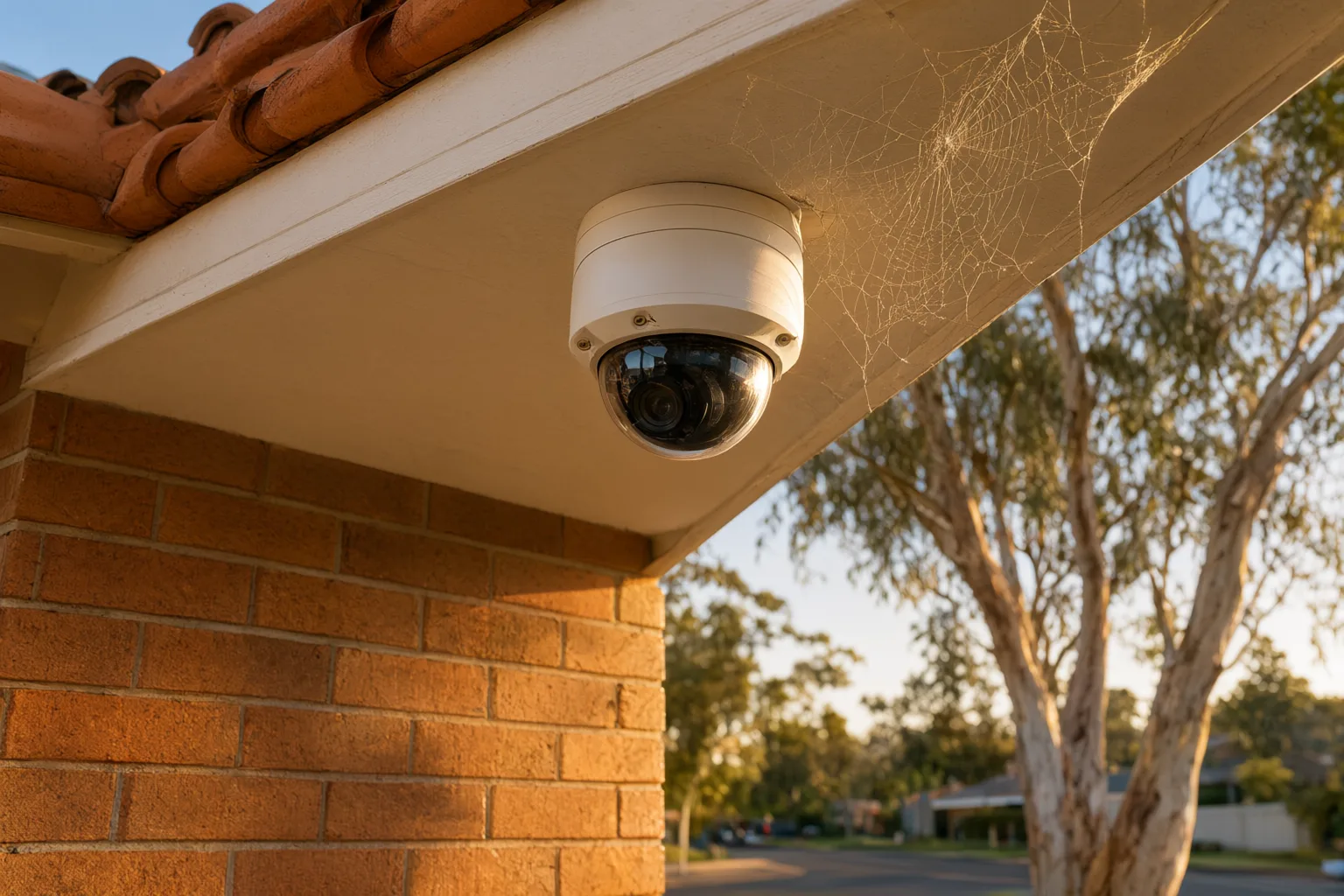
Where and how a camera is mounted influences pest problems more than any product you can buy. Cameras recessed deep under eaves or soffits are spider magnets — they're sheltered from rain and wind, giving webs a stable home. Professional installers position cameras with a slight downward tilt and minimal overhang instead, exposing webs to weather that naturally clears them.
Mounting beside [[uv-damage-to-cctv-cabling-why-cheap-cable-fails-in-the-australian-sun|outdoor]] lights is another common mistake. Lights attract the insects that attract spiders, creating a self-sustaining pest ecosystem right at your lens. Keeping cameras away from light sources breaks that chain.
Cable management matters too. Exposed cabling gives geckos a direct route to the housing. Running cables through walls or conduit and sealing entry points with silicone eliminates most access paths — it's part of our standard five-step [[installing-security-cameras-in-cyclone-prone-areas-what-you-need-to-know|installation]] process of consult, design, install, configure and handover.
Done correctly, professional positioning reduces pest issues by up to 80% before any deterrent is even applied.
Do You Need a Monthly Maintenance Routine for Pest-Free Footage?
Even a well-installed system needs occasional attention. On the first of each month, inspect every camera for web strands, gecko droppings on the housing and insect build-up around the IR LEDs. Wipe the lens with a microfibre cloth — never paper towel, which scratches coatings — and reapply silicone spray if more than two months have passed or heavy rain has occurred.
Every three months, test your alerts by walking through each camera's field of view. Confirm you receive notifications for people, not pests. If false alarms are creeping back up, adjust sensitivity or redraw motion zones.
Once a year, book a professional service. A technician will clean housings inside and out, check seals for insect entry points, update firmware with the latest AI detection improvements, and reposition cameras if growing vegetation has created new pest habitats. This annual check is included in our lifetime support promise.
Are Spiders and Geckos Seasonal Pests for Australian Security Cameras?
Pest pressure isn't constant throughout the year, and neither should your maintenance be. Spider activity peaks through autumn as temperatures cool and insects seek shelter, making March to May the busiest period for web removal. Geckos dominate summer nights, hunting insects around warm housings and IR glow.
A quick settings review twice a year — lowering IR intensity before summer and tightening motion zones before autumn — keeps alerts accurate without needing a callout. During handover, we show every customer how to make these seasonal adjustments themselves, so minor tweaks never become service calls.
Pest Deterrent Methods Compared
| Method | Effectiveness | Cost | Reapplication | Best For |
|---|---|---|---|---|
| Silicone spray | High | $8-15 | Every 2-3 months | All camera types, easy DIY |
| Physical web brush | Medium | $15-30 | Weekly during spider season | High cameras, regular maintenance |
| AcuSense AI cameras | Very High | $200-400 per camera | Never (set and forget) | New installations, high-false-alarm areas |
| Peppermint oil spray | Low-Medium | $5-10 | Weekly | Natural option, light spider activity |
| Professional repositioning | Very High | $150-300 | One-off | Cameras in problem locations |
| Foam pipe insulation | Medium-High | $10-20 | Replace annually | Gecko-prone areas, exposed cables |