
Key Takeaways
- A typical single-storey Australian home needs four to six security cameras covering front door, driveway, backyard and side access.
- Two-storey homes, corner blocks and properties with detached garages generally require six to eight cameras for full coverage.
- A professionally installed four-camera CCTV system in Australia typically costs $1,500 to $3,000 including NVR and remote viewing.
- Choose an 8-channel NVR even for a four-camera setup so you can expand later without replacing the recorder.
- Security installers in NSW must hold a Class 2C security licence under the Security Industry Act 1997 (NSW).
- Mount cameras at 2.5 to 3 metres high to balance facial detail capture against tamper resistance.
How Many Cameras Does the Average Australian Home Need?
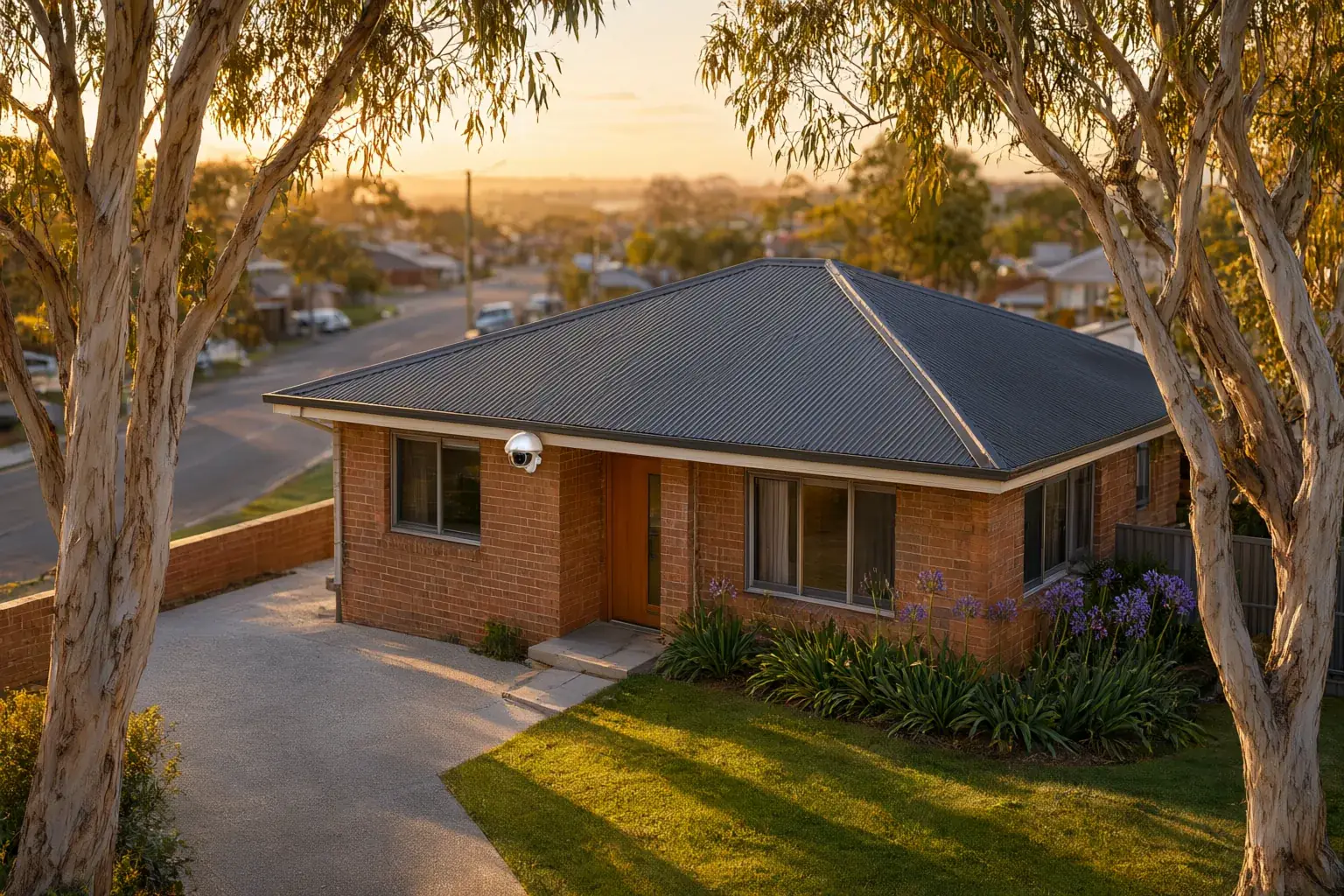
Most Australian homes need between four and eight security cameras to achieve genuine coverage of their property. A typical single-storey brick veneer home on a standard suburban block is well protected with four to six cameras, while larger two-storey homes, corner blocks and properties with detached structures generally need six to eight.
This figure is not arbitrary. It comes from years of designing residential systems across New South Wales and reflects the zones an intruder would realistically use to approach, enter and leave your home. The aim of a good CCTV design is never to film every square metre of your property — it is to eliminate the blind spots that matter.
Why Camera Count Depends on Your Block, Not Just Your House
Two homes with identical floor plans can need very different numbers of cameras. What drives the requirement is the block: its shape, its street frontages, its fencing, and how many separate ways someone can move around the property unseen.
A home on a rectangular block with solid side fencing has natural protection on two boundaries, so one camera can often watch both side access points from a single position. A corner block, by contrast, has two full street frontages and usually a side lane or path — effectively doubling the approaches an intruder can use. That single layout difference can add two or more cameras to the design.
Detached garages, pools, sheds, long driveways and rear-lane access all add coverage requirements that have nothing to do with the size of the house itself. This is why any honest answer about camera counts starts with a proper look at the property, not just the floor plan.
What Are the Four Zones Every Home Must Cover?
Whatever the size of your home, there are four zones that form the backbone of every residential CCTV design we install. Leave any one of them uncovered and you have a genuine gap in your security.
First, the front door. Roughly a third of break-ins happen through the front entrance, and a camera positioned here captures faces at close range — the footage police actually value. Second, the driveway. This zone records vehicle movements, number plates and anyone approaching the garage or front of the house.
Third, the backyard or rear alfresco area. Rear sliding doors and windows are the most common entry point for burglars precisely because they are hidden from the street. Fourth, side access paths. These are the routes intruders use to travel between the front and back of a property without being seen by neighbours or passers-by.
Cover these four zones properly and you already have a functional system. Every additional camera beyond this exists to close gaps specific to your block and layout.
Which Camera Requirements Apply to Each Home Type?
Camera needs scale with the complexity of the property. Here is how it typically breaks down for Australian homes.
A compact single-storey home on a fenced rectangular block can often be fully covered with four cameras: front door, driveway, backyard and one side access point. The second side is frequently within the field of view of the rear camera, so a fifth unit would simply duplicate coverage.
Two-storey homes introduce new challenges. Higher eaves change mounting angles and can reduce facial detail at ground level, and upper-level balconies or access points may warrant dedicated coverage. These homes usually sit in the five-to-seven camera range.
Corner blocks justify six to eight cameras because both street frontages need monitoring along with the standard zones. Homes with detached garages, pools or rear-lane access fall into the same bracket, since each structure adds another area worth watching.
Acreage and rural properties are a different exercise altogether. Long driveways, gates, sheds and livestock areas can push the count well past eight, and remote zones often call for solar-powered cameras connected via 4G rather than cabled runs back to the house.
Should Placement Beat Numbers When Sizing Your System?
We regularly attend properties where a DIY installer has mounted ten cameras and still left critical angles uncovered — while a professionally designed four-camera system next door leaves no blind spot at all. Raw camera count tells you very little about how well a system will perform when it counts.
[[what-is-the-ideal-mounting-height-for-home-security-cameras-in-australia|Mounting height]] is the classic mistake. A camera fixed too high under the eaves films the tops of heads instead of faces, rendering identification impossible. Lens selection matters just as much: a wide-angle lens stretched across too large an area sacrifices the detail needed to recognise a person, while the right lens for each position keeps usable detail where it matters.
Sunlight is another silent killer of footage quality. A camera facing the afternoon sun produces silhouettes rather than identifiable images for hours each day. Professional installers plan around solar paths, not just building lines.
Modern camera technology also means fewer units doing better work. Hikvision ColorVu cameras capture full-colour footage at night instead of grainy monochrome, while AcuSense AI filters out false triggers from pets, passing cars and swaying gum trees. Choosing the right hardware for each position is worth more than adding another camera.
Do You Need Indoor Cameras as Well?
For most Australian homeowners, outdoor perimeter coverage should come first — the goal is to deter and detect intruders before they get inside. That said, one or two indoor cameras earn their place in specific situations.
An indoor camera covering the main hallway or living area provides a valuable backup layer if someone does breach the perimeter, capturing identifying detail the outdoor cameras may miss. Families with young children, elderly parents living at home, or regular cleaners and tradies coming through often appreciate the accountability an internal camera provides.
Privacy considerations still apply indoors. Avoid bedrooms and bathrooms entirely, and make sure everyone living in or regularly visiting the home knows where cameras are located. Used sensibly, indoor cameras complement a perimeter system rather than replace it.
Can Your System Survive Harsh Australian Conditions?
Generic international guides ignore the realities of installing [[poe-vs-wi-fi-cameras-which-is-better-for-australian-homes|security cameras]] in Australia, and those realities affect both equipment choice and camera count.
Harsh summer heat degrades cheap camera housings and electronics far faster than milder climates, which is why we specify professional-grade hardware rated for local conditions. Coastal salt air corrodes inferior housings within a couple of seasons, so beachside installations need marine-grade equipment. Storm season puts cable runs and connections to the test, and NBN dropouts can disrupt cloud-dependent remote viewing if the system is not configured correctly.
Every one of these factors shapes the design. A system built for Australian conditions uses quality cabling, [[weatherproofing-your-cctv-system-for-harsh-australian-summers|weatherproof]] connections and recorders configured to keep working even when the internet does not — backed by lifetime support from licensed installers who understand the environment the equipment lives in.
Is Buying Spare NVR Channels Worth It for Future Expansion?
One of the smartest decisions you can make when sizing a system happens before a single camera is mounted: choosing a recorder with spare capacity.
We routinely recommend an 8-channel NVR for a four-camera installation. The extra channels cost little upfront but mean you can add cameras later — covering a new pool, a renovated alfresco area or a shed — without replacing the recorder or re-cabling the system.
This forward planning is a standard part of our design process. Life changes: families grow, properties are extended, and security priorities shift. A system designed with expansion in mind grows with your home instead of being scrapped and replaced.
Are Licensed Installers Worth It for Camera Design?
The difference between a system that genuinely protects your family and one that merely records blurry footage after the fact comes down to design. Our licensed NSW installers follow a proven five-step process on every residential job.
It starts with a consultation about your specific concerns — break-in risk, package theft, pool safety, vehicle security. From there we design a system tailored to your property's layout, specifying professional-grade Hikvision, Dahua or Uniview hardware suited to each position. Installation follows, then configuration of remote viewing on your phone, and finally a full walkthrough at handover so you know exactly how to use everything.
Because the design starts with your property rather than a fixed camera package, you end up with coverage where it matters and no money wasted on cameras duplicating the same view. That is how four to eight well-placed cameras protect a home better than a dozen badly placed ones.
Recommended Camera Count by Australian Home Type
| Home Type | Typical Camera Count | Key Coverage Areas |
|---|---|---|
| Single-storey, standard block | 4–6 | Front door, driveway, backyard, side access |
| Two-storey home | 5–7 | All standard zones plus upper-level or balcony coverage |
| Corner block | 6–8 | Two street frontages, driveway, backyard, both sides |
| Home with detached garage or pool | 6–8 | Standard zones plus garage, pool area, rear lane |
| Acreage or rural property | 8+ | Gates, long driveway, sheds, house perimeter, livestock areas |