
Key Takeaways
- Heat-rated cameras for Australian bushfire zones should be specified at a minimum 65°C operating rating in metal housings, not plastic.
- Fire-rated cabling to AS/NZS 3013 run inside galvanised steel conduit is the backbone of any bushfire CCTV installation in Australia.
- AS 3959 does not regulate CCTV directly, but BAL-40 and BAL-FZ properties require sealed penetrations and non-combustible mounts.
- NVRs must sit in a cool ventilated internal room with UPS backup — never a roof space, garage or unventilated cupboard.
- ColorVu and Starlight low-light sensors keep footage usable when smoke haze strips ambient light during a fire event.
- Book a pre-fire-season inspection in early spring; Aussie CCTV Cams services bushfire-ready CCTV across Newcastle NSW and Adelaide SA.
What Makes CCTV Suitable for Bushfire-Prone Properties?
A bushfire-ready CCTV system in Australia needs four things: cameras rated to at least 65°C in metal housings, external cabling run inside galvanised steel conduit using LSZH or AS/NZS 3013 fire-rated cable, sealed metal junction boxes with fire-rated penetration sealing, and an NVR installed in a cool internal space backed by a UPS. Get these right and your system keeps recording through heatwaves, smoke haze and ember attack.
This guide walks through each of those components in detail, explains how your property's Bushfire Attack Level (BAL) rating should shape the installation, and provides a pre-fire-season maintenance checklist so your cameras are ready before summer arrives.
Why Ordinary CCTV Systems Fail in Australian Summer Conditions
Most consumer-grade security [[weatherproofing-your-cctv-system-for-harsh-australian-summers|cameras]] are specified to operate between -10°C and 55°C. That sounds generous until you consider what happens on a western-facing wall in Penrith or Wagga Wagga during a 42-degree January afternoon. A dark-coloured housing under a Colorbond eave absorbs radiant heat all day, and the internal temperature of the camera can easily exceed the manufacturer's ceiling. When that happens, image sensors degrade, infrared LEDs dim or cut out entirely, and plastic housings begin to warp, discolour or crack.
The cabling is actually the more fragile part of the system. Standard PVC-jacketed Ethernet cable starts to soften at around 70°C, and under ember attack or direct flame contact it can melt, short circuit or ignite. Because every camera depends on its cable run, one compromised section takes the entire channel offline — often at precisely the moment footage matters most, such as during a fire event or the opportunistic break-ins that can follow an evacuation.
The lesson is that bushfire-ready CCTV is not about buying a more expensive camera. It is about matching every component in the chain — housing, cable, conduit, junction boxes, recorder and power supply — to the real conditions of an Australian fire-prone site.
Which Heat-Rated Cameras Suit Extreme Australian Heat?
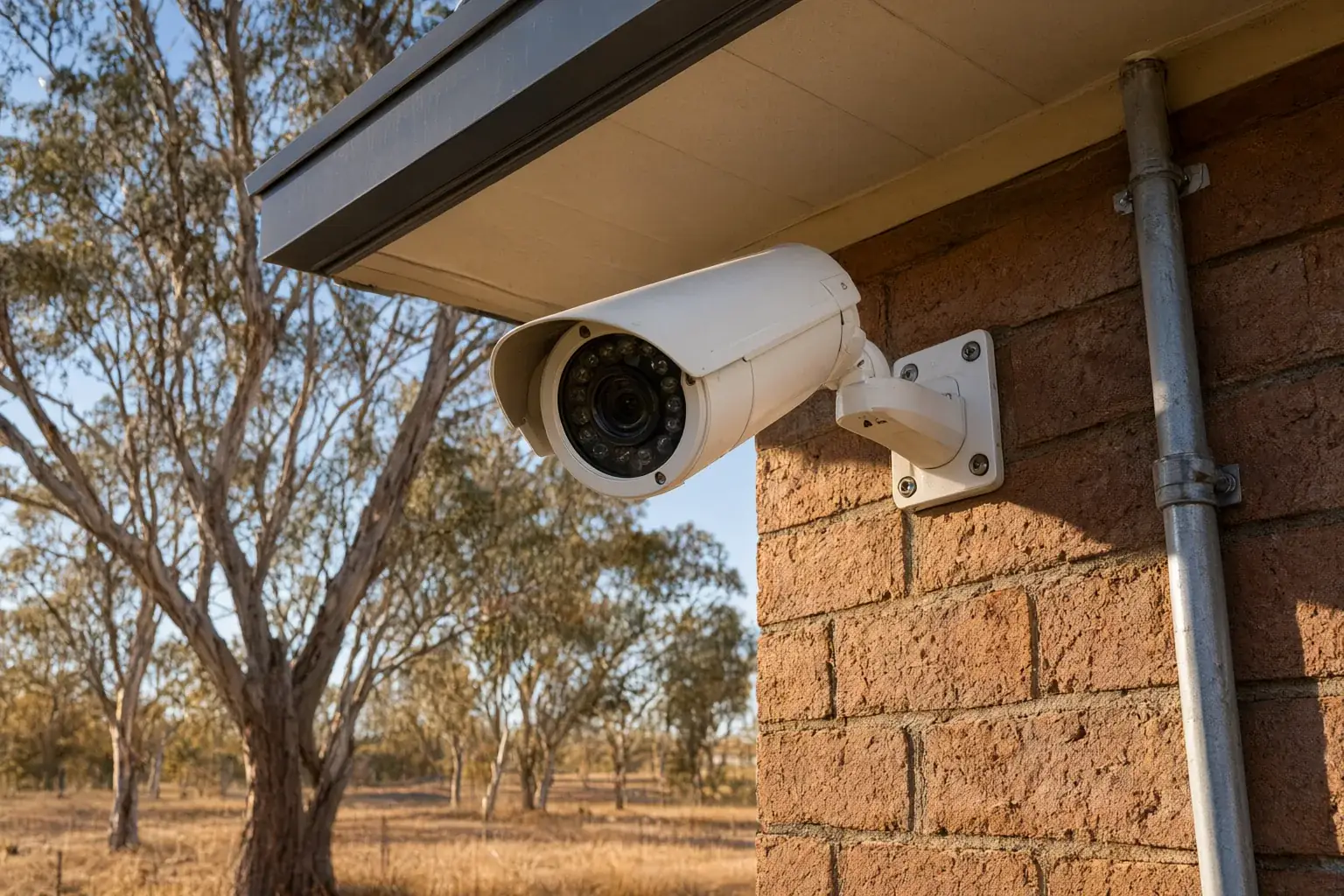
Start with the operating temperature range on the datasheet. Professional-grade ranges from Hikvision, Dahua, Uniview and Axis include models rated to 60°C, 65°C or even 70°C. For properties in bushfire-prone areas of NSW, we recommend a minimum rating of 65°C, housed in metal rather than polycarbonate.
Metal housings dissipate heat far more effectively than plastic and stand up much better to ember contact. Pair this with an ingress protection rating of IP66 or IP67, which keeps out the fine ash and dust that coats lenses and blocks infrared illumination during and after a fire event.
Two simple additions make a measurable difference. A sun shield or thermal barrier mounted above the camera reduces direct solar load and can lower internal housing temperature by 10°C or more on a 40-degree day. And colour choice matters more than most people expect: white or light-grey housings absorb significantly less radiant heat than black. On a sun-baked western wall, that difference can determine whether the camera keeps recording through the afternoon or shuts down. All installations comply with Australia's Privacy Act 1988 and applicable state surveillance licensing requirements.
How Fire-Rated Cabling and Steel Conduit Protect a Bushfire CCTV System
Cabling is where most bushfire-area installations succeed or fail. Standard Cat6 with a PVC jacket has no place on an exposed external run in a fire-prone zone. At minimum, specify LSZH (Low Smoke Zero Halogen) jacketed cable, which maintains integrity at higher temperatures than PVC and does not emit toxic halogen fumes if it does burn.
For critical runs — a camera on an outbuilding, a boundary fence line or a gate pillar — step up to fire-rated cable that meets AS/NZS 3013, the Australian standard for circuit integrity under fire conditions. That cable should then be protected mechanically and thermally by running it through galvanised steel conduit or heavy-duty metal trunking for every external section. Steel conduit shields the cable from radiant heat, direct ember contact and physical [[uv-damage-to-cctv-cabling-why-cheap-cable-fails-in-the-australian-sun|damage]] from falling branches during high winds.
Junction boxes and connection points are the weak spots installers most often overlook. Plastic boxes melt or ignite under ember attack, so use metal enclosures with sealed cable glands, positioned in sheltered locations wherever possible. Finally, seal every cable penetration through an external wall with fire-rated silicone so embers cannot enter the roof cavity or wall space — an ember entering a wall cavity can destroy a building long after the fire front has passed.
Can NVR Placement and Power Protection Survive High-Heat Environments?
The Network Video Recorder is the brain of the system, and it is just as vulnerable to heat as any camera. NVRs generate their own internal heat and rely on small fans for cooling. In a hot garage, shed or unventilated cupboard, an NVR can overheat and shut down well before the cameras outside reach their limits.
Install the recorder in the coolest, best-ventilated internal space available — ideally inside the main dwelling rather than an outbuilding. A comms rack or linen cupboard with passive airflow usually works well. Never mount an NVR in a roof space, where temperatures routinely exceed 70°C in an Australian summer.
Power protection is equally important. Bushfire weather brings surges, brownouts and full outages, and voltage spikes when supply is restored can fry equipment that survived the blackout. A quality UPS keeps the NVR and PoE switch running through short interruptions and smooths out those spikes. On rural properties where extended outages are common, pair the system with a generator changeover switch or solar battery backup so recording continues uninterrupted.
Are Smoke and Haze Camera Technologies Worth the Investment?
Beyond raw temperature ratings, certain technologies cope better with the harsh lighting and air quality of a bushfire zone. Hikvision's ColorVu range captures full-colour footage in very low light, which is genuinely useful when smoke haze strips ambient light during a fire event. Dahua's Starlight sensors deliver comparable low-light performance with strong detail retention.
False alerts are another practical problem. Wind-blown debris, ash and moving vegetation trigger constant motion-detection alarms on standard cameras. Hikvision's AcuSense technology uses onboard AI to distinguish humans and vehicles from everything else, filtering out the noise so you only receive notifications worth acting on.
For perimeter monitoring on larger rural holdings, thermal cameras detect heat signatures through smoke and total darkness. They represent a higher investment, but a single thermal unit covering a boundary fence line can provide early warning of an approaching fire front or an intruder when visibility is near zero — something no optical camera can match.
Do BAL Ratings Change CCTV Installation Standards in Bushfire Zones?
If your property falls within a designated Bushfire Attack Level (BAL) zone, your CCTV [[installing-security-cameras-in-cyclone-prone-areas-what-you-need-to-know|installation]] should align with the construction principles behind your rating. AS 3959 — the Australian Standard for construction in bushfire-prone areas — does not specifically regulate security systems, but its core principles apply directly: ember protection, non-combustible materials and sealed penetrations.
In BAL-29 and BAL-40 zones, treat every external cable run and camera mount as a potential ember entry point. Seal all conduit joints, use fire-rated sealant at every wall penetration, and mount cameras on non-combustible surfaces wherever possible. In BAL-FZ (Flame Zone), minimise exposed external cabling altogether — run cable underground in heavy-wall conduit, or use point-to-point wireless links between buildings to eliminate exposed runs completely.
This is where installer expertise matters. A licensed installer who understands both security systems and bushfire construction requirements will assess your BAL rating, vegetation proximity, building materials and access points before recommending a single camera position.
Should You Run a Pre-Fire-Season Maintenance Checklist?
Even a properly specified system needs seasonal attention. Before each fire season, inspect every camera housing for cracks, warping or degraded seals, confirm conduit joints remain tight, and check that no cable has become exposed. Clean lenses and infrared windows — a film of dust or ash can dramatically reduce night-time image quality.
Test the UPS battery, confirm the NVR is recording, and verify remote viewing over NBN or 4G is stable. Fire season is the worst possible time to discover your remote access silently failed three months earlier.
Finally, trim vegetation back from camera sightlines and cable runs. Overhanging branches drop embers onto conduit and can physically damage cameras in high winds. Thirty minutes of inspection in early spring can be the difference between a system that records all summer and one that fails when you need it most.
Is Bushfire-Area CCTV Installation Different Across NSW and SA?
A compliant, heat-tolerant installation comes down to correct specification and disciplined workmanship: 65°C+ metal housings with sun shields, LSZH or AS/NZS 3013 cable in galvanised steel conduit, sealed metal junction boxes, fire-rated penetration sealing, a cool internal NVR location with UPS backup, and mounting practices matched to your BAL rating.
Aussie CCTV Cams designs systems around exactly this process. Our five-step installation begins with a site assessment covering your BAL rating, vegetation proximity, building materials and access points, followed by component selection, professional cabling, configuration and a pre-season handover check. If your property sits in a bushfire-prone area, request a free quote from our licensed NSW installers and get a system built for the conditions it will actually face.
Standard vs Bushfire-Rated CCTV Component Comparison
| Component | Standard Outdoor | Bushfire-Rated |
|---|---|---|
| Camera housing | Polycarbonate, rated to 55°C | Metal (aluminium), rated to 65–70°C+ |
| Cable jacket | PVC (softens ~70°C) | LSZH or fire-rated AS/NZS 3013 |
| External cable protection | Direct burial or surface clip | Galvanised steel conduit or metal trunking |
| Junction boxes | Plastic with standard glands | Metal with sealed cable glands |
| Wall penetrations | Standard silicone | Fire-rated intumescent sealant |
| NVR location | Garage or shed | Ventilated internal room with UPS |
| Ingress protection | IP65 | IP66 or IP67 (ash and dust sealed) |