
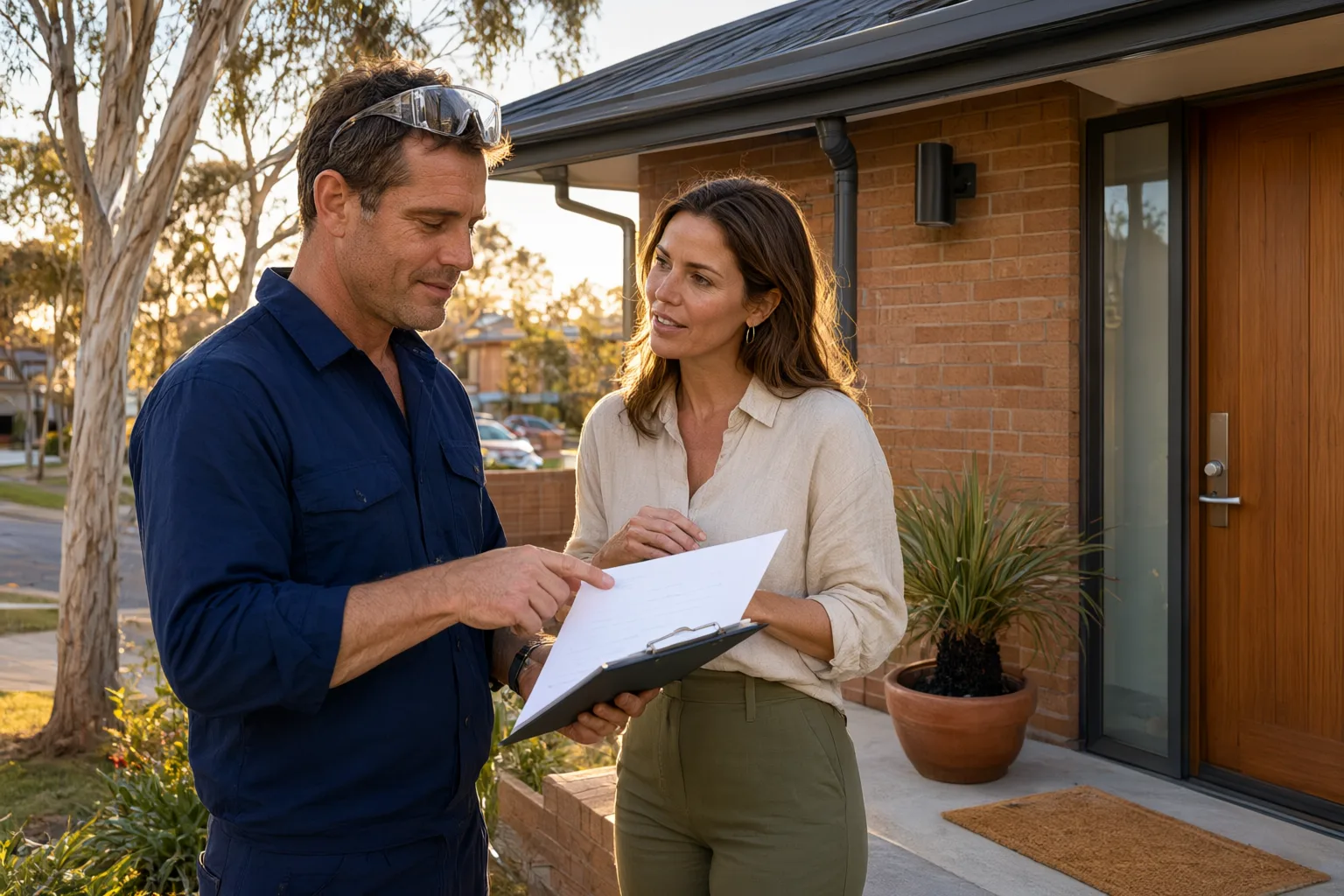
Key Takeaways
- Always verify your installer holds a valid security licence under NSW's Security Industry Act 1997 or SA's equivalent.
- Demand an itemised quote covering cameras, NVR, cabling, labour, and configuration with no hidden extras.
- Expect at least three years' equipment warranty and 12 months on workmanship.
- Ask about brands suited to Australian heat, coastal salt air, and storm conditions in Newcastle and Adelaide.
- Check references from similar recent installations before signing.
What Should You Ask a CCTV Installer Before Signing a Quote?
The short answer is that you should ask seven key questions before accepting any CCTV quote in Australia: licence verification, brand suitability, itemised costs, warranty terms, installation process, after-sales support, and references. A professional CCTV installation typically costs between $1,500 and $5,000 AUD depending on property size, so asking these questions upfront ensures you get genuine value rather than a cheap system that fails when you need it most.
This guide walks through each question in detail, explaining why it matters under Australian laws and standards, what a good answer looks like, and the red flags that should send an installer straight off your shortlist. Whether you are securing a family home in Sydney or a warehouse in Melbourne, these questions apply equally.
Is Your Installer Licensed Under the Security Industry Act 1997?
This should be your first question, and the answer should be immediate and verifiable. In New South Wales, anyone installing security equipment must hold a current security licence issued under the Security Industry Act 1997. Ask for their licence number and verify it through the NSW Police Force Security Licensing and Enforcement Directorate before any money changes hands.
Insurance matters just as much as licensing. Your installer should carry public liability insurance with minimum $10 million coverage as well as professional indemnity insurance. If a worker damages your roof while running cables, or a faulty [[the-real-cost-of-a-4-camera-poe-system-installed-in-australia|installation]] contributes to a break-in, you need confidence that both you and the installer are protected. Request certificates of currency for both policies before work begins.
Any installer who hesitates, makes excuses, or claims licensing 'isn't necessary' for CCTV should be crossed off your list immediately. Reputable operators provide licence details and insurance certificates upfront because trust starts with transparency.
Are the Quoted Camera Brands Suitable for Australian Conditions?
Not all CCTV cameras are created equal, and the brand matters enormously for reliability, image quality, and longevity. [[diy-vs-professional-cctv-installation-which-option-saves-you-more-in-the-long-ru|Professional]] installers work with commercial-grade manufacturers such as Hikvision, Dahua, Uniview, and Axis — brands engineered for Australian conditions and backed by proper manufacturer warranties.
Be specific in your questioning. Do not accept vague answers like 'high-definition cameras' or 'professional equipment.' Ask for exact model numbers, then research them independently. A Hikvision ColorVu camera with AcuSense technology performs vastly differently from a generic no-name camera bought online, even if both claim to be '4K'.
Consumer DIY kits from hardware stores might seem tempting on price, but they are designed for different use cases. Professional-grade cameras offer superior low-light performance — look for Starlight or ColorVu technology — weather resistance ratings of IP66 or IP67, and firmware that receives regular security updates. Your installer should explain why they have selected specific models for your property's unique requirements rather than simply pushing whatever stock they carry.
Which Costs Are Included in Your CCTV Quote — and Which Cost Extra?
A professional quote should itemise everything: cameras, NVR or DVR recorder, hard drives, cables, mounting hardware, labour, and configuration. If you receive a single lump sum with no breakdown, ask for itemisation. This simple step protects you from surprise charges later and makes comparing quotes between installers far easier.
Clarify these potential extras before signing: additional cable runs beyond a certain length, difficult roof access requiring special equipment, trenching for underground cables, electrical work if new power points are needed, and integration with existing alarm systems or access control. Each of these can add hundreds of dollars if not flagged upfront.
Ask specifically about recording storage capacity. A proper quote specifies hard drive size — typically 2TB to 8TB depending on camera count and retention requirements — and explains how many days of footage you will retain before older recordings are overwritten. Also confirm whether remote viewing setup on your smartphone is included in the price or billed as an extra.
How Long Is the Warranty on Equipment and Workmanship?
Equipment warranties vary significantly across the market. Professional brands typically offer three-year manufacturer warranties on cameras and recorders, while cheaper equipment might only carry 12 months. Your installer should clearly state what is covered and handle warranty claims on your behalf rather than leaving you to deal with overseas manufacturers.
Workmanship warranty is equally important. This covers the installation itself — cable connections, weatherproofing, mounting stability, and system configuration. The industry standard is 12 months minimum, but confident installers offer longer terms because they stand behind their installation quality.
Get all warranty terms in writing. Understand what is excluded (typically physical damage, lightning strikes, or unauthorised modifications) and what the claim process involves. Choosing a local installer with a solid reputation matters here: they will still be around in three years when you need warranty service, unlike an online seller who has vanished.
Should Your Installer Follow a Structured Installation Process?
Professional installers follow a structured process rather than turning up with a drill and improvising. A typical five-step approach includes initial consultation, custom system design, professional installation, complete configuration, and thorough handover with training. Ask your installer to walk you through their methodology so you know what to expect at every stage.
Discuss cable management specifically. Will cables be concealed in wall cavities and roof spaces, or surface-mounted in conduit? How will external penetrations be weatherproofed? Sloppy cable work is the hallmark of amateur installations and leads to system failures, water ingress, and pest damage down the track.
Timing matters too. How long will installation take? Will they need access to your roof space? Do they clean up thoroughly afterwards? For commercial installations, ask whether they can work outside business hours to minimise disruption to your operations. These practical questions reveal professionalism and real-world experience faster than any sales pitch.
Can You Get Training and Ongoing Support After Handover?
The best CCTV system is useless if you do not know how to operate it. Your installer should provide comprehensive handover training covering live viewing, playback, footage export, and basic troubleshooting. This should happen on installation day, not via a manual emailed weeks later.
Ask about ongoing support arrangements. What happens if your system goes offline at 9pm on a Sunday? Is phone support available? Do they offer remote diagnostics? What is the typical response time for service calls? Lifetime support should mean exactly that — help whenever you need it, not just during business hours for the first month.
Remote viewing configuration deserves special attention. Your installer should set up smartphone access, test it thoroughly on your actual devices, and show you how to use it before they leave site. They should also explain cybersecurity basics such as changing default passwords and keeping firmware updated — critical steps that prevent your cameras becoming a liability rather than an asset.
Do They Have References from Recent Similar Installations?
Past performance predicts future results. Ask for references from installations completed within the last six months that match your property type — residential homes if you are a homeowner, warehouses if you are securing industrial premises, retail shops if you are protecting a storefront.
Then actually contact those references. Ask whether the installer arrived on time, stayed within budget, cleaned up properly, and provided adequate training. Most importantly, ask whether they would hire them again. Online reviews help, but direct conversations reveal details that star ratings miss.
A confident installer will happily provide references because they know their work speaks for itself. Hesitation, excuses, or claims that references are 'confidential' suggest problems you do not want to discover after signing a contract.
Why Run a Final Checklist Before Signing Your CCTV Quote?
Before putting pen to paper, run through this quick checklist: verified security licence under the Security Industry Act 1997, current certificates of currency for public liability ($10 million minimum) and professional indemnity insurance, itemised quote listing exact camera models and hard drive capacity, written warranty covering both equipment and workmanship, clear [[from-quote-to-commissioning-what-a-professional-cctv-installation-timeline-looks|installation timeline]] and cable management plan, confirmed training and support arrangements, and contacted references from comparable jobs.
Taking an hour to ask these questions and verify answers will save you years of frustration with a poorly installed system. Quality CCTV is an investment in your safety and peace of mind — make sure the person installing it has earned your trust before you sign anything.
Comparing CCTV quote options for Australian properties
| Option | Typical Cost (AUD) | Best Suited To |
|---|---|---|
| Consumer-grade 4-camera kit | $1,200 – $1,800 | Small homes, low-risk areas |
| Professional 6-camera wired system | $2,500 – $4,500 | Family homes, Newcastle coastal properties |
| Commercial AI-enabled 8+ camera system | $5,000 – $10,000+ | Retail shops, warehouses, offices |
| Rural/farm solar 4G camera setup | $3,000 – $7,000 | Farms and properties without fixed internet |