
Key Takeaways
- The Workplace Surveillance Act 2005 requires 14 days' written notice before workplace cameras go live in NSW
- Cameras must never film bathrooms, change rooms or other private spaces — penalties apply
- A short written surveillance policy covering purpose, retention and access keeps you compliant
- Security monitoring of premises differs from tracking individual employees; keep cameras pointed at spaces, not people
- Professional installation in Newcastle or Adelaide typically costs $1,500–$5,000+ depending on camera count and cabling
What Are Workplace Cameras Ethical and Legal Requirements in NSW?
The short answer is that workplace CCTV ethics in NSW rest on three pillars: visibility, disclosure and proportionality. Under the Workplace Surveillance Act 2005, employers must notify staff in writing at least 14 days before surveillance begins, display clear signage at every entrance, and never film bathrooms, change rooms or lactation rooms. Get those basics right and your Newcastle or Adelaide business can protect property, staff and stock without breaching privacy laws or employee trust.
That distinction sounds simple, but in practice many business owners drift across the line without realising it. A camera installed to deter shoplifting gradually becomes a tool for checking how long staff take their breaks. A system bought for after-hours security ends up being reviewed to settle disputes between colleagues. Each step feels minor; together they erode trust, invite legal exposure and can turn a valuable security investment into a liability.
This guide walks through exactly where that line sits in NSW: what the Workplace Surveillance Act 2005 requires, where cameras belong (and where they absolutely don't), how to build a transparent policy, and how to manage footage so your system protects your business without compromising your team.
Why Does Lawful Employee Monitoring Matter More Than Ever?
CCTV remains one of the most cost-effective protections available to Australian businesses. It deters theft, supports work health and safety obligations, provides evidence for insurance claims and police investigations, and gives owners peace of mind when they can't be on site. For retail stores, warehouses and offices alike, a well-designed camera system pays for itself quickly.
But the risks of getting it wrong are equally real. Businesses that monitor employees improperly face unfair dismissal claims built on disputed evidence, workers compensation complications, morale problems and resignations, and in serious cases prosecution under NSW surveillance legislation. A single poorly placed camera in a change room isn't just an HR problem — it's a criminal matter.
There's also a cultural dimension. Staff who feel watched as individuals disengage; staff who understand cameras exist to keep everyone safe tend to support them. The difference comes down to transparency and intent, which is why ethics and good security practice point in exactly the same direction.
How Does the Workplace Surveillance Act 2005 Affect Employers?
In New South Wales, the primary legislation governing workplace cameras is the [[workplace-surveillance-laws-in-australia-what-employers-must-know|Workplace Surveillance]] Act 2005. The Act draws a hard line between two types of monitoring.
Overt surveillance is camera monitoring that is visible and pre-announced. Under the Act, employers may conduct overt camera surveillance provided employees have been notified in advance — typically through written notice delivered at least 14 days before monitoring begins, or at the point of engagement for new staff. The monitoring must serve a legitimate business purpose.
Covert surveillance — hidden cameras or monitoring employees don't know about — is prohibited unless the employer first obtains a covert surveillance authority from a magistrate. These authorities are generally granted only to investigate suspected unlawful activity such as theft or fraud, and even then the process is tightly controlled and time-limited. In short: you cannot simply decide to install a hidden camera because you suspect someone of slacking off.
Larger employers should also consider the Privacy Act 1988 (Cth), which applies to businesses with annual turnover above $3 million, along with general duties under work health and safety laws. The common thread across all of this legislation is reasonableness: surveillance must be proportionate to a genuine need.
Should You Avoid Certain Camera Placements in NSW Workplaces?
Placement is where ethics and law collide most directly. The governing principle is simple: never install a camera anywhere employees have a reasonable expectation of privacy. Bathrooms, toilets, change rooms, showers and lactation rooms are absolute no-go zones — filming these areas is a criminal offence in NSW, not merely bad practice.
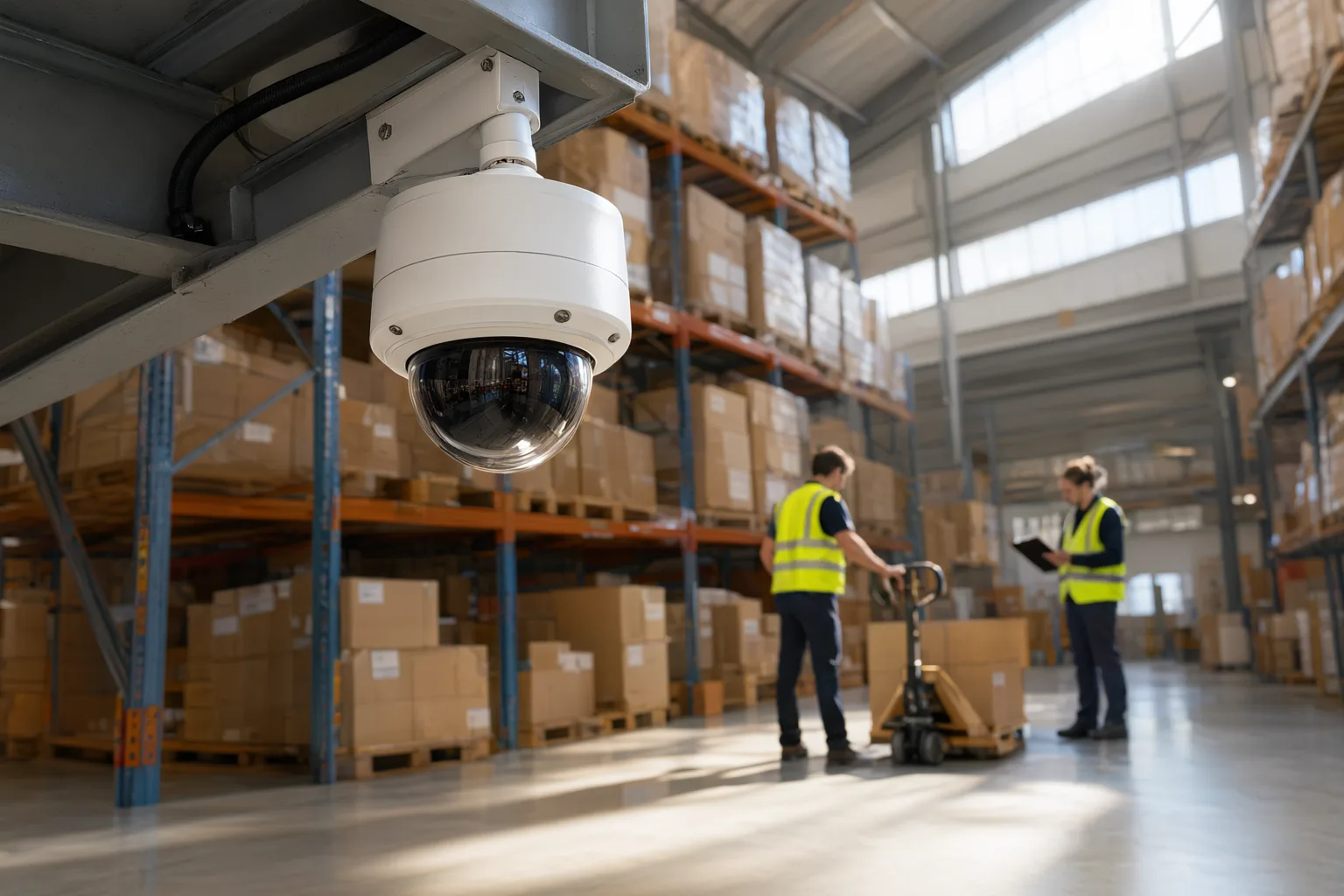
On the other side of the ledger, there's broad agreement about where cameras add genuine value: entry and exit points, cash registers and point-of-sale areas, stockrooms, warehouse aisles, loading docks, car parks, reception areas and server rooms. In each of these locations, the camera protects assets and people rather than scrutinising individuals.
Break rooms and staff kitchens occupy a grey zone. The law doesn't prohibit cameras there outright, but they can feel intrusive and corrosive to culture. If you have a documented, specific concern — repeated theft from a shared fridge, for example, or unauthorised after-hours access — you may be justified in monitoring, but covering the doorway rather than the room's interior usually achieves the same outcome with far less intrusion. Whatever you decide, tell staff why the camera exists.
Is Security Monitoring Different From Employee Tracking?
At the heart of monitoring ethics lies one question: is the camera watching a space or a person? Security monitoring uses cameras to protect premises, stock and people. Employee tracking uses them to measure individual productivity, movements or behaviour. The former is widely accepted and legally defensible; the latter is where businesses get into trouble.
Modern camera platforms make this line easy to blur accidentally. Intelligent analytics such as Hikvision's AcuSense can distinguish humans from vehicles, trigger perimeter alerts and count foot traffic — genuinely useful security features. But the same analytics could theoretically be used to time how long an employee spends away from their desk, which transforms a security tool into personal surveillance.
A practical self-test: would you be comfortable explaining this camera's location and purpose directly to the employee it most affects? If the honest answer is no, rethink the placement. Cameras pointed at individual workstations, for instance, almost always constitute employee tracking rather than security, and carry high legal and cultural risk.
Do All Businesses Need a Written Workplace Surveillance Policy?
Every business operating [[do-you-need-to-tell-staff-theyre-on-camera-australian-notice-requirements-explai|workplace]] cameras should maintain a written surveillance policy. It doesn't need to be a dense legal document — one or two pages of plain English beats a twenty-page policy nobody reads.
At minimum, your policy should cover six things: that cameras are in use; where they're located; why each area is monitored; who is authorised to view footage; how long recordings are kept; and how employees can raise questions or complaints. Distribute the policy to all current staff, embed it in onboarding for new hires, and post signage at monitored locations. Signage doubles as a transparency measure and a deterrent to would-be offenders.
Transparency isn't only a legal safeguard — it strengthens security. Visible, well-explained cameras deter theft more effectively than secret ones, and staff who understand the purpose rarely object. Covert monitoring, even when technically authorised, almost always damages trust permanently once discovered.
Can Footage Access and Retention Breach Privacy Laws?
Ethical monitoring extends well beyond where cameras hang. How footage is stored, accessed and disposed of matters just as much.
Access should be tightly restricted to a small number of named individuals — typically the owner, a senior manager or a designated security officer. Every viewing should be logged, and footage must never be shared casually, circulated for entertainment or sent outside the business without a lawful reason such as a police request or insurance claim.
Retention should be defined and automated. Most NSW businesses keep footage for 30 to 90 days before it's overwritten; holding recordings indefinitely creates unnecessary privacy risk and potential liability. Modern NVR systems handle this automatically, and retention schedules should be configured during installation rather than left to chance.
When footage is needed for a disciplinary process, investigation or claim, extract it through a formal procedure with documentation of who handled it and when. A clear chain of custody protects both the business and the employee, and ensures the recording stands up if challenged later.
Which Hardware Supports Compliant Monitoring?
Quality hardware makes ethical monitoring easier to achieve. Professional-grade cameras with strong low-light performance — such as ColorVu technology for full-colour night identification or Starlight sensors for dim environments — capture evidentiary-quality footage from fewer, better-placed cameras. That means you can cover entrances, cash areas and stockrooms thoroughly without blanketing the entire premises, including sensitive spaces.
Fewer, smarter cameras also reduce the temptation to over-monitor. A single well-positioned camera with reliable analytics delivers more usable evidence than half a dozen poorly placed ones, and keeps your footprint proportionate to your actual risks.
Are Professional Installers Necessary for Compliant Workplace CCTV?
The businesses that get workplace surveillance right treat cameras as a security tool first and never as a management tool. They pair quality hardware with thoughtful placement, clear policies and genuine respect for their team — and they usually get professional help to do it.
At Aussie CCTV Cams, our five-step installation process starts with a consultation covering not just your security needs but your obligations as an employer. We design systems that deliver comprehensive coverage of your premises while respecting the boundaries that keep your workplace compliant and positive. Every installation is completed by our fully licensed and insured NSW team, and every system is backed by lifetime support.
If you're planning workplace cameras — or you're unsure whether an existing system is set up correctly — contact us for a free, no-obligation quote. We'll help you protect your business the right way.
Coastal conditions add another layer of planning for [[/newcastle|Newcastle]] businesses. Salt-laden air corrodes cheap housings within a couple of summers, so marine-grade enclosures and stainless mounts are worth the premium on any building near the harbour or Stockton coastline. In [[/adelaide|Adelaide]], the priority flips: summer heat regularly pushes roofline temperatures past 60°C, so cameras rated for high-temperature operation and shaded eaves mounting prevent image degradation and premature failure. Either way, cameras belong on eaves, fascia lines and brick walls overlooking entries, loading docks and car parks — never angled into neighbouring properties, which can raise separate privacy complaints under Australian consumer and privacy frameworks.
Retail shops, warehouses, farms and commercial offices each face different risk profiles, but the ethical framework stays constant. A warehouse operator in Hexham might prioritise dock doors and racking aisles; a Rundle Mall retailer focuses on registers and entrances; a Barossa Valley farmyard operation watches fuel stores and machinery sheds. What none of them should do is repurpose security footage to micromanage individual staff performance — that shift from protecting a place to surveilling a person is where tribunals and the Fair Work Ombudsman start taking interest, and where workplace relationships quietly break down.
Budget realistically for [[cash-handling-areas-camera-rules-every-australian-business-should-follow|compliance]], not just hardware. A four-camera commercial system professionally installed in Newcastle or Adelaide typically lands between $1,500 and $3,500, while larger warehouses needing eight to sixteen cameras, network video recorders and remote monitoring sit in the $5,000–$12,000 range. Factor in signage, policy drafting time and annual maintenance. Getting a quote from a licensed local installer who understands both the Workplace Surveillance Act 2005 and South Australia's equivalent surveillance laws is the fastest way to ensure your system protects your business without exposing it to penalties or Fair Work claims.
Comparing workplace monitoring options for Australian businesses
| Monitoring Type | Legal Requirements | Best Suited To |
|---|---|---|
| Visible premise CCTV | 14 days' written notice + entry signage (NSW Act 2005) | Retail shops, warehouses, offices |
| Covert surveillance | Rarely lawful; needs warrant or exceptional justification | Suspected serious misconduct only, with legal advice |
| Computer/email monitoring | Separate notice under NSW Act; APPs apply nationally | Office-based commercial teams |
| Vehicle/GPS tracking | Tracking-device notice requirements; union consultation in some cases | Fleet, delivery and farm operations |