
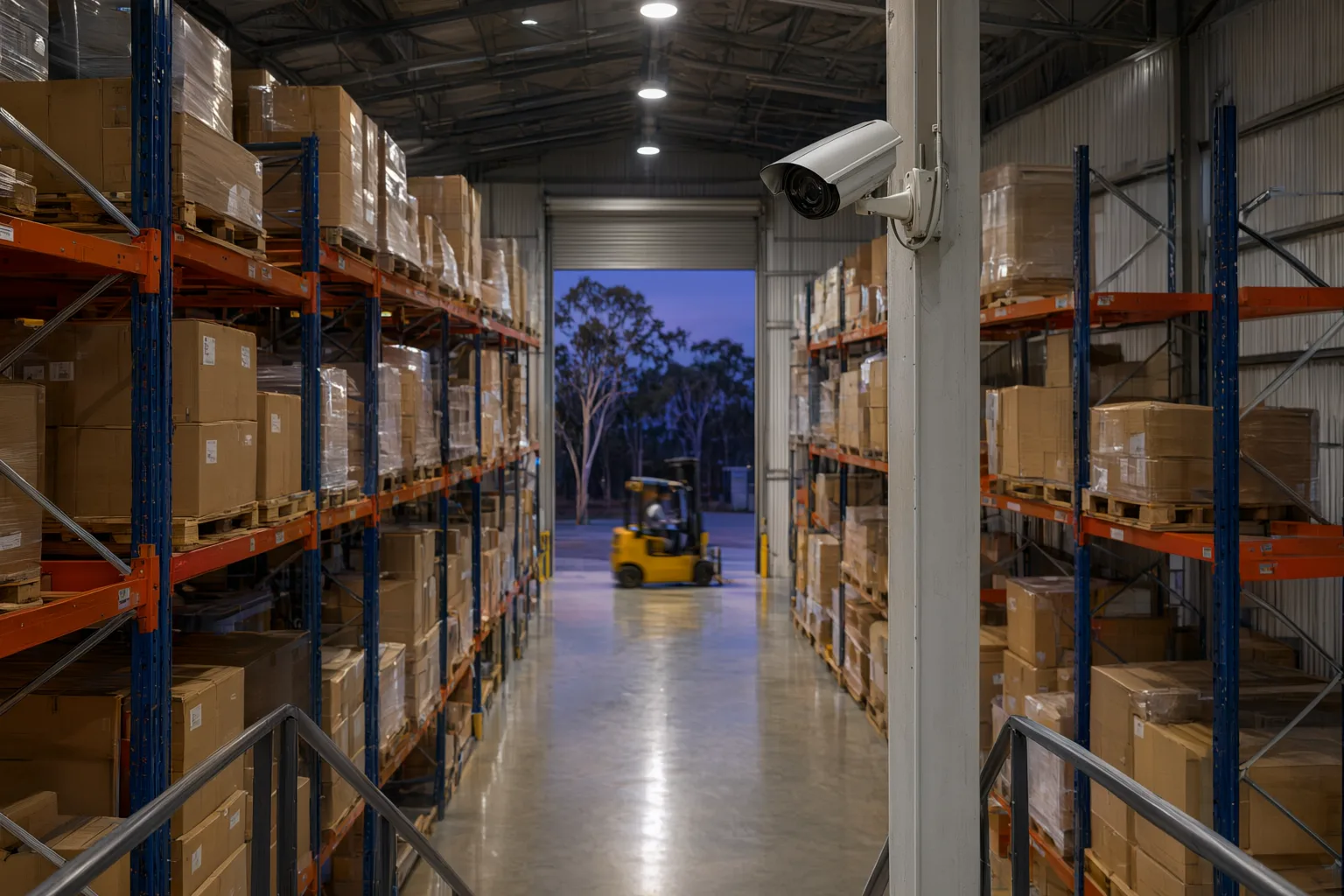
Key Takeaways
- Warehouse CCTV reduces theft by up to 60% and provides critical evidence for insurance claims
- IP cameras with PoE simplify cabling and deliver superior image quality over analogue systems
- Strategic camera placement at entry points, loading docks, and high-value storage areas is essential
- AI-powered analytics like AcuSense reduce false alarms by distinguishing humans from animals or vehicles
- Professional installation ensures compliance with Australian privacy laws and optimal system performance
- Remote viewing lets managers monitor multiple sites from anywhere via smartphone or desktop
Why Australian Warehouses Need Professional Surveillance
Warehouses face unique security challenges: vast floor spaces, high-value inventory, multiple entry points, and constant vehicle movement. A single incident of theft or vandalism can cost tens of thousands of dollars, not to mention the operational disruption and insurance headaches that follow.
Professional warehouse surveillance systems do more than record crime. They deter theft, monitor workplace safety, verify deliveries, resolve disputes, and provide evidence for police and insurers. Modern systems with AI analytics can even alert you to unusual activity in real time, turning passive recording into active protection.
Australian conditions add another layer of complexity. Warehouses in regional areas deal with dust, heat, and insects. Coastal facilities face salt air corrosion. A professionally designed system accounts for these factors, using rated housings, appropriate camera types, and robust cabling that won't fail when you need it most.
Essential Camera Types for Warehouse Environments
Not all cameras are suited to warehouse conditions. High ceilings, poor lighting, and 24/7 operation demand specific technologies. Here's what works best in Australian warehouse settings.
- Bullet cameras: Ideal for long-range viewing down aisles and across open floor areas. Look for models with motorised varifocal lenses (2.8-12mm or 5-50mm) so you can adjust the field of view during installation.
- Dome cameras: Vandal-resistant and discreet, domes work well in packing areas, offices, and staff zones. Choose IK10-rated models for high-traffic areas where accidental impact is possible.
- PTZ cameras: Pan-tilt-zoom cameras cover large areas with a single unit. They're perfect for monitoring loading docks and car parks, allowing operators to track vehicles or zoom in on number plates.
- Thermal cameras: For high-value storage or perimeter protection, thermal imaging detects intruders in complete darkness, smoke, or dust. Hikvision and Dahua both offer thermal bullet cameras suited to Australian conditions.
- ANPR cameras: Automatic Number Plate Recognition cameras at entry and exit points create a searchable database of every vehicle that enters your site. Essential for logistics facilities and distribution centres.
Key Features That Matter in Warehouse CCTV
Resolution is critical. A 4K camera (8MP) captures number plates and faces from 20+ metres away, while a 2MP camera struggles beyond 10 metres. For most warehouse applications, 4MP to 8MP cameras offer the best balance of detail and storage efficiency.
Low-light performance separates consumer cameras from professional gear. Hikvision's ColorVu technology delivers full-colour images 24/7 using supplemental lighting, while Starlight sensors produce usable monochrome images in near-darkness. Both are game-changers for warehouses that operate around the clock.
AcuSense AI reduces false alarms by distinguishing humans and vehicles from animals, shadows, and moving foliage. Instead of getting 50 motion alerts overnight, you get three that actually matter. This technology is built into modern Hikvision and Dahua NVRs at no extra cost.
Power over Ethernet (PoE) simplifies installation by running power and data through a single cable. This reduces cabling costs, improves reliability, and makes future expansion straightforward. All professional IP camera systems use PoE as standard.
Designing Your Warehouse Camera Layout
Camera placement is more important than camera count. A well-designed system with 16 cameras will outperform a poorly planned 32-camera system every time. Start by identifying your critical zones: entry and exit points, loading docks, high-value storage, packing stations, and blind spots.
Entry points need cameras that capture faces clearly. Mount them at 2.5 to 3 metres high, angled slightly downward. Too high and you'll only see the top of heads. Too low and they're vulnerable to tampering. Loading docks require cameras that cover both the dock area and the interior of trucks during loading and unloading.
Aisles present a unique challenge. A single camera at the end of a 50-metre aisle won't capture usable detail. Instead, use multiple cameras with overlapping fields of view, or install a PTZ camera that can patrol the aisle on a preset tour. For very long aisles, consider cameras with 180-degree panoramic lenses.
Don't forget the perimeter. Outdoor cameras monitoring your fence line, car park, and building exterior provide early warning of intruders before they reach your inventory. Pair these with motion-activated lighting for maximum deterrent effect.
Storage, Retention, and Remote Access
How long should you keep footage? Most Australian warehouses retain 30 to 90 days, depending on insurance requirements and the value of goods stored. High-value or high-risk facilities often keep 12 months or more. Your NVR (Network Video Recorder) needs enough hard drive capacity to store this footage without overwriting critical evidence.
A 16-camera system recording at 4MP resolution, 15 frames per second, uses roughly 1TB per week. For 90-day retention, you'd need 12TB of usable storage. Professional NVRs support multiple hard drives and RAID configurations to protect against drive failure.
Remote viewing is now standard. Modern systems let you view live and recorded footage from anywhere via smartphone apps or web browsers. This is invaluable for managers overseeing multiple sites or checking on after-hours alarms. Ensure your system uses encrypted connections and strong passwords to prevent unauthorised access.
Compliance and Legal Considerations
Australian privacy laws require you to notify staff and visitors that surveillance is in use. This means clear signage at all entry points and a written surveillance policy for employees. Cameras must not be installed in areas where people have a reasonable expectation of privacy, such as bathrooms or change rooms.
Audio recording is heavily restricted. In NSW, it's illegal to record conversations without consent. Most warehouse CCTV systems record video only, which keeps you compliant and avoids legal complications.
Workplace health and safety regulations may actually require surveillance in certain areas. If you store dangerous goods or operate heavy machinery, CCTV can help you meet your duty of care obligations and provide evidence in the event of an incident or WorkCover claim.
Warehouse CCTV System Comparison
| Warehouse Size | Camera Count | Camera Type | Storage | Typical Cost |
|---|---|---|---|---|
| Small (500-1,000 sqm) | 8-12 cameras | 4MP IP bullet/dome mix | 4TB (30 days) | $8,000-$12,000 |
| Medium (1,000-3,000 sqm) | 16-24 cameras | 4-8MP IP with PTZ | 8-12TB (60 days) | $15,000-$25,000 |
| Large (3,000+ sqm) | 32-64 cameras | 8MP IP, thermal, ANPR | 16-32TB (90 days) | $30,000-$60,000+ |
| High-value/24-7 ops | Custom design | ColorVu, AcuSense, thermal | RAID array (12 months) | Quote required |