
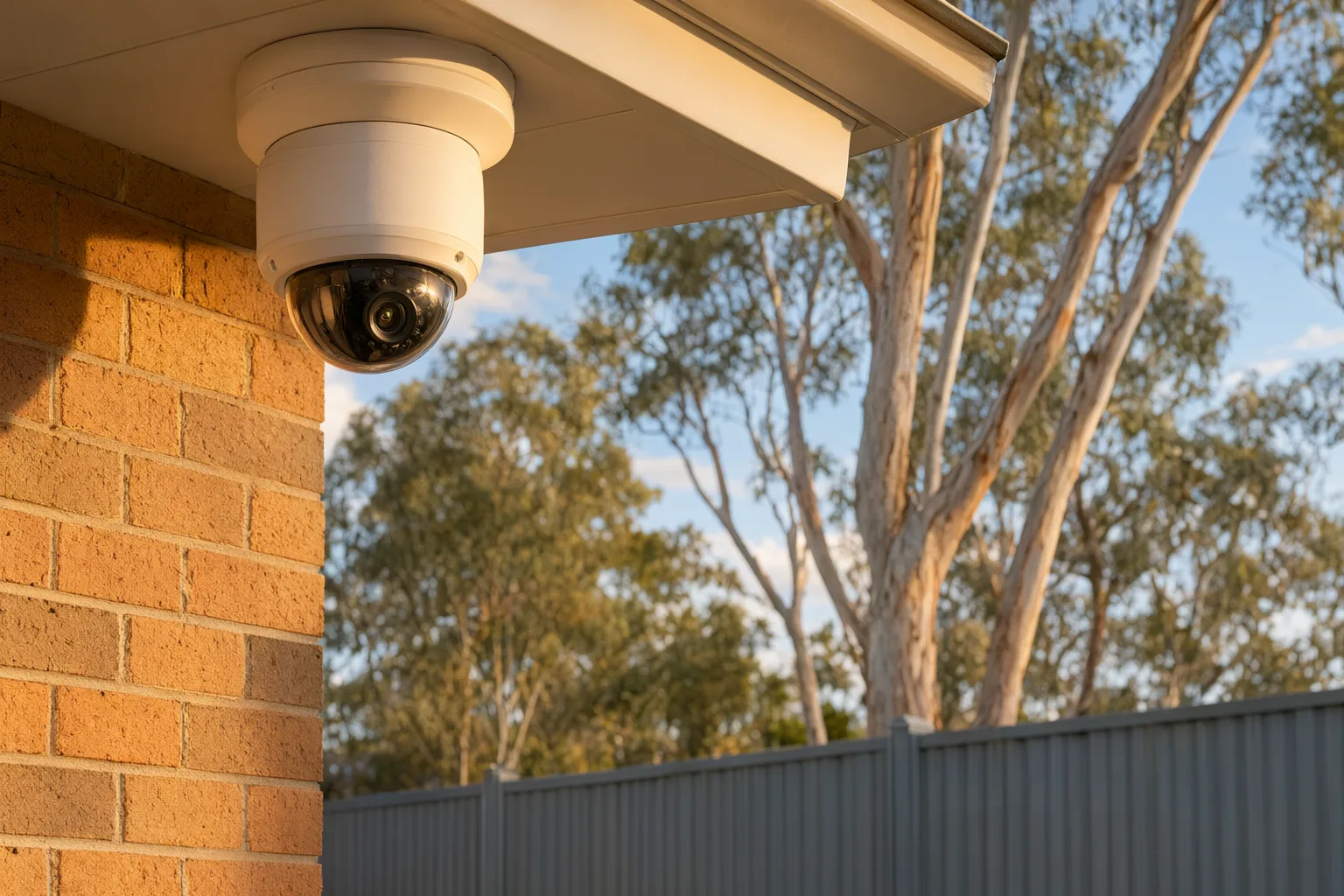
Key Takeaways
- Uniview ranks among the top three global surveillance manufacturers by market share since its 2005 founding.
- A professionally installed 4-camera Uniview ColorHunter system starts around $1,800-$2,600 fully installed in NSW.
- ColorHunter technology captures genuine full-colour footage down to roughly 0.003 lux using warm supplemental lighting.
- Uniview AI detection filters false alarms from possums, rain, insects and headlights that trigger standard motion alerts.
- Uniview equipment is NDAA-compliant, unlike Hikvision or Dahua, which matters for Australian government-contract sites.
- IP66/IP67 ratings let Uniview cameras handle 40°C-plus Australian summers, coastal salt air and storm season reliably.
Should You Buy a Uniview CCTV System in Australia?
Yes — Uniview CCTV is one of the best-value professional surveillance brands you can buy in Australia, offering top-three global manufacturing quality, full-colour ColorHunter night vision and intelligent AI detection at typically 15-30% less than comparable Hikvision or Dahua systems. For most Australian homes and businesses, it delivers flagship-grade results without the flagship price tag.
That unfamiliarity works in your favour. Because demand hasn't inflated prices the way it has for better-known brands, equivalent-spec Uniview systems typically cost 15-30% less than comparable Hikvision or Dahua builds. Add NDAA compliance — something neither of those two rivals can currently claim — and you have a compelling package for homes, shops, warehouses, schools and rural properties alike.
This guide explains what Uniview actually offers, how its technology compares with the brands that dominate Australian installs, what you should expect to pay, and how to make sure your system performs when it matters most.
What Is the Uniview Brand Behind These Cameras?
Uniview, often abbreviated to UNV, was founded in 2005 and has built its entire business around one thing: video surveillance. Unlike conglomerates that spread themselves across consumer gadgets, Uniview concentrates on IP [[solar-powered-cctv-cameras-upfront-costs-vs-long-term-savings-in-australia|cameras]], network video recorders (NVRs) and video management software. That focus shows in the polish of its firmware and the coherence of its product ecosystem.
Globally, Uniview sits comfortably in the top three surveillance manufacturers by market share, shipping millions of cameras annually to more than 180 countries. In Australia, however, the brand flies under the radar for a simple reason: distribution. Uniview sells almost exclusively through professional installers and security distributors rather than retail shelves. You won't find its kits hanging next to the DIY options at Bunnings or JB Hi-Fi.
For buyers, this installer-only model cuts both ways. On one hand, you can't grab a box off a shelf and self-install over a weekend. On the other, every system is specified, cabled and configured by a technician who stands behind the result — which is precisely why the brand has earned such a strong reputation among the people who install it daily.
Why Haven't More Australians Heard of Uniview?
Brand recognition in the Australian CCTV market has been shaped largely by two names: [[hikvision-vs-dahua-which-cctv-brand-offers-better-value-in-australia|Hikvision]] and Dahua. Both invested heavily in local marketing, distributor networks and big-box retail presence over the past decade, so they're the names customers ask for by default.
Uniview took a different path, prioritising relationships with installation companies and commercial distributors. The result is a brand that technicians recommend enthusiastically but shoppers rarely encounter until an installer puts a quote in front of them. At Aussie CCTV Cams, we install Hikvision, Dahua, Uniview and Axis systems across NSW, and Uniview has become one of our most-recommended options for clients who want professional-grade hardware without flagship-brand pricing.
The practical takeaway: don't dismiss a brand simply because you haven't seen it advertised. Judge it on specifications, real-world footage quality, warranty terms and installer support — which is exactly what we'll cover below. Our installers are fully licensed under state security laws and comply with the Privacy Act 1988 at every job.
How Does ColorHunter Full-Colour Night Vision Work?
The single biggest leap in consumer CCTV over recent years has been full-colour night imaging, and Uniview's answer to it is ColorHunter. Traditional infrared cameras switch to black-and-white after dark, which makes identifying clothing colours, vehicle paint or a person's features far harder. ColorHunter solves this using large-aperture lenses, high-sensitivity sensors and subtle warm supplemental lighting to capture genuine colour footage in near-darkness — down to around 0.003 lux.
In practical terms, a ColorHunter turret mounted above your driveway will show you whether the car that pulled in at 11pm was red or silver, and what colour jacket the person at your gate was wearing. That's information police genuinely use when investigating break-ins and thefts.
ColorHunter sits directly alongside Hikvision's ColorVu and Dahua's Full-Color technologies in capability. Side-by-side comparisons at the professional tier show all three producing excellent low-light colour footage; the difference between them comes down more to price and ecosystem than image quality.
Can Uniview AI Detection Filter Out Possums and Headlights?
False alarms are the number-one reason people stop checking their camera notifications. Standard motion detection can't tell the difference between an intruder and a possum on the fence, wind-blown branches, rain streaks, insects crawling across the lens or headlights sweeping the driveway.
Uniview's smart intrusion prevention uses deep-learning analytics to classify humans and vehicles separately from everything else. You receive a push notification when a person walks up your side path — not when a cat crosses the lawn. Higher-spec models add face detection, people counting and configurable perimeter protection zones, which are particularly useful for businesses monitoring fences, loading docks and after-hours entries.
This AI layer isn't a gimmick; it fundamentally changes how usable a system is day to day. Customers who've lived with older analog or basic IP setups routinely describe accurate detection as the feature they didn't know they needed.
What Storage, Weatherproofing and Camera Options Does Uniview Offer?
Beyond imaging and AI, several technical details separate good systems from frustrating ones:
Ultra 265 compression is Uniview's enhanced version of H.265, reducing storage consumption by up to 75% compared with older H.264 encoding. On a typical 4TB surveillance-grade drive, that translates to weeks rather than days of retained footage before overwriting.
IP66 and IP67 weatherproof ratings plus wide operating temperature ranges mean Uniview cameras shrug off 40°C-plus summer heat, coastal salt air and storm season — conditions that regularly kill cheaper hardware within a couple of years.
The range spans compact 4MP turrets suited to suburban homes, 4K (8MP) domes for commercial ceilings, PTZ cameras with 25x optical zoom for large yards and gates, fisheye models for single-camera room coverage, and ANPR units purpose-built for capturing number plates at driveways and property entrances.
Most models are PoE-powered, meaning a single Cat6 cable carries both power and data back to the NVR. That means cleaner installations, fewer power adapters to fail, and simpler troubleshooting.
- ColorHunter: full-colour imaging in low light down to 0.003 lux
- Smart intrusion prevention: AI human/vehicle classification
- Ultra 265 compression: reduces storage needs by up to 75% versus H.264
- IP67 weatherproofing and wide-temperature operation for harsh Australian conditions
- ANPR, PTZ and fisheye options for commercial and rural sites
Is Uniview Better Than Hikvision or Dahua?
The question we hear most often is how Uniview stacks up against the two [[ndaa-approved-cctv-brands-what-they-are-and-why-they-matter-in-australia|brands]] that dominate Australian installs. On image quality, the honest answer is that all three are excellent at the professional tier — a Uniview 4K turret with ColorHunter produces footage that stands toe-to-toe with Hikvision ColorVu in real-world conditions.
Where Uniview genuinely pulls ahead is value and compliance. Equivalent-spec kits typically come in 15-30% cheaper, and the brand's NDAA compliance makes it a safer pick for sites with government contracts, schools or businesses that need to future-proof against procurement restrictions. Its EZView mobile app and NVR interface are also refreshingly straightforward — less cluttered than some competitors, which our customers appreciate during handover training.
Where do the rivals win? Hikvision and Dahua have broader accessory ecosystems and stronger local brand recognition, which can matter for very large or highly specialised projects. Axis remains the premium enterprise choice for critical infrastructure. But for the vast majority of Australian homes, shops, warehouses and farms, Uniview hits the sweet spot of performance, price and support.
How Much Does a Professionally Installed Uniview System Cost?
Pricing depends on camera count, resolution, storage capacity and cabling complexity, but as a realistic guide for NSW properties: a professionally installed 4-camera Uniview ColorHunter system with an 8-channel NVR, 4TB surveillance-grade hard drive and remote viewing setup typically starts around $1,800-$2,600 fully installed.
An 8-camera 4K system for a larger home or small business generally lands between $3,200 and $4,800. For comparison, equivalent Hikvision or Dahua builds typically run $2,200-$3,000 and $3,800-$5,500 respectively — so the savings become especially meaningful on commercial jobs with 16 or more cameras.
Every property is different. Roof type, wall construction, cable runs, switchboard access and lighting conditions all influence the final figure, which is why we provide free on-site quotes with a design tailored to your layout, lighting and risk areas rather than a one-size-fits-all package price.
Are Uniview Cameras Built for Harsh Australian Conditions?
Yes — with the usual caveat that hardware selection and installation quality matter as much as the badge. Uniview cameras carry IP66/IP67 weather ratings and operating ranges that handle 40°C-plus summer heat, coastal salt air and storm season without complaint. For bushfire-prone or off-grid rural properties, Uniview cameras pair well with solar power and 4G connectivity for remote sites beyond NBN reach.
One important note for NSW buyers: professional installation isn't just about neat cabling. Correct camera height, lens selection, IR reflection management and NVR hardening (strong passwords, firmware updates, secure remote access) determine whether your footage actually stands up when police or insurers need it. Our 5-step process — consult, design, install, configure, handover with training — plus lifetime support means your system keeps performing long after installation day.
Should You Get a Uniview CCTV Quote in Newcastle or Adelaide?
A few practical tips ensure your system delivers value from day one. First, prioritise camera placement over camera count — well-positioned coverage of entry points, driveways and blind spots beats scattering extra cameras across areas that rarely see activity.
Second, insist on surveillance-rated hard drives rather than desktop drives; they're engineered for continuous 24/7 write cycles and last dramatically longer in an NVR. Third, ask your installer to configure motion zones and AI rules properly during handover, so notifications arrive tuned to your property rather than generic defaults.
Finally, keep firmware current and credentials strong. A professionally hardened NVR with secure remote access protects not just your footage but your entire home network. With those fundamentals in place, a Uniview system installed today should serve reliably for many years.
Uniview vs Hikvision vs Dahua at a Glance
| Feature | Uniview | Hikvision | Dahua |
|---|---|---|---|
| Full-colour night tech | ColorHunter | ColorVu | Full-Color |
| AI human/vehicle detection | Yes (smart intrusion prevention) | Yes (AcuSense) | Yes (WizSense) |
| 4-camera installed price (from) | $1,800-$2,600 | $2,200-$3,000 | $2,100-$2,900 |
| NDAA compliant | Yes | No | No |
| Mobile app | EZView | Hik-Connect | DMSS |
| Typical warranty | 3 years | 3 years | 3 years |