
Key Takeaways
- Cloud CCTV subscription costs Australia homes $10–$50 per camera monthly, or $480–$2,400 yearly for four cameras.
- A four-camera cloud setup costs roughly double a local NVR system over five years: $4,000–$8,000 vs $1,950–$2,750.
- Continuous cloud recording needs 60–300GB upload per camera monthly, straining typical 20–50Mbps NBN upload speeds.
- Most consumer cloud footage is stored on offshore servers, raising data sovereignty questions under the Privacy Act 1988.
- Hidden costs include cancellation fees, 4G failover data plans, SD card replacements and price rises at renewal.
- A hybrid setup — local NVR plus selective cloud backup — cuts ongoing fees while protecting footage from recorder theft.
What Does Cloud CCTV Really Cost Australian Households?
Cloud CCTV subscriptions in Australia typically cost between $10 and $50 per camera per month, which means a four-camera home system can quietly add $3,600 to $7,200 in fees over five years — often more than the entire cost of a professionally installed local NVR system.
That single figure is the reason this guide exists. Most buyers compare camera prices at the checkout and never model the subscription over the life of the system. This article breaks down the real numbers for Australian homes and small businesses, explains why our internet infrastructure makes continuous cloud recording harder than the marketing suggests, and shows where a local NVR or hybrid setup delivers better value, better privacy and better reliability.
Why Are Subscription Cameras Marketed So Aggressively in Australia?
Walk into any major electronics retailer or browse online marketplaces and you'll find consumer cloud cameras from brands like Ring, Arlo and Google Nest promoted heavily, often with steep discounts on the hardware itself. The pricing isn't accidental. These products are built around recurring revenue: the camera is the hook, and the monthly plan is the business.
For an Australian homeowner, the pitch sounds genuinely appealing. There's no bulky recorder under the TV cabinet, no hard drives to maintain, and footage is stored off-site where a burglar can't steal it. Remote access through a phone app feels modern and effortless.
The problem is what happens after the free trial ends. Features that seem standard — continuous recording, meaningful video history, intelligent person detection, extended retention — are frequently gated behind paid tiers. A $15 per-camera monthly fee looks trivial next to a new TV, but almost nobody multiplies it by 60 months before committing. The result is a growing number of Australian households paying more in subscriptions over five years than a complete professional system would have cost outright.
How Much Do Four Cloud Cameras Actually Cost Over Five Years?
Let's model a typical scenario: an Australian household with four cameras on a mainstream cloud plan. Most providers charge $10 to $30 per camera per month for continuous recording, with premium tiers reaching $50 for 4K resolution or longer retention windows.
At the conservative end of that range, four cameras at $15 each works out to $60 per month, or $720 annually. Over five years you've handed over $3,600 in subscription fees alone — before counting the $400 to $800 you spent on the cameras themselves. Total outlay approaches $4,500, and critically, you own nothing at the end. Stop paying and your recording history, smart alerts and much of the system's usefulness disappear with it.
Now compare a professionally installed local NVR system. A quality Hikvision or Dahua four-camera package with a 2TB recorder typically runs $1,800 to $2,500 installed by licensed technicians. After [[how-much-does-professional-cctv-installation-cost-in-australia|installation]], ongoing costs are effectively zero. The surveillance hard drive may need replacing once every five to seven years at roughly $150 to $250, but that's the extent of it.
The gap widens every year. By year ten, the cloud subscriber has paid around $7,200 in fees while the NVR owner's total spend sits near $2,800 including a drive replacement. And unlike the cloud customer, the NVR owner's system doesn't degrade if a provider changes its pricing, terms or product lineup.
Can Australian NBN Connections Handle Continuous Cloud Recording?
Australia's network conditions deserve special attention because overseas marketing rarely accounts for them. Most NBN plans deliver upload speeds somewhere between 20Mbps and 50Mbps. That sounds ample until you calculate what continuous cloud uploading actually consumes.
A single 4MP camera streaming continuously at reasonable quality generates roughly 2Mbps to 4Mbps of sustained upload traffic. Multiply by four cameras and you're pushing 8Mbps to 16Mbps around the clock. On a typical household connection, that competes directly with video calls, remote work, streaming and gaming — and it never switches off.
Data allowances add another layer. While unlimited-data NBN plans are now common in metro areas, many rural and regional customers on fixed wireless or satellite services still face monthly caps or shaped speeds. A four-camera cloud setup uploading continuously can consume 1TB to 2TB per month, enough to blow through caps or trigger throttling that degrades both your security footage and everything else on the network.
Reliability is the final blow. When a storm takes out your NBN connection or scheduled maintenance interrupts service, cloud cameras stop uploading — and most stop recording entirely. Outages tend to coincide with bad weather, exactly when break-ins, storm damage and insurance-relevant incidents are most likely. A local NVR records straight through any outage; only remote viewing pauses until the connection returns.
Is Your Footage Stored Offshore Under Data Sovereignty Rules?
When your security footage uploads to a consumer cloud platform, it usually lands on servers in the United States, Singapore or elsewhere offshore. That raises legitimate questions about who can access it and under which legal framework.
Australian privacy law offers protections, but once data resides on foreign infrastructure it may fall subject to overseas legal regimes and government access requests that operate outside Australian oversight. For businesses handling commercially sensitive operations, and for homeowners simply uncomfortable with third parties holding footage of their property and family, this matters.
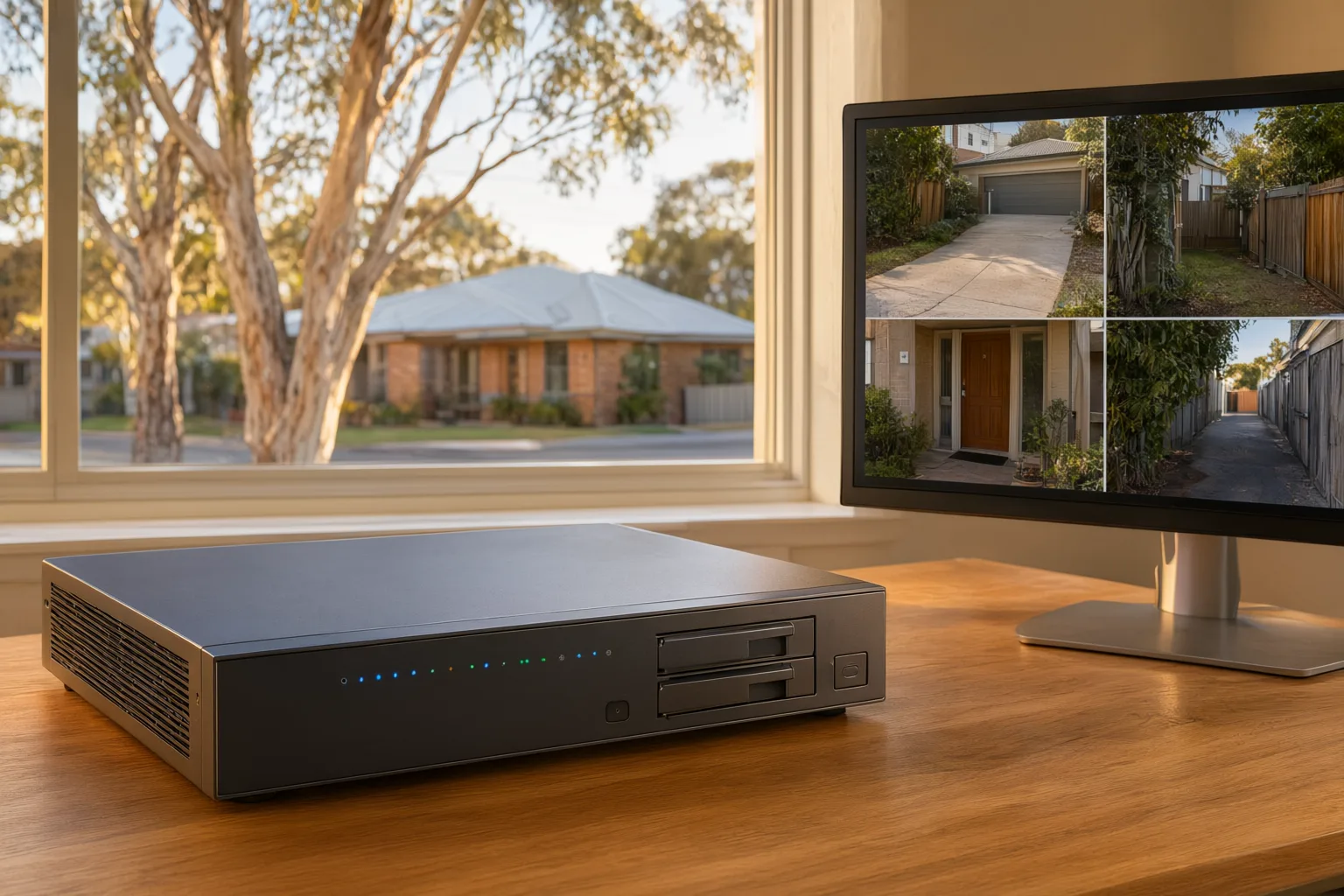
Local NVR [[cloud-vs-local-cctv-storage-pros-cons-and-costs-for-aussie-homeowners|storage]] keeps every frame physically on your premises, under your direct control. No provider can access it without your knowledge or a valid warrant served to you personally. For many Australians weighing convenience against control, that peace of mind alone justifies the local approach.
Which Hidden Costs Come With Cloud CCTV Subscriptions?
Subscription pricing is only the visible layer. Several less obvious costs compound over time:
Price increases are near-universal. Cloud providers regularly raise rates, and once you've invested in their ecosystem — cameras, mounts, app habits, shared family access — switching means replacing hardware. You're locked in long before you realise it.
Feature paywalls creep upward. Capabilities included at sign-up sometimes migrate to higher tiers in later updates, effectively raising your price without a formal increase.
Internet upgrades may be needed. If continuous uploading congests your connection, the fix is often a faster (more expensive) NBN plan — a cost driven entirely by your security system.
Service shutdown risk exists. If a provider discontinues a product line or exits the market, cameras can lose core functionality overnight. Locally recorded systems keep working regardless of any company's fortunes.
An NVR system's cost profile is boringly predictable: one [[diy-vs-professional-cctv-installation-real-cost-comparison-for-australians|installation]] fee, occasional drive replacement, minimal electricity. No surprises, no mid-cycle repricing, no features held hostage.
Should You Choose a Hybrid Cloud and NVR Setup Instead?
None of this means cloud storage is worthless. Used strategically rather than as your sole recording method, it solves real problems. The smart configuration is hybrid: a local NVR as the primary recorder, with selective cloud backup layered on top.
Professional platforms from Hikvision, Dahua and Uniview can record continuously to the local NVR while simultaneously pushing motion-triggered clips — or feeds from one or two critical cameras — to cloud storage. You gain off-site protection for the footage that matters most without terabytes of continuous uploading.
This matters most at remote sites such as farms, sheds and construction sites, where the recorder itself could be stolen or damaged. If someone takes the NVR, your evidence survives off-site. Because you're uploading gigabytes rather than terabytes each month, both cost and bandwidth stay manageable.
It's also worth noting that modern NVRs deliver excellent remote viewing without any cloud storage subscription. Apps like Hik-Connect and DMSS let you watch live feeds, review recordings and receive motion alerts from anywhere in the world. The footage stays on your hardware; only the viewing travels over the internet.
Are Local NVR Systems Cheaper Than Cloud Over Ten Years?
Quality security equipment should last seven to ten years with basic maintenance, so evaluate options across that full lifespan rather than year one. On that horizon, the comparison becomes decisive.
By year ten, a four-camera cloud subscriber has typically paid about $7,200 in fees plus hardware, while the NVR owner's cumulative spend — installation plus one hard drive replacement — sits near $2,800. The cloud customer also carries ongoing exposure to rate rises and feature changes; the NVR owner's costs are already behind them.
There's a resale and portability angle too. A professionally installed NVR system adds genuine value to a property and can be expanded with additional cameras and channels. A subscription ecosystem transfers to nobody and appreciates toward nothing.
Do You Need a Licensed Installer for the Right Property Setup?
For most Australian homes and small businesses with reliable NBN, a professionally installed four-to-eight camera NVR system offers the lowest lifetime cost, the best reliability during outages and full control over footage. Choose quality brands, insist on licensed installers, and size the hard drive for your retention needs.
Consider adding selective cloud backup if your recorder sits somewhere vulnerable — a detached shed, a farm outbuilding, a construction site — or if insurers require off-site evidence retention. Even then, back up events, not streams.
Pure cloud suits a narrow niche: renters and short-term occupants who need a portable, drill-free solution and accept the recurring cost as rent on convenience. For everyone else, run the ten-year numbers before signing up for anything monthly.
Five-Year Cost Comparison: Cloud CCTV vs Local NVR
| Cost Component | Cloud CCTV (4 cameras) | Local NVR System (4 cameras) |
|---|---|---|
| Initial hardware | $400 – $800 | $1,800 – $2,500 (installed) |
| Monthly subscription | $60 – $120 | $0 |
| Year 1 total | $1,120 – $2,240 | $1,800 – $2,500 |
| 5-year subscription costs | $3,600 – $7,200 | $0 |
| Hard drive replacement | N/A | $150 – $250 |
| 5-year total cost | $4,000 – $8,000 | $1,950 – $2,750 |
| Recording during internet outage | No | Yes |
| Data sovereignty | Overseas servers | Local storage |
| Bandwidth usage | 8-16 Mbps continuous | Only for remote viewing |