
Key Takeaways
- A 4mm lens keeps faces recognisable at 10–15 metres on a 4MP camera, suiting most Newcastle driveways.
- A 2.8mm lens offers a 100–110 degree field of view, ideal for Adelaide carports under 6 metres deep.
- A 4mm lens reads number plates reliably at 8–12 metres, versus just 5–7 metres for a 2.8mm lens.
- Mount driveway cameras between 2.4–3 metres high; above 3.5 metres facial identification drops sharply.
- Hikvision ColorVu with an F1.0 aperture delivers full-colour night footage when paired with a 4mm lens.
- Professional installation in Newcastle or Adelaide typically costs $150–$250 per camera including cabling.
Which Lens Should You Choose for a Driveway?
For most Australian suburban driveways, a 4mm lens beats a 2.8mm lens. It keeps faces recognisable at 10–15 metres and number plates readable at 8–12 metres on a 4MP camera, covering the typical garage-to-street run. A 2.8mm lens only wins when the camera sits within about 6 metres of everything you need to watch — short driveways, carports and double-garage frontages — where its wider 100–110 degree view eliminates blind spots.
The decision ultimately comes down to three measurements: the distance from your planned camera position to the far end of the driveway, the width of the area you need covered, and how high you can mount the camera. Get those numbers first, then choose the lens. This guide walks you through exactly how to make that call, what each focal length captures in real conditions, and which camera technologies pair best with each option.
What Does Focal Length Mean for Your CCTV Camera?
Focal length, expressed in millimetres, describes how much scene a camera lens takes in and how large distant subjects appear on the sensor. Shorter focal lengths like 2.8mm pull in a broad sweep of the surroundings; longer focal lengths like 4mm zoom in slightly, trading breadth for magnification. Two cameras that look identical from the outside, such as matching Hikvision or Dahua turrets, can produce strikingly different footage purely because of this one specification.
It helps to think of it like standing at your front door with binoculars versus looking through a window. The window shows you everything at once but small details vanish; the binoculars narrow your view but reveal fine detail further away. Neither approach is universally better — the right tool depends on what you are trying to see and from how far. On a driveway, that usually means deciding whether you want to simply record activity or actually identify who was there and what vehicle they drove.
How Does a 2.8mm CCTV Lens Perform on a Driveway?
A 2.8mm lens provides a horizontal [[narrow-vs-wide-field-of-view-matching-lens-choice-to-gateways-and-corridors|field of view]] of approximately 100 to 110 degrees depending on sensor size. Mounted within 3 to 6 metres of the target area, it comfortably frames a full double-width driveway, the garage door and a slice of the front yard in one shot. For compact properties, townhouses and carports, this wide coverage means fewer cameras and fewer blind spots close to the building.
The compromise is pixel density. At 10 metres, a person's face occupies relatively few pixels on a standard 4MP sensor through a 2.8mm lens, making confident identification difficult. Number plates generally become legible only within roughly 5 to 7 metres and under decent lighting. If someone walks up from the street on a 12-metre driveway, a 2.8mm camera will show you that they arrived — but may not show you clearly who they are. That distinction matters enormously if footage ever needs to support a police report or insurance claim. Our installers are fully licensed under state [[wireless-camera-batteries-vs-solar-keeping-unpowered-cameras-running|security]] laws and comply with the Privacy Act 1988 at every job. Get a free quote from Aussie CCTV Cams; installed prices start from $800 for a single camera through to $15,000+ for large commercial systems.
Is a 4mm CCTV Lens Better for Number Plates and Faces?
A 4mm lens tightens the horizontal field of view to roughly 80 to 90 degrees. Because the same sensor pixels are now spread over a narrower slice of the scene, everything in frame appears larger and sharper. In practical terms, faces stay identifiable at 10 to 15 metres and number plates read reliably at 8 to 12 metres on a 4MP camera in reasonable light.
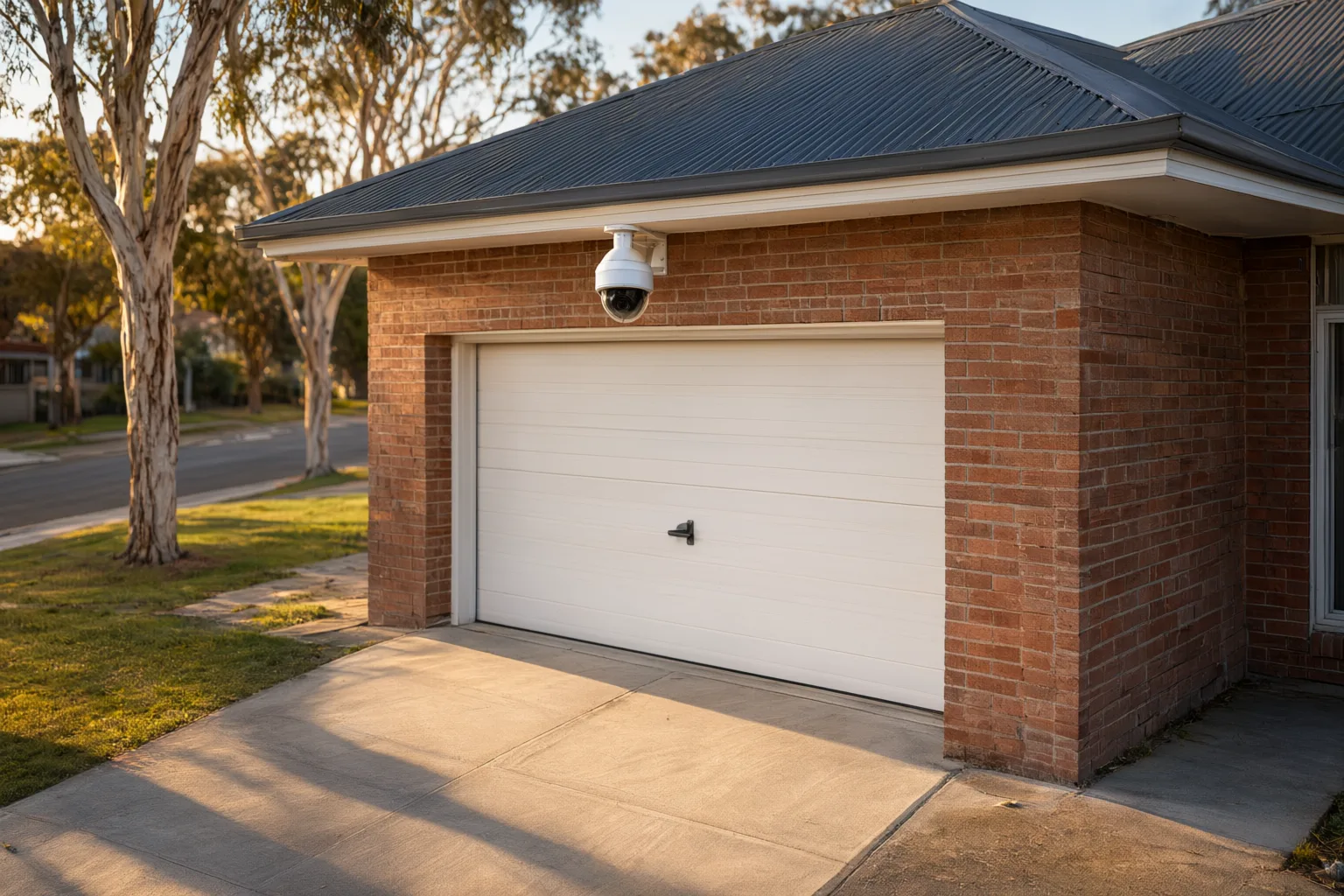
This maps neatly onto the typical Australian suburban block, where the garage-to-boundary distance usually falls between 8 and 15 metres. A 4mm turret mounted under the eaves of a brick veneer home at around 2.8 metres captures the entire driveway length with enough clarity to identify both the person and the vehicle. You give up some peripheral coverage near the camera itself, but for driveway monitoring that trade-off is almost always worthwhile — the edges of your eaves are rarely where intruders appear.
Why Does Driveway Length Decide the Winning Lens?
The decisive measurement is the distance from your intended camera location to the furthest point you need to monitor. Measure from the proposed mounting spot — typically under the eaves, on the garage fascia or on a dedicated pole — out to the street end of the driveway before you buy anything.
Under 6 metres with a wide driveway? A 2.8mm lens covers everything cleanly. Beyond 8 metres? Step up to 4mm for the extra pixel density needed for identification. For driveways stretching past 15 metres, or where you need plate capture at the property entrance, consider a 6mm fixed lens or a varifocal model that lets you dial in the exact framing after installation.
Height matters just as much as focal length. Cameras positioned at 2.4 to 3 metres capture faces at a natural, useful angle. Push above 3.5 metres and the steep downward angle starts hiding faces under hats, hoods and brows — a problem that makes the already-limited identification range of a 2.8mm lens even less effective. Aim for eye-level-ish placement with a slight downward tilt rather than mounting as high as physically possible.
Can Camera Resolution Change Which Lens You Need?
Focal length alone does not determine image quality. Sensor technology, resolution and low-light capability all shape whether your driveway footage is usable when it counts. Hikvision's ColorVu range pairs a fast F1.0 aperture with supplemental warm lighting to deliver genuine full-colour recording after dark — combined with a 4mm lens, a ColorVu turret produces identifiable colour images of people and vehicles across a standard driveway even in total darkness.
Dahua's WizSense lineup applies AcuSense-style AI filtering to cut false triggers from pets, swaying branches and passing shadows, which is especially valuable on driveways bordered by gardens or gum trees. Uniview's Starlight sensors hold colour well into low ambient light without needing supplemental illumination, while Axis cameras featuring Lightfinder technology suit premium commercial driveways and industrial yards where lighting is inconsistent.
Resolution compounds the effect of your lens choice. A 4MP sensor behind a 4mm lens resolves more detail than a 2MP sensor behind the same lens because more pixels land on the subject. For most homes, 4MP hits the sweet spot between quality and storage cost. If you need plates at 15 metres or beyond, move up to 4K (8MP) paired with a 4mm or 6mm lens.
Should You Mix 2.8mm and 4mm Cameras on One Driveway?
Standard suburban driveway (Sydney, [[/newcastle|Newcastle]], Central Coast): garage sitting 8 to 12 metres from the street. We typically specify a 4mm lens on a 4MP ColorVu turret mounted under the eaves at approximately 2.8 metres. This configuration records the full driveway length, keeps faces and plates identifiable, and captures colour footage overnight.
Short driveway or carport: camera within 4 metres of the vehicle. Here a 2.8mm lens shines, covering the full width without wasting pixels on a narrow corridor. Rural and farm driveways running 20 metres or more are a different beast entirely — a 6mm varifocal bullet with ANPR capability is the better investment, frequently paired with a solar-powered 4G camera at the gate for remote monitoring where cabling is impractical.
Corner blocks and L-shaped driveways often justify two cameras working together: one 2.8mm unit covering the broad area beside the garage, and one 4mm unit aimed down the approach from the street. Both feed the same NVR, giving you seamless overview plus identification coverage with no blind spots between them.
Do You Need Professional Help Choosing a CCTV Lens in Adelaide?
Choosing between 2.8mm and 4mm is not a spec-sheet exercise. It depends on your property layout, mounting surfaces, ambient lighting at different times of day, and what you realistically need the footage to achieve. A camera that frames a beautiful wide view but cannot identify a face at your front gate is money wasted — and retrofitting later costs far more than specifying correctly the first time.
At Aussie CCTV Cams, our licensed and insured NSW installers begin every job with a free on-site assessment. We measure your driveway, test sight lines, evaluate lighting conditions morning and evening, then recommend the precise lens, camera model and mounting position for your property. Our five-step process — consultation, [[how-much-does-a-4k-cctv-system-cost-compared-to-1080p|system]] design, professional installation, network configuration and a full handover with training — means you know how to operate your system from day one. Every installation carries lifetime support, and we fit only professional-grade hardware from Hikvision, Dahua, Uniview and Axis, never consumer DIY kits.
2.8mm vs 4mm: Side-by-Side Comparison for Driveway Cameras
| Feature | 2.8mm Lens | 4mm Lens |
|---|---|---|
| Horizontal field of view | 100-110 degrees | 80-90 degrees |
| Best driveway length | Under 6 metres | 8-15 metres |
| Face identification range (4MP) | Up to 6-8 metres | Up to 10-15 metres |
| Number plate readability (4MP) | Up to 5-7 metres | Up to 8-12 metres |
| Coverage near camera | Excellent, minimal blind spots | Reduced, some blind spots at edges |
| Best use case | Short wide driveways, carports | Standard to long suburban driveways |