
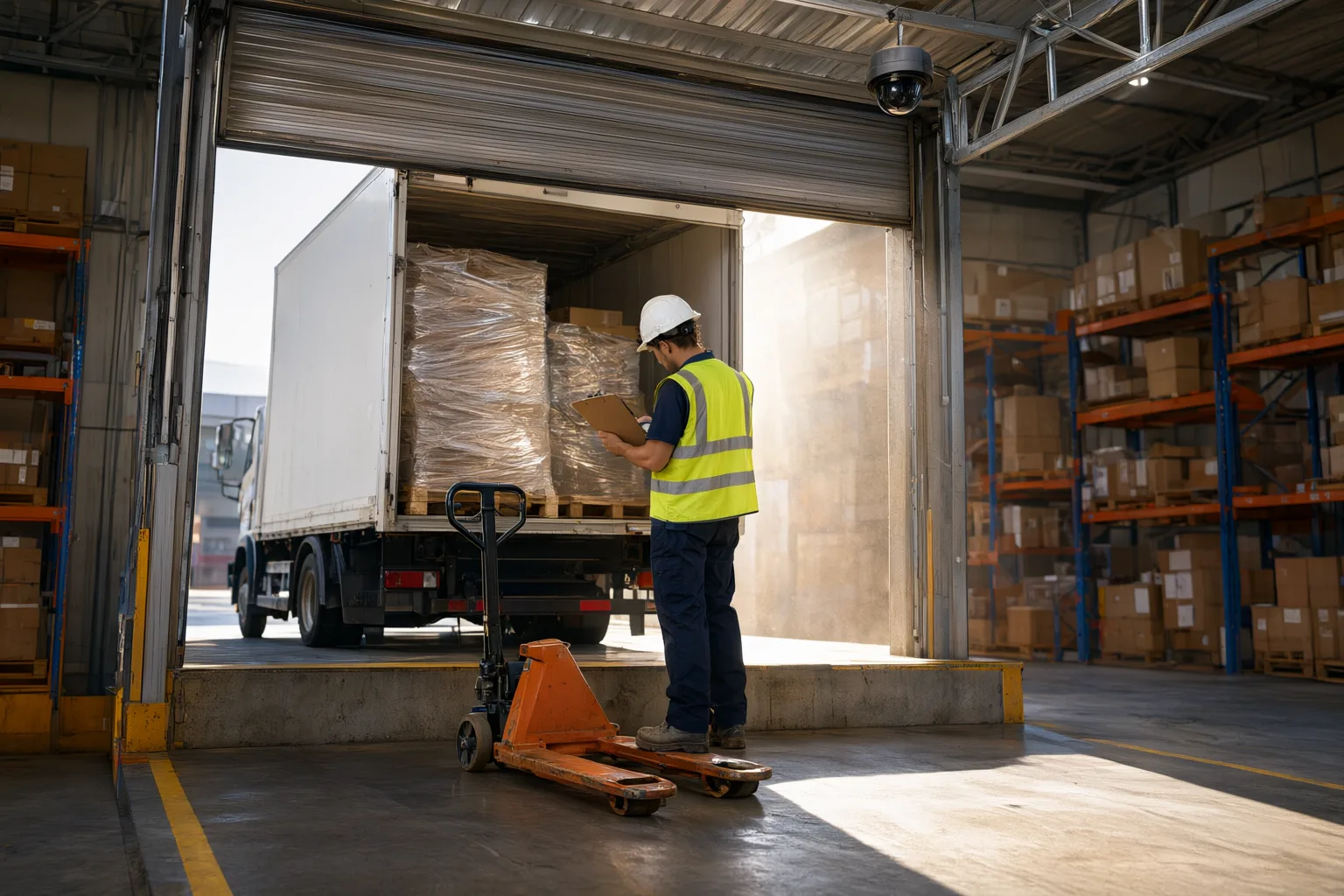
Key Takeaways
- Loading dock CCTV installation costs $2,500–$6,500 per door installed in Newcastle and Adelaide
- ANPR cameras link every vehicle arrival to every delivery, closing the goods-in accountability gap
- NSW employers must notify staff under the Workplace Surveillance Act 2005 before installing dock cameras
- Coastal humidity in Newcastle and Adelaide heat demand IP66/IP67-rated industrial cameras
- Integrated systems with access control deliver far more value than standalone recorders
Why Goods-In Areas Are the Weakest Link in Warehouse Security
The short answer: professional loading dock CCTV installation in Australia typically costs between $2,500 and $6,500 per dock door, depending on camera count, ANPR integration and cabling complexity. For warehouses and distribution centres in Newcastle and Adelaide, that investment routinely pays for itself within months by deterring internal theft, resolving delivery disputes and creating an auditable record of every vehicle that crosses your goods-in line.
A properly engineered system does three things at once. First, it deters — staff and drivers who know every pallet movement is recorded in high definition rarely attempt to skim stock. Second, it documents — ANPR cameras log every vehicle plate entering and leaving, linking each delivery to timestamped footage. Third, it provides evidence — when a stocktake reveals a discrepancy, you can pinpoint exactly what arrived, who handled it and where it went within minutes rather than days of manual review.
This guide walks through why these zones are so vulnerable, which camera technologies suit industrial dock environments, how to plan camera placement for zero blind spots, and what New South Wales law requires before you switch a single camera on.
How Surveillance Changes Behaviour and Builds Accountability
Every business that receives physical stock has one location where losses concentrate: the point where goods cross from outside your control into your custody. In warehouses, distribution centres and industrial facilities across NSW, that point is the loading dock and its associated goods-in area. These spaces are busy, noisy and chaotic during peak receiving windows — conditions in which under-reported deliveries, diverted cartons and falsified consignment notes can go unnoticed for months or even years.
Internal theft at the dock takes several distinct forms. Staff may record fewer units than actually arrived on an incoming delivery, allowing surplus stock to disappear quietly. Items may be walked out through an unmonitored roller door during shift changes. Drivers and receiving staff may collude to sign off short deliveries while splitting the difference. Because so much activity happens simultaneously, honest oversight alone simply cannot keep pace.
The scale of the problem is significant. The Australian retail and logistics sectors lose billions of dollars annually to [[retail-loss-prevention-how-cctv-cuts-shrinkage-for-australian-stores|shrinkage]], and employee theft accounts for a substantial portion of those losses — more than shoplifting or external break-ins in many operations. For owners and operations managers, the real question is not whether dock CCTV fits the budget; it is whether the operation can keep absorbing unrecorded losses without it.
What ANPR Cameras Do: Linking Every Vehicle to Every Delivery
Deterrence is the first and fastest return on a dock CCTV investment. When staff and visiting drivers understand that every vehicle arrival, every roller door opening and every pallet transfer is captured in high definition, opportunistic theft becomes an unacceptable risk. Importantly, this is not about breeding distrust — visible, fairly applied surveillance protects honest employees by removing suspicion and ensuring any investigation starts with facts rather than accusations.
Evidence is the second pillar. Modern IP camera [[service-station-cctv-protecting-fuel-cash-and-night-shift-staff|systems]] offer smart search tools that filter footage by time, date, motion events or specific regions of the frame. When a stocktake uncovers a variance, you can jump straight to the relevant delivery window and review exactly what was unloaded, who touched it and which direction it moved. What once demanded hours of scrubbing through recordings now takes minutes.
Finally, there is the evidentiary standard. If you need to pursue disciplinary action through Fair Work processes or refer a matter to police, the footage must clearly identify faces, number plates and the items being handled. Consumer-grade cameras from hardware stores rarely deliver the resolution, frame rates or low-light performance required for footage that stands up under scrutiny — which is why professional-grade hardware matters so much in this context.
Which Cameras Are Built for Industrial Dock Conditions?
Automatic Number Plate Recognition (ANPR) cameras are arguably the highest-value component of any dock surveillance system. Mounted at the entry and exit points of your facility, these specialised cameras capture clear, readable plates on moving vehicles regardless of speed, lighting conditions or weather. Each read is logged with a timestamp, creating a searchable register of every vehicle that has entered your site.
The investigative power comes from correlation. When a discrepancy emerges, the ANPR log tells you which vehicles were on site during the affected period. Cross-reference that against footage from the receiving bay cameras and you have a complete picture: which truck arrived, when it docked, what was unloaded, who received it and when the vehicle departed. That chain of evidence is extremely difficult to argue with.
ANPR also deters collusion. Drivers who know their plates are automatically logged on every visit are far less likely to agree to arrangements involving short deliveries or off-the-books pickups. For businesses running scheduled carrier deliveries alongside ad hoc contractor collections, the ANPR record brings order and accountability to otherwise hard-to-track traffic.
Is Your Placement Plan Leaving Blind Spots at the Dock?
Loading docks are hostile environments for cameras. Roller doors opening and closing create dramatic lighting swings, forklifts generate dust and vibration, and many docks are partially exposed to the elements. Hardware chosen for these conditions must be rugged, weather-rated and capable of handling extreme contrast between bright daylight and dim interiors.
For general coverage, we typically recommend fixed-lens bullet cameras for targeted views of individual bays, paired with varifocal dome cameras for wider coverage of staging and marshalling areas. Hikvision's ColorVu range delivers full-colour footage even in very low light — critical for early morning or late evening deliveries when dock lighting may be limited. Dahua's WizMind series adds AI-powered analytics such as people counting, loitering detection and object removal alerts that can flag suspicious behaviour in real time rather than after the fact.
Resolution matters enormously in high-bay environments. Where forklifts operate and ceilings are tall, cameras must be mounted high enough to survive daily operations while still capturing enough detail to identify individuals and read labels or consignment documents. In practice this means specifying 8MP (4K) sensors or above, combined with careful lens selection to balance scene width against pixel density. Uniview and Axis round out the professional brands we install, all built for industrial demands and backed by manufacturer warranties.
Should You Integrate CCTV with Access Control and Alarms?
Even the best cameras fail if positioned poorly. Effective dock surveillance follows a layered placement strategy designed so that every critical interaction — vehicle arrival, dock door opening, unloading, staging and putaway into the [[warehouse-surveillance-systems-a-complete-guide-for-australian-operators|warehouse]] — is captured from at least one angle, ideally two.
Start with the doors. Every dock door or roller door should have a dedicated camera capturing the full opening, mounted high enough to avoid damage from forklifts or raised truck beds but angled to clearly show goods moving in and out. Behind each door, a second camera covering the internal staging area provides the cross-reference angle that makes diverting stock without being recorded practically impossible.
Next, cover the inspection zone. This is where incoming stock is counted, checked against purchase orders and prepared for putaway. An overhead camera directly above this area captures the detail needed to verify quantities and resolve disputes about what was actually delivered versus what was recorded.
Do not neglect the external approach. Cameras covering the driveway, gate entry and vehicle queuing area provide context internal cameras cannot. Combined with ANPR at the gate, this creates a complete record of every vehicle that entered your site, when it arrived, which dock it used and when it left. A typical four-door dock with staging and entry coverage generally requires eight to twelve cameras for genuinely blind-spot-free surveillance.
Do You Know the NSW and SA Surveillance Laws Before Installing?
CCTV delivers its full value only when it operates as part of an integrated security system rather than as a standalone recorder. By linking cameras with access control on dock doors, pedestrian entry points and restricted stock areas, you create an audit trail that connects physical access events with corresponding visual evidence.
Consider two practical scenarios. A roller door opens outside scheduled receiving hours — the access control system logs the event and the CCTV system automatically bookmarks the matching footage for review. An alarm triggers in an overnight stock holding area — the monitoring centre immediately pulls up live and recorded video to verify whether the threat is genuine before dispatching a response, reducing false callouts and speeding up genuine ones.
This level of integration is standard practice in professionally designed commercial security systems. It transforms surveillance from a passive archive into an active management tool supporting loss prevention, workplace safety compliance and day-to-day operational efficiency.
Can You Monitor Docks Remotely and Control Footage Retention?
Before installing cameras anywhere staff work, you must understand your obligations under the Workplace Surveillance Act 2005 (NSW). Employers are generally permitted to conduct camera surveillance of employees at work, but notification is mandatory: employees must be informed in writing before surveillance begins, and that notice must explain the kind of surveillance, how it will be carried out and when it will start.
Signage is both a legal safeguard and a practical deterrent. Clearly visible signs at every entry point to the dock and goods-in area should state that CCTV surveillance is in operation. This ensures employees and visitors cannot claim ignorance of the monitoring, and it strengthens your position if footage is later relied upon in a dispute.
We strongly recommend having an employment lawyer or HR advisor review your surveillance policy before rollout. A well-drafted, clearly communicated policy keeps the business compliant and signals to your team that the system exists to protect everyone — not to target individuals.
Are Professional Installers Worth It Over DIY for Dock Coverage?
Modern commercial systems include secure remote viewing via apps on your phone, tablet or computer, letting you check live feeds or review recorded footage from anywhere with an internet connection. For multi-site operations, this means a single manager can oversee dock activity across several facilities without travelling between them.
Retention planning should happen at design stage. Storage duration depends on the number of cameras, resolution settings and NVR capacity; most commercial systems we install retain footage for 30 to 90 days. Sizing storage correctly upfront ensures you meet both operational needs and any insurance requirements without costly upgrades later.
Why Professional Loading Dock CCTV Installation Beats DIY for Dock Coverage
Loading dock surveillance is not a weekend project. High mounting positions, industrial-grade cabling runs, PoE network infrastructure, ANPR configuration and integration with existing access control and alarm systems all demand licensed, experienced installers. A poorly executed DIY kit typically produces gaps in coverage, unreliable recording and footage too weak to be useful when it matters most.
At Aussie CCTV Cams, every commercial installation follows a proven five-step process. It begins with an on-site consultation to understand your dock layout, workflow and risk areas. From there we design a system specifying the right camera types, mounting positions and recording infrastructure for your specific operation. Our licensed and insured installers then handle the full installation, configure every camera and recorder for optimal performance, and hand over with training so your team can use the system confidently from day one.
Ongoing support matters just as much as the initial fit-out. Every system we install comes with lifetime support, so if your operation grows, your layout changes or you need assistance down the track, help is a phone call away.
For a typical four-door dock in [[/newcastle|Newcastle]] or [[/adelaide|Adelaide]], expect a professionally installed system covering entry ANPR, per-door dome cameras and a recorder to land between $6,000 and $14,000 fully configured. Larger commercial sites with eight or more doors, thermal cameras or farm and rural depots requiring long cable runs can exceed $20,000. Every quote we provide itemises hardware, labour and licensing so you know exactly what you are paying for.
Newcastle's coastal environment adds a specification consideration many operators miss: salt-laden, humid air corrodes cheap housings within two seasons. We specify marine-grade, IP67-rated enclosures for any camera within 5 km of the coast, and position units under eaves or soffits where possible to shield lenses from direct sun and storm-driven rain.
In South Australia, businesses should also be aware of the Surveillance Devices Act 2016 (SA), which governs the use of optical surveillance devices. While workplace monitoring of open dock areas is generally lawful, recording in break rooms or amenities is not, and signage obligations still apply. Failing to comply can expose your business to penalties and render footage unusable in Fair Work disputes.
Placement follows a layered logic: one ANPR bullet capturing plates at 10–15 metres on approach, one wide-angle dome per dock door framing the full doorway and roller shutter, one overhead camera over the staging or pallet area, and optionally a PTZ unit covering the yard. This ensures no pallet moves across your boundary without appearing on at least two overlapping angles.
Lighting swings are the number-one cause of poor dock footage. When a roller door opens on a bright Adelaide afternoon, a consumer camera will blow out the entire frame. True WDR (wide dynamic range) sensors rated at 120 dB handle the transition from dark interior to sunlit yard without losing plate or face detail — this is non-negotiable for evidentiary quality.
Integration multiplies value. Linking CCTV to your access control means every badge swipe at the goods-in door automatically bookmarks the corresponding video timestamp, cutting investigation time from hours to minutes. Alarm triggers can steer PTZ presets, and after-hours motion events can push instant alerts to your phone with a live clip attached.
Retention requirements vary by industry and insurer, but 30 days is the commercial standard for Australian warehouses, with some logistics contracts demanding 90 days. We size NVR storage accordingly using H.265 compression, which roughly halves bandwidth compared to older codecs while preserving 4K detail for plate and face identification.
Remote monitoring is included as standard on every system we install in Newcastle and Adelaide. Owners and operations managers can review live feeds, search by vehicle movement or time window, and export password-protected clips for insurers, police or Fair Work proceedings from anywhere in Australia.
DIY kits consistently fail at the dock because they ignore three things: correct mounting height for ANPR accuracy, industrial-grade cabling and PoE budgets across long runs, and legal compliance setup including signage and notification records. A licensed installer carries the security licences and ACMA-open cabling registration required for commercial work in both NSW and SA.
Finally, remember that footage is only useful if it is legally obtained and properly managed. Under the Privacy Act 1988 and the Australian Consumer Law expectations around transparency, staff and visiting drivers should be clearly notified via signage, access to recordings restricted, and retention schedules documented. We handle this compliance layer as part of every loading dock CCTV installation.
Camera options for loading dock CCTV installation in Newcastle & Adelaide
| Camera Type | Best For | Indicative Cost (AUD) |
|---|---|---|
| 4K WDR Dome | Per-door coverage handling roller-door lighting swings | $350–$700 per camera |
| ANPR Bullet | Capturing truck plates at yard entry and exit | $800–$1,600 per camera |
| PTZ Camera | Large yards, farms and multi-dock commercial sites | $900–$2,000 per camera |
| Thermal Camera | Perimeter detection in low light, storm or bushfire smoke | $1,500–$3,500 per camera |