
Key Takeaways
- A basic four-camera PoE system costs $800–$1,200 installed; premium NVR systems reach $2,500+.
- NSW landlords must comply with the Residential Tenancies Act 2010 — no cameras inside living areas of tenanted homes.
- Exterior-only coverage at entries, driveways and side gates delivers the best value for investment properties.
- Licensed installers provide compliance advice, warranties and insurance-friendly documentation DIY kits cannot.
What Rental Property CCTV Costs and Requires in Australia
The short answer: rental property CCTV installation in Australia typically costs between $800 and $1,200 fully installed for a basic four-camera PoE system, rising to $2,500 or more for premium NVR setups with remote viewing. Costs vary by city — expect slightly higher rates in Newcastle NSW than Adelaide SA due to demand — and every install must respect tenancy laws covering what you can legally record.
Cost is only half the equation, though. In New South Wales, surveillance at a rental property is governed by strict rules: cameras may only be fitted to the exterior of the property or in common areas of multi-unit buildings, never inside a leased premises, and current tenants must provide written consent before any equipment goes in. Audio recording is heavily restricted under the Surveillance Devices Act 2007, so most landlords should disable microphone functionality entirely. This guide walks through the costs, legal obligations, camera placement strategy and technology choices that matter when securing an investment property.
Why More Australian Landlords Are Fitting CCTV
Investment properties carry [[price-per-camera-explained-what-australian-homeowners-should-expect-to-pay|security]] risks that owner-occupied homes do not. Vacant periods between tenancies leave homes exposed to break-ins, squatters and vandalism—often during exactly the weeks when nobody is checking on the property regularly. Even occupied rentals generate disputes over property damage, unauthorised occupants, dumped rubbish or boundary issues with neighbours, and exterior footage can provide objective evidence that protects both landlord and tenant.
CCTV also earns its keep day to day. Landlords managing properties across Sydney, Newcastle or regional NSW can verify that tradespeople actually attended scheduled maintenance visits, monitor the condition of gardens and exteriors between inspections, and document the state of the property immediately before and after each tenancy. Many insurers recognise this risk reduction: several Australian insurers offer premium discounts of roughly 5-15% on landlord policies where a professionally installed security [[how-much-does-a-4-camera-cctv-system-cost-in-australia|system]] is present, so it pays to check with your provider before committing to a system.
The critical caveat is equipment quality. Cheap consumer [[solar-powered-cctv-cameras-upfront-costs-vs-long-term-savings-in-australia|cameras]] sold through electronics retailers frequently fail within 18 months, leaving landlords with dead hardware and no support. Professional-grade brands such as Hikvision, Dahua and Uniview cost more upfront but deliver years of reliable operation—which is what matters when the property is not your own home.
Can Landlords Legally Install CCTV Under the Residential Tenancies Act?
Before buying a single camera, landlords must understand their legal obligations. In New South Wales, installing cameras inside a tenanted property breaches the Residential Tenancies Act 2010 and can attract significant penalties. Interior surveillance violates the tenant's right to privacy and quiet enjoyment, and there are no circumstances in which it is acceptable while a lease is active.
Exterior cameras are permitted, but only with the written consent of current tenants. That consent should clearly specify where cameras will be mounted, which areas they record, and how footage will be stored and used. Cameras must also avoid capturing neighbouring properties or public footpaths beyond what is reasonably necessary for genuine security purposes—overlooking a neighbour's backyard is a privacy problem waiting to become a dispute.
Audio is a separate minefield. The Surveillance Devices Act 2007 places heavy restrictions on recording conversations, and most landlords should simply disable audio recording altogether rather than risk non-compliance. For vacant properties between tenancies, landlords have more flexibility and can fit exterior cameras covering driveways, entries and yards—but those cameras must still be disclosed to incoming tenants. Engaging a licensed security installer takes the guesswork out of compliance: they understand the legislation, position cameras lawfully, and can help you draft appropriate disclosure notices for new tenants.
How Much Does a Cost-Effective CCTV System Cost: $800 Basics to $2,500 Premiums?
The sweet spot for a standard suburban rental is a four-camera PoE system. PoE runs both power and data over a single ethernet cable to each camera, which means no battery changes, no dependence on flaky WiFi and no need for power points near mounting locations. A quality four-camera package with a 4-channel NVR (Network Video Recorder) typically lands between $800 and $1,200 fully installed, depending on resolution and features.
At the budget end, a 4MP system with infrared night vision covers the essentials—front door, driveway, side access and backyard—and records clear monochrome footage after dark. Stepping up to 4K cameras with ColorVu technology adds full-colour night vision, which makes it dramatically easier to identify faces, clothing colours and vehicle details in low light. For landlords dealing with false alerts, AcuSense cameras use onboard AI to distinguish people and vehicles from animals and moving vegetation, cutting down notifications triggered by possums, cats or swaying branches.
Location matters too. Rentals in coastal areas or bushfire-prone regions should specify cameras with IP67 weatherproof ratings and corrosion-resistant housings, since salt air and extreme heat destroy inferior equipment prematurely. As a rough pricing guide:
- Basic 4-camera 4MP PoE system: $800-$1,200 installed
- Mid-range 4-camera 4K system with ColorVu: $1,400-$1,800 installed
- Premium 4-camera system with AcuSense AI and ColorVu: $1,800-$2,500 installed
- 8-camera systems for larger blocks or multi-unit dwellings: $2,000-$3,500 installed
Should You Position Cameras at Entries, Driveways and Side Gates?
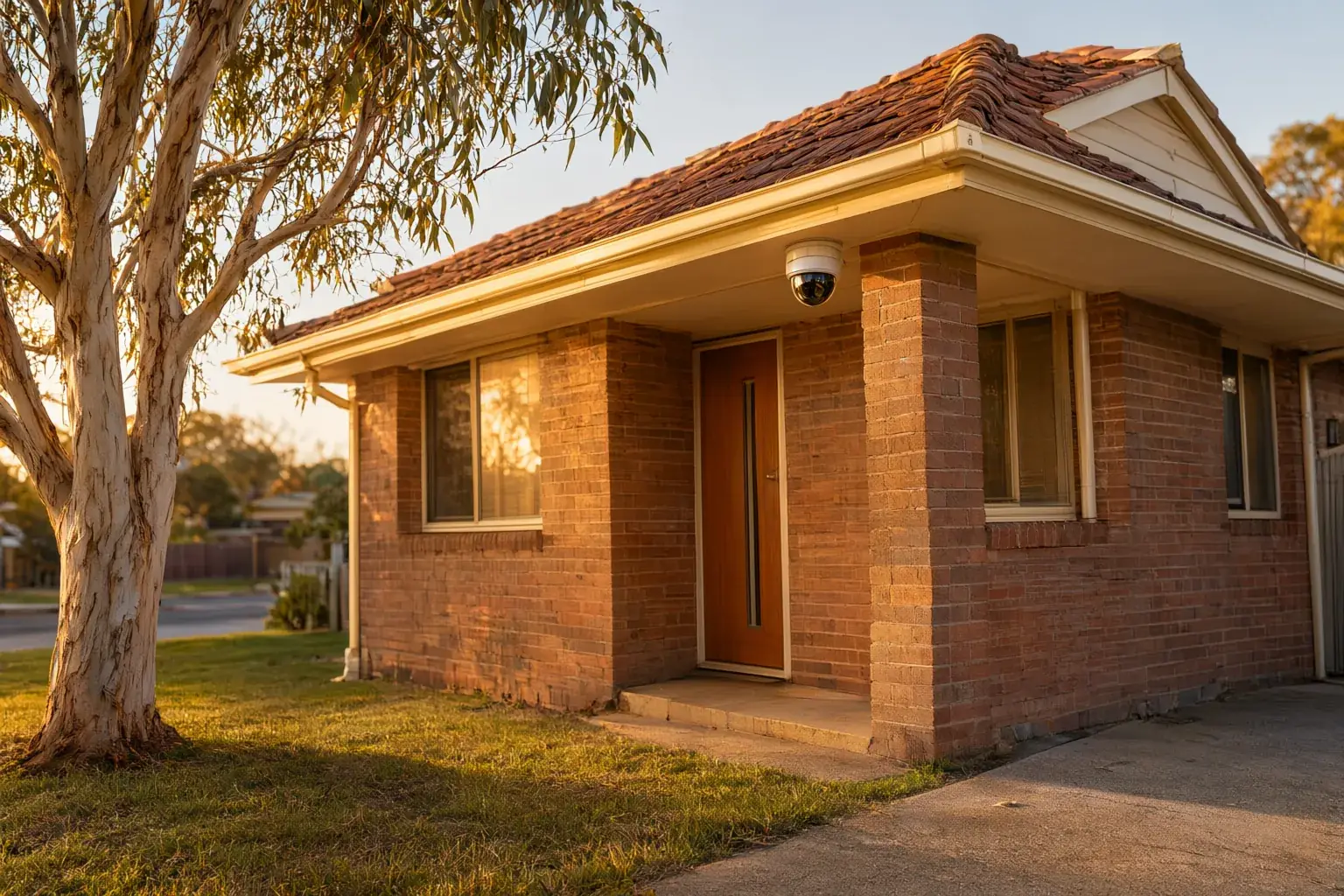
Smart placement lets four cameras cover an entire standard brick veneer home on a suburban block. Camera one watches the front entry and porch, capturing anyone approaching the front door. Camera two monitors the driveway and street approach, logging vehicle arrivals and departures. Camera three covers side access gates—one of the most common entry points for intruders. Camera four keeps watch over the backyard and rear entry.
Properties with carports, detached garages or shared driveways may justify additional cameras, and multi-unit dwellings require coverage of common areas such as building entrances, shared laundries and car parks—never inside individual units. Mounting height matters more than most landlords expect: 2.5 to 3 metres is ideal, high enough to prevent tampering but low enough to capture usable facial detail. Finally, avoid aiming lenses directly into the rising or setting sun, as glare can wash out images during precisely the morning and evening windows when activity around the property peaks.
Do NVR Systems Let Landlords View Rentals Remotely From Anywhere?
Modern NVR-based systems let landlords view live and recorded footage from anywhere via smartphone apps. Hikvision's Hik-Connect and Dahua's DMSS apps both deliver dependable remote access with push notifications when motion is detected. During vacancy periods this is invaluable—you can confirm the property remains secure, spot maintenance issues such as storm damage or burst pipes early, and verify that cleaners or gardeners attended as booked.
For landlords holding properties in regional NSW or interstate, remote viewing eliminates unnecessary site visits entirely. Access can be granted temporarily to property managers or real estate agents so they can review footage around inspections, and some systems integrate with smart locks and intercoms to form a fuller property management solution.
One caution applies above all others: tenants hold the right to quiet enjoyment of their home. Constantly monitoring an occupied property crosses the line into harassment and creates serious legal exposure. Remote access should be used sparingly and only for legitimate security or maintenance purposes—not as a substitute for proper inspection protocols.
Is DIY CCTV Worth It Compared to Licensed Installers for Rentals?
DIY camera kits look cheap on the shelf but rarely represent value for a rental property. Consumer-grade wireless cameras suffer WiFi dropouts, battery failures and limited storage, and their typical lifespan is short. Worse, self-installation frequently produces poor camera angles, inadequate weatherproofing and non-compliant setups that expose landlords to legal risk—the exact opposite of what a security investment should achieve.
A licensed NSW security company brings three things a box from a retailer cannot: legal compliance, commercial-grade equipment and workmanship guarantees. Licensed installers ensure the system meets all relevant legislation, run proper cable management so cabling cannot be tampered with, configure remote viewing securely, set strong passwords and provide handover training so you can operate the system confidently. They issue compliance certificates, which some insurers require when processing claims related to security systems.
Professional installations also carry warranties covering both equipment and workmanship—protection no DIY kit offers. When the property is hundreds of kilometres away and every site visit costs time or money, paying for an installation that works reliably for years is almost always the cheaper option overall.
Which CCTV System Suits Your Investment Property Type?
Matching the system to the property prevents overspending on features you do not need—or underspending and replacing everything within two years. For a single-storey house on a standard block with a modest budget, the basic 4MP PoE package delivers dependable coverage of all key approaches. If the property has dim entryways, dense tree cover or a history of after-hours incidents, the extra spend on 4K ColorVu pays for itself in footage quality.
High-turnover rentals, properties backing onto bushland teeming with wildlife, and premium homes justify AcuSense AI detection, which filters out animal-triggered false alarms and keeps notifications meaningful. Duplexes, townhouse rows and small apartment blocks need the eight-camera tier, mixing camera types across entrances, car parks and shared facilities with larger 4TB storage to match. Whatever the tier, insist on PoE wiring, IP67-rated outdoor cameras and a licensed installer—the combination that keeps a rental system running long after cheaper alternatives have failed.
For a typical three-bedroom brick veneer rental on a 600sqm suburban block, most licensed installers quote $900–$1,100 supplied and installed for four 4MP PoE cameras, an 8-channel NVR with a 1TB drive, and cabling run through the roof cavity and eaves. Coastal suburbs like Merewether in [[/newcastle|Newcastle]] or Glenelg in [[/adelaide|Adelaide]] add modest cost because marine-grade housings and corrosion-resistant mounts are recommended near salt air. Add roughly $150–$250 per extra camera beyond four, and budget $300–$500 if your switchboard needs a dedicated circuit for the NVR.
Location within Australia also affects labour rates. Newcastle NSW installers commonly charge $90–$130 per hour, while Adelaide SA rates sit closer to $85–$120 per hour. A straightforward single-storey install takes four to six hours; double-storey homes or properties with tiled roofs and difficult ceiling access can push labour to eight hours, adding $200–$400 to the final invoice. Always get a written quote that itemises cameras, cabling, mounting hardware and call-out fees so you can compare apples with apples.
Legal compliance is not optional. Under the Residential Tenancies Act 2010 (NSW), landlords cannot install cameras inside a tenanted home without tenant consent, and entry to fit exterior cameras requires proper notice — generally seven days for non-urgent access under the standard form agreement. In South Australia, the Residential Tenancies Act 1995 (SA) similarly restricts surveillance inside premises, and the federal Privacy Act 1988 plus state Surveillance Devices legislation govern audio recording, which is effectively prohibited in private areas. Fines and tribunal orders are real risks, so document tenant notice carefully.
Insurance benefits help offset the cost. Many Australian landlord insurers offer premium discounts of 5–15% for investment properties with monitored or recorded security systems, provided the installation is completed by a licensed installer with a compliance certificate. Keep your invoice and photos of camera placement — insurers may request them at claim time if a break-in occurs between tenancies.
Placement strategy matters more than camera count. Four well-positioned cameras at the front door, driveway, rear door and side gate cover over 90% of common entry points on a standard block. Mounting under eaves protects units from sun, storm and heat damage — important in Newcastle's humid summers and Adelaide's dry heat — and keeps lenses out of direct rainfall. Avoid pointing cameras at neighbouring properties or public footpaths beyond what is necessary, as this can trigger privacy complaints under NSW and SA surveillance laws.
For landlords managing multiple properties, remote access via Hik-Connect or DMSS apps means you can check vacant rentals between tenants from anywhere in Australia. Pair the NVR with motion alerts so you receive notifications only when something happens, rather than reviewing hours of footage. Cloud backup plans cost $5–$15 per month per site and protect evidence if a burglar steals the recorder itself.
When comparing quotes, ask whether the price includes cable concealment (a tidy finish adds value at inspection time), surge protection, and a minimum three-year workmanship warranty. Reputable Newcastle and Adelaide installers will also walk you through tenant notification requirements before booking the job — a sign they understand rental-specific compliance rather than treating your investment property like any other home.
Rental Property CCTV System Options Compared (AUD, Installed)
| System Type | Typical Cost | Best For |
|---|---|---|
| 4-Camera PoE + 8CH NVR | $800 – $1,200 | Standard suburban house rentals |
| 6–8 Camera PoE Premium | $1,800 – $2,600 | Larger homes, duplexes, small commercial |
| DIY Wireless Kit | $300 – $700 | Short-term monitoring; higher ongoing costs |
| PoE + Cloud Backup & Monitoring | $1,400 – $2,000 | Vacant properties between tenancies |