
Key Takeaways
- Australian distributors like Hikvision and Dahua routinely refuse warranty service on grey import serial numbers.
- Australian Consumer Law binds the seller — buy from an overseas site and your rights are practically unenforceable.
- Region-locked firmware can brick grey import cameras during critical security updates.
- Authorised stock through a licensed NSW or SA installer typically adds 15–30% upfront but protects your investment.
Why Does a Grey Import Security Camera Fail Without Any Warranty?
The short answer: a grey import security camera bought outside authorised channels typically carries no manufacturer warranty in Australia, and you can be left with a dead camera and no recourse. Local distributors refuse service on overseas serial numbers, so what looked like a $90 saving on a Hikvision unit in Newcastle or Adelaide can become a full replacement cost within months of installation.
This guide explains exactly what a grey import is, what happens step by step when one fails, where you stand under Australian Consumer Law, and how to protect yourself before you spend a dollar. Whether you are securing a home in Sydney's west or a small business on the Central Coast, these realities apply to every brand from Hikvision and Dahua through to Uniview and Axis.
What Is a Grey Import CCTV Camera and How Do You Spot One?
A grey import — sometimes called a parallel import — is a genuine, brand-name product brought into Australia outside the manufacturer's authorised distribution channel. It is not counterfeit. The Hikvision turret camera you spotted on an overseas marketplace may be completely authentic. The catch is that it was manufactured and intended for sale in China, Europe or North America, and the Australian arm of that manufacturer has no obligation whatsoever to support it.
Grey imports flood online marketplaces because they typically sell for 20–40% less than authorised Australian stock. That discount is not generosity — it exists because the seller skips local compliance testing, local warranty obligations and local technical support. While everything works, you never notice the difference. The moment something fails, the true cost of that saving reveals itself.
How Does the Grey Import Camera Failure Process Unfold Step by Step?
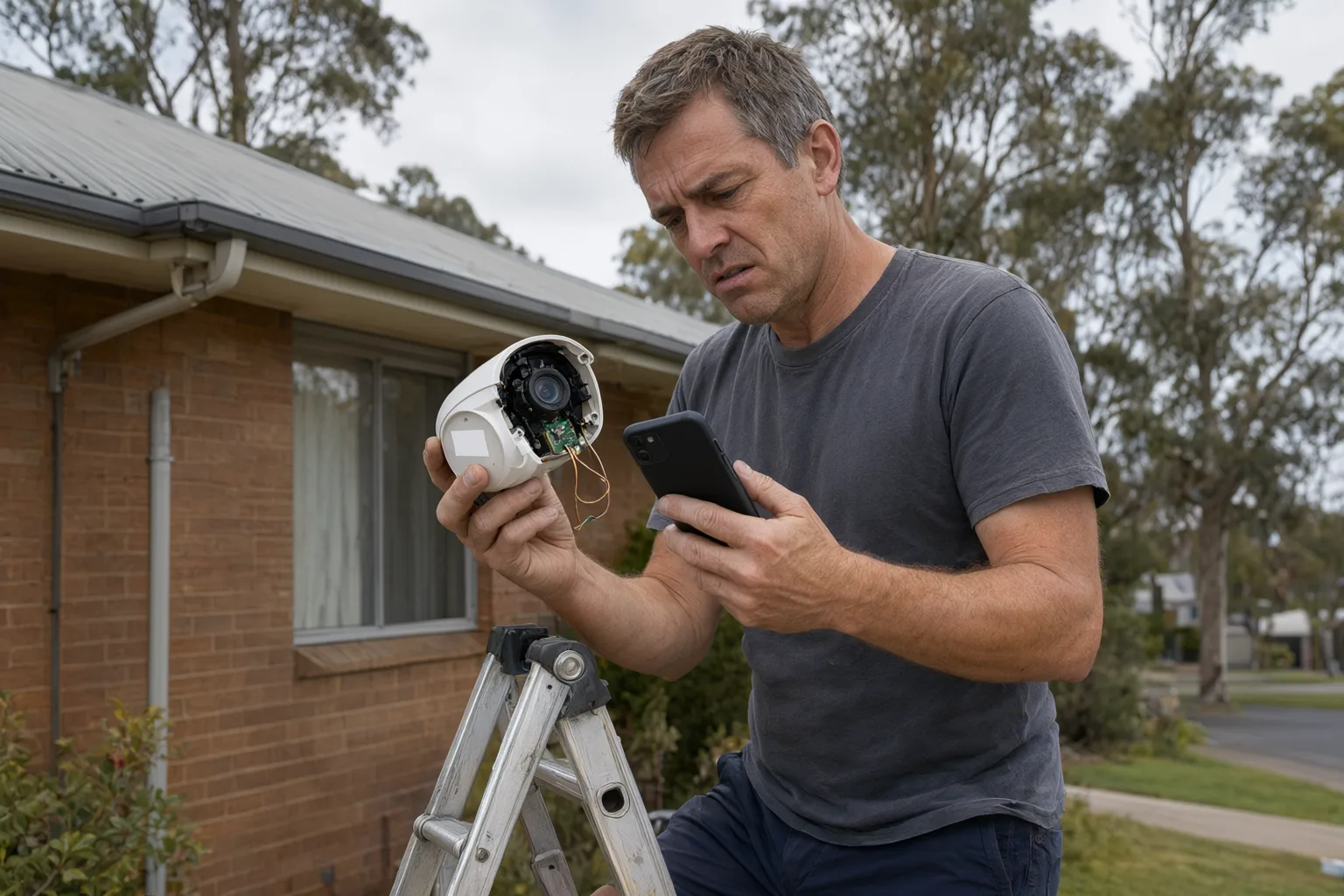
Here is the sequence we see repeatedly when a customer brings us a dead grey import camera. First, they contact the Australian [[why-buying-cctv-from-an-authorised-australian-distributor-saves-you-money-long-t|distributor]] — say, Hikvision Australia — who checks the serial number. The serial flags as an overseas-region unit, and warranty service is declined on the spot. It does not matter that the camera is only eight months old; the regional database is definitive.
Next, the customer returns to the overseas seller. Some offer a 'store warranty', but claiming it means paying international return postage (often $40–$80 for a single camera), waiting four to eight weeks for a resolution, and hoping the seller actually honours the promise. Many simply stop replying. Even when a replacement eventually arrives, you have paid an installer twice — once to remove the failed unit and once to fit the new one — which erases any upfront saving entirely.
Meanwhile, your property sits with a blind spot. If a break-in, vandalism incident or workplace injury occurs while that camera is down, there is no footage. For a business, that can mean a failed insurance claim or an unresolved liability dispute — consequences that dwarf the $150 saved on the original purchase.
Are Grey Import Cameras Covered by Australian Consumer Law?
Australian Consumer Law (ACL) is genuinely powerful — but it binds the seller, not the manufacturer. If you buy from an Australian retailer, even one selling grey stock, that retailer must honour consumer guarantees around acceptable quality and fitness for purpose. If you buy directly from an overseas website, enforcing ACL against a foreign entity is, in practical terms, nearly impossible for a $300 camera.
There is another wrinkle worth understanding. If a product listing clearly discloses that the item is an 'international version' without Australian manufacturer warranty, the seller has largely covered themselves contractually. You still hold statutory rights against the seller for faults, but pursuing them across borders usually means chargebacks, marketplace disputes and months of frustration. The ACCC cannot compel an overseas company to respond, no matter how justified your complaint may be.
Can Grey Import Firmware Updates Brick Your CCTV System?
Warranty refusal is only part of the story. Grey import cameras frequently ship with region-locked firmware. When Hikvision or Dahua releases a critical security patch, the update for your region may not install on an overseas unit — or worse, flashing the wrong regional firmware can brick the camera entirely. We have seen entire NVR systems locked out after a well-meaning owner attempted what should have been a routine update.
App connectivity is another common pain point. Some international-version cameras will not activate on Australian servers for platforms like Hik-Connect, leaving remote viewing unreliable or non-functional. And because grey stock is not certified for the Australian market, it may lack the RCM (Regulatory Compliance Mark) required for electrical and electromagnetic compliance — a genuine problem if an uncertified device contributes to a fire and your insurer starts asking questions about the equipment installed on your premises.
Australian conditions make reliability non-negotiable. A camera rated for a European winter still has to survive 45°C summer heat on a Colorbond roof, coastal salt air in Sydney's eastern suburbs, and storm season in Queensland. Authorised Australian stock is selected and supported with these conditions in mind; grey stock is not.
Which Costs More: Grey Import vs Authorised CCTV Stock?
On paper, grey imports win on price every time. In practice, the comparison collapses the moment anything goes wrong. The table below summarises what you actually gain — and give up — when choosing [[grey-import-cctv-cameras-the-risks-every-australian-buyer-should-know|grey import CCTV]] equipment over authorised Australian stock installed by a licensed professional.
When you add installer call-out fees, international postage, weeks of downtime and the risk of an unenforceable warranty, the 'cheap' option routinely ends up more expensive within the first failure. A professionally installed system using authorised Hikvision, Dahua, [[uniview-cctv-the-underrated-brand-australian-buyers-should-consider|Uniview]] or Axis hardware comes with local warranty, correct firmware support and someone accountable on the end of the phone.
Should You Buy CCTV Hardware Through a Licensed Installer Instead?
The simplest protection is to buy through a licensed and insured NSW installer who sources authorised Australian stock. You get a genuine manufacturer's warranty, correct regional firmware, and a single point of contact if anything goes wrong. Our five-step process — consult, design, install, configure, and handover with training — ends with you knowing exactly how your system works and who to call if it ever doesn't.
If you prefer buying hardware yourself, ask the seller directly: 'Is this Australian stock with a local manufacturer warranty? Can you provide the Australian distributor's warranty terms in writing?' Check the serial number with the distributor before installing anything. Be wary of prices dramatically below retail, listings that say 'international version' or 'CN firmware', and sellers with no Australian business presence.
Do You Have Options When a Grey Import Camera Has Already Failed?
All is not lost if you already own a dead grey import camera. A professional can often salvage the rest of your system, replace the failed unit with authorised stock, and configure everything correctly — including remote viewing on your phone. Because most systems mix working components with one failed device, a targeted replacement usually costs far less than starting over.
Our CCTV repairs and maintenance team deals with exactly this scenario every week, and we back every job with lifetime support. The outcome is a system that works reliably, updates safely, and has a real person accountable for it — something no overseas marketplace listing can ever provide.
Is Buying Grey Import CCTV Cameras in Australia Worth the Risk?
Grey imports are legal, genuine and tempting — but they transfer all the risk onto you. Refused warranties, unenforceable consumer rights, bricked firmware and insurance complications are the hidden price of a 20–40% discount. For a security system whose entire purpose is to protect you when things go wrong, buying authorised stock through a licensed installer is the only option that keeps someone accountable on your side of the transaction.
Before your next purchase, verify the serial number, demand written warranty terms, and ask whether the hardware carries RCM certification. If any answer is vague, walk away — or better yet, get a free quote from a licensed NSW installer who stands behind every camera they fit.
For homeowners and small business operators across [[/newcastle|Newcastle]] NSW and [[/adelaide|Adelaide]] SA, the appeal is obvious: the same Dahua or Hikvision model listed at $249 through an authorised distributor can appear for $170 on an overseas marketplace. That gap widens further when buying multi-camera kits for a warehouse, retail shop or farm shed. But the price difference is not really a discount — it is compensation for the risk you absorb once the product leaves the authorised supply chain.
We have attended callouts across the Hunter and greater Adelaide where a failed grey import NVR meant replacing not just one camera but the whole recorder, because matching firmware versions across mixed-stock systems is unreliable. A four-camera commercial install that could have been repaired under warranty for $0 instead became a $1,800–$2,600 replacement exercise. Multiply that across a strata complex or a logistics depot with sixteen cameras and the arithmetic gets ugly fast.
There is also the compliance angle. Under the Surveillance Devices Act (NSW) 2007 and South Australia's equivalent surveillance legislation, cameras must be installed and operated lawfully regardless of where the hardware came from — but a bricked or unsupported device cannot receive security patches, which matters if footage feeds into workplace monitoring covered by the Workplace Surveillance Act. Insurers assessing a break-in claim at a coastal Newcastle property may also question hardware provenance if the system was offline due to a failed update.
Our recommendation for both residential and commercial clients is straightforward: pay the modest premium for authorised Australian stock sourced by a licensed installer, keep every invoice, and register warranties in your own name. If you already own grey import gear, get a quote on retrofitting compatible authorised units before the next failure — staged replacement spreads the cost while restoring genuine warranty cover and long-term firmware support.
Grey Import vs Authorised CCTV Stock: Real Cost Comparison (AUD)
| Factor | Grey Import | Authorised AU Stock |
|---|---|---|
| Upfront camera price | $140–$180 per 4MP unit | $180–$230 per 4MP unit |
| Warranty service | Refused by AU distributor | 3–4 years, honoured locally |
| Firmware updates | Region-locked, brick risk | Full official support |
| ACL recourse | Practically unenforceable | Enforceable against AU seller |