
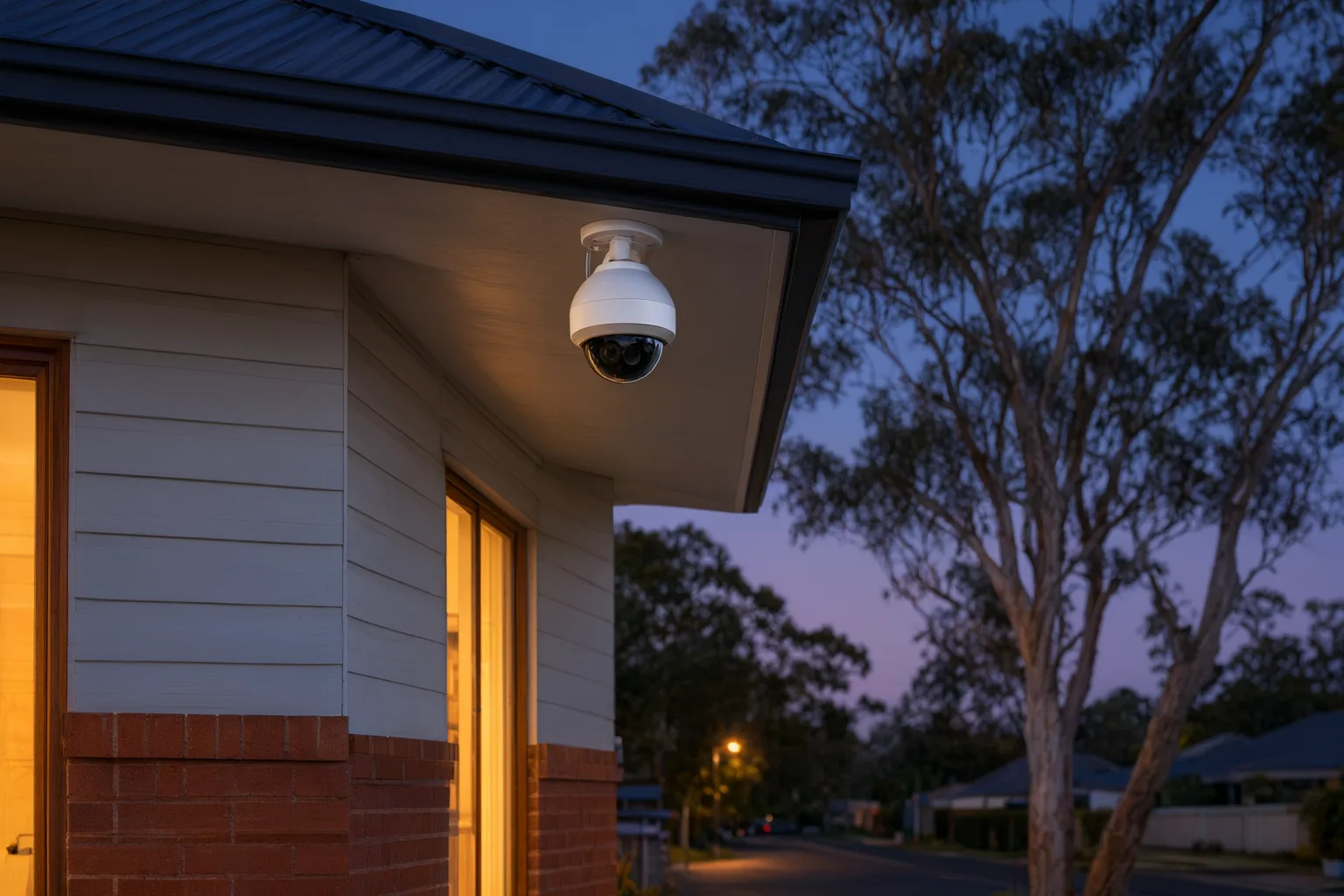
Key Takeaways
- Genuine four-camera professional systems typically cost $1,800–$3,500 installed in Australia; anything far below usually hides grey imports or unlicensed labour.
- NSW installers must hold a Class 2 security licence under the Security Industry Act 1997; South Australia requires registration under the Security and Investigation Industry Act 1995.
- Bait pricing can turn a $599 headline into a $1,400+ bill through cabling, mounting and app-configuration add-ons.
- Always verify licence numbers, warranty terms and after-install support before signing any cheap CCTV deal.
What Does a Real CCTV Installation Cost in Australia?
The short answer is that most cheap CCTV deals Australia advertised under $1,000 fully installed are traps rather than bargains. They typically rely on grey-import cameras, unlicensed labour and bait pricing that inflates the final bill well past a legitimate quote. A professionally installed four-camera system from a licensed installer in Newcastle NSW or Adelaide SA typically costs $1,800–$3,500 — and that price buys compliance, warranty and support you actually keep.
Here's the uncomfortable answer: because the cheap version usually has to be paid for twice. Once in cash upfront, and again when the footage turns out to be grainy mush after a burglary, the installer's phone number stops working, or the 'genuine' cameras turn out to be grey imports that no Australian distributor will touch. The security camera industry attracts more than its share of bait pricing and unlicensed operators precisely because most buyers can't tell the difference between hardware tiers until it's too late.
This guide walks through what a legitimate CCTV installation actually costs in Australia, the five red flags that expose a dud deal, and the exact questions to ask before you hand over a deposit. None of it requires technical knowledge — just a healthy scepticism about prices that defy basic maths.
Why Is That $599 CCTV Special a Trap?
Start with an honest baseline, because every red flag below only makes sense against it. A professional four-camera system built on genuine Australian-stock Hikvision, Dahua or Uniview equipment — with a network video recorder (NVR), surveillance-grade hard drive, quality cabling, licensed labour and full configuration — typically lands between $1,800 and $3,500 fully installed. Larger [[commercial-cctv-costs-in-australia-budgeting-for-your-business-security|commercial]] jobs, eight-camera systems, ANPR licence-plate cameras or premium ColourVu setups cost more again.
That figure isn't padding. Break it down and the maths becomes clear: professional-grade cameras retail at trade for roughly $150–$450 each; a proper NVR with a surveillance-rated hard drive adds several hundred dollars; cabling must be rated for Australian roof spaces that regularly exceed 60°C in summer; and a licensed installer carries insurance, overheads and years of training. When a competitor advertises the same outcome for $599 installed, something in that equation has been removed — and it is almost never their profit margin.
Understanding this baseline transforms how you read every quote. You're no longer comparing numbers; you're asking which components, protections and services have been quietly stripped out to hit the headline price.
How Do Grey-Import Cameras Cost You Twice?
The most common trick in the cheap-CCTV playbook is grey importing. Cameras manufactured by major brands for the Chinese domestic market are bought online at steep discounts, reflashed with English-language firmware and resold as 'genuine'. To the eye they're identical to Australian stock. The differences surface later, and they're expensive.
Firmware updates can brick a grey-import camera permanently. The Australian distributor refuses warranty claims because the serial number was never sold into this market. And critically, remote-viewing apps such as Hik-Connect or Dahua's DMSS may simply refuse to connect, because the device region is locked to China. A camera you can't view remotely isn't much of a modern security system.
The defence is one direct question: 'Is this Australian stock with local distributor warranty, and can I see the serial numbers before [[how-much-does-cctv-installation-cost-in-australia-a-complete-breakdown|installation]]?' Legitimate installers answer instantly and happily — genuine Australian Hikvision stock carries a three-year warranty through authorised channels. Evasion, vague assurances or 'it's exactly the same camera' should end the conversation.
Should You Check an Installer's Security Licence Before Hiring?
In New South Wales, anyone installing security equipment for payment must hold a Class 2 security licence under the Security Industry Act 1997, and the business itself must hold a master licence. This isn't bureaucratic box-ticking. It means the person drilling into your walls and climbing onto your roof has passed police checks and answers to a regulator if things go wrong.
Unlicensed operators advertising cut-price installs on community pages aren't offering a discount — they're breaking the law. If they put a drill bit through electrical wiring, crack your tiles or simply vanish mid-job, you have virtually no recourse. Your home insurer may also take a dim view of work performed by an unlicensed tradesperson.
Before accepting any quote, ask for the installer's security licence number and verify it on the NSW Police Force public register. Request a certificate of currency for public liability insurance as well. A legitimate operator emails both within minutes. Hesitation, excuses, or claims that 'my mate's licence covers it' are your signal to walk away — politely, but immediately.
Can Bait Pricing Turn a Cheap Quote Into a $1,400 Bill?
The '$599 fully installed' headline rarely survives contact with your actual house. Once the installer is on site, the add-ons begin: cabling charged at $80 per run, the hard drive mysteriously not included, extra fees for mounting on a double-storey wall, an 'optional configuration charge' for setting up the phone app, and colour night vision positioned as a paid upgrade. By the time everything actually works, many customers have paid around $1,400 — close to the price of a genuine mid-range system — for bottom-shelf hardware.
The protection here is procedural, not technical. Insist on a fixed, itemised written quote before anyone touches a ladder. It should list cameras by model number, the recorder and hard drive capacity, all cabling and mounting, remote-viewing configuration, and hands-on training so you can actually use the system. Professional installers follow a recognisable process: consultation, design, [[the-true-cost-of-cheap-cctv-why-bargain-systems-cost-australians-more-in-the-lon|installation]], configuration, handover.
If your 'quote' is a single number in a text message, treat the final invoice as a surprise you've already agreed to pay. Reputable businesses put everything in writing because they intend to honour it.
Are DIY Wi-Fi Kits Really Professional Security Systems?
There's nothing wrong with a battery-powered consumer camera watching the dog or the front porch. The problem arises when those kits are sold — or worse, 'professionally installed' at professional prices — as genuine security systems. Consumer Wi-Fi cameras depend entirely on your home wireless signal, frequently require paid cloud subscriptions to record more than a few seconds of clip, and their infrared night vision typically produces grainy black-and-white footage that police will tell you is too poor to identify anyone.
Professional hardware occupies a different class entirely. Hikvision's ColorVu range captures full-colour footage at night using large-aperture lenses and gentle supplemental lighting. AcuSense technology distinguishes people and vehicles from cats, possums and rain, cutting false alerts dramatically. Dahua's Starlight sensors and Uniview's LightHunter line deliver comparable low-light performance. These cameras run over hardwired Power over Ethernet connections to a local NVR that records continuously, charges no subscription, and keeps recording even when your internet drops out.
The tell is simple: if a 'professional' quote lists cameras you could buy off the shelf at a hardware store, you're paying tradesperson rates for flat-pack electronics. Ask specifically which technologies the quoted cameras use — ColorVu, AcuSense, Starlight, LightHunter — and note whether the answer is a brand technology or a shrug.
Who Answers the Phone Next Year After Your Cheap Install?
A CCTV system is not a toaster you buy once and forget. Over a typical lifespan you'll change NBN providers, replace phones, want a camera angle adjusted after a renovation, need firmware updated, or require footage exported for police after an incident. Each of these moments requires a responsive, knowledgeable local support team.
The operator who installed your system at rock-bottom price on a cash deal will not be taking those calls. Many won't still be in business by the following summer — the ultra-cheap end of the market churns through operators constantly. A system without support slowly degrades into decoration: cameras mounted on walls, recording nothing useful, viewed by nobody.
Established local installers earn their price premium here. Lifetime support, a physical presence in your area and a verifiable track record mean you're buying a decade of working security rather than a box of electronics. Put one question to any suspiciously cheap quote: 'Who do I call in three years, and will you still be here?' The silence — or the evasiveness — tells you everything you need to know.
Which Five Checks Belong on Your CCTV Quote Checklist?
None of this argues for automatically choosing the most expensive quote. It argues for comparing quotes on substance rather than headline numbers. Before committing to any CCTV deal in Australia, run five checks:
First, verify the installer's security licence on the NSW Police public register and confirm they hold current public liability insurance. Second, demand camera model numbers in writing and confirm the hardware is genuine Australian stock covered by local distributor warranty. Third, insist on a fixed itemised quote covering cabling, hard drive, mounting, app setup and training — no vague allowances. Fourth, ask which night-vision and detection technologies the cameras actually use, and treat non-answers as answers. Fifth, get after-sales support commitments in writing rather than relying on verbal promises.
A reputable installer welcomes every one of these questions, because they're precisely the questions that separate professional work from the operators damaging the industry's reputation. And if a deal still looks dramatically cheaper than comparable quotes after you've checked like-for-like? You haven't found a bargain. You've found the catch.
- Verify the NSW security licence on the public register before paying any deposit
- Demand camera model numbers in writing and confirm Australian distributor warranty
- Insist on a fixed itemised quote covering cabling, hard drive, app setup and training
- Ask which night vision and detection technologies the cameras use
- Get after-sales support commitments in writing, not verbal promises
Cheap CCTV deal vs licensed professional installation in Australia (2025)
| Option | Typical Installed Price (AUD) | Key Risks |
|---|---|---|
| $599–$999 online special | $599–$999 upfront, often $1,400+ final | Grey-import cameras, unlicensed labour, no local warranty |
| Licensed 4-camera install (Newcastle/Adelaide) | $1,800–$3,500 | Higher upfront cost, minimal risk |
| DIY Wi-Fi kit self-installed | $300–$800 | Battery limits, cloud fees, weak deterrence, no compliance advice |
| Mid-range hybrid wired/wireless system | $1,200–$2,200 | Mixed reliability; verify installer licensing |