
Key Takeaways
- Retail shrinkage costs Australian stores $2.7 billion per year, with theft accounting for 57% of losses
- AI-powered CCTV systems reduce shrinkage by 30-40% through real-time alerts and behaviour analysis
- Strategic camera placement at entrances, exits, POS terminals and high-value areas maximises theft deterrence
- Integration with POS systems flags suspicious transactions and sweethearting in real time
- Professional installation ensures compliance with Australian privacy laws and optimal coverage
Understanding Retail Shrinkage in Australia
Shrinkage is the silent profit killer for Australian retailers. According to the Australian Retail Association, the average store loses 1.4% of annual revenue to shrinkage — that's $14,000 for every $1 million in turnover. For a typical suburban convenience store turning over $2 million annually, that's $28,000 walking out the door each year.
The breakdown is sobering: external theft (shoplifting) accounts for 35% of losses, employee theft makes up 22%, administrative errors contribute 15%, and supplier fraud adds another 8%. The remaining 20% comes from damaged stock, pricing errors and unknown causes. What most store owners don't realise is that modern CCTV technology can address nearly every category — not just the obvious shoplifting incidents.
Traditional loss prevention relied on security guards and random bag checks. Today's AI-powered camera systems work 24/7, never take breaks, and provide court-admissible evidence when incidents do occur. The return on investment is measurable: most retailers see a 30-40% reduction in shrinkage within six months of installing a professional system.
How Modern CCTV Technology Prevents Retail Theft
The latest generation of commercial CCTV cameras goes far beyond passive recording. Hikvision's AcuSense technology uses deep learning algorithms to distinguish between humans, vehicles and irrelevant motion like shadows or animals. This means your system only alerts you to genuine threats, not every moth that flies past the lens.
Dahua's TiOC (Three-in-One Camera) range takes this further with active deterrence. When the camera detects someone loitering in a restricted area after hours, it triggers a strobe light and audible warning: 'You are in a restricted area. Security has been notified.' Most opportunistic thieves leave immediately — before they've taken anything.
For high-value retail environments, Axis cameras with perimeter analytics create virtual tripwires around expensive displays. Cross the line, and staff receive an instant notification on their mobile device with a live video feed. This is particularly effective for jewellery stores, electronics retailers and pharmacies where grab-and-run thefts are common.
Uniview's ColorHunter technology captures full-colour footage 24/7, even in near-darkness. This matters because most retail theft occurs during opening hours, but after-hours break-ins cause the biggest single-incident losses. Colour footage at 2am makes identification and prosecution far more likely than grainy black-and-white night vision.
Strategic Camera Placement for Maximum Deterrence
Camera placement is where most DIY installations fail. A camera mounted too high captures the tops of heads. Too low, and it's vulnerable to tampering. The wrong angle creates blind spots exactly where thieves operate.
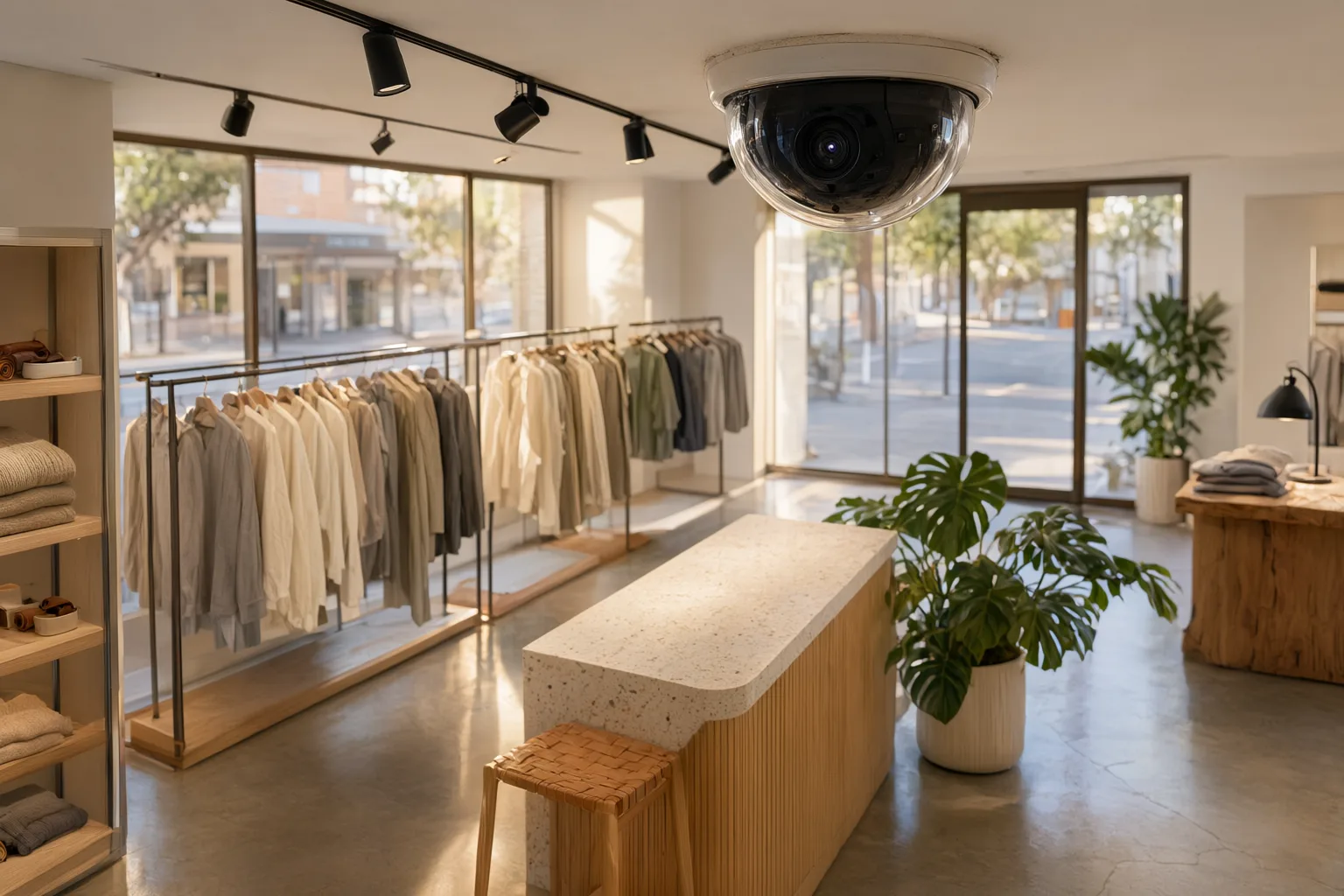
Professional installers follow a layered approach. Entrance and exit cameras capture facial images at eye level — this is your primary identification tool. Overhead cameras provide situational awareness and track movement patterns. Point-of-sale cameras monitor transactions and deter sweethearting (when staff give unauthorised discounts to friends).
High-value merchandise areas need dedicated coverage with cameras positioned to capture both the product and the person's face. This dual-angle approach is critical for prosecution. A single overhead shot of someone taking an item proves nothing if you can't identify who they are.
Stockrooms and receiving areas are often overlooked, yet employee theft in these zones accounts for significant losses. Cameras here should cover entry points, storage racks and any area where stock is counted or prepared for sale. The mere presence of visible cameras reduces internal theft by up to 50%, according to loss prevention studies.
Integrating CCTV with Point-of-Sale Systems
The most powerful loss prevention tool isn't a camera — it's the integration between your CCTV system and point-of-sale software. This technology flags suspicious transactions in real time and links them directly to video footage.
Here's how it works: your POS system records every transaction, refund, void and discount. The CCTV system overlays this data onto the corresponding video. If a staff member processes an unusually high number of refunds, or applies discounts outside normal parameters, the system alerts management immediately.
Sweethearting — where employees give mates free or discounted goods — is nearly impossible to detect without this integration. The transaction looks legitimate in your POS records, but the video shows the full story. Modern systems from Hikvision and Dahua integrate with major Australian POS platforms including Vend, Square, Lightspeed and Retail Express.
The analytics go deeper. Heat mapping shows which areas of your store get the most traffic, helping you optimise product placement and staff positioning. Dwell time analysis identifies where customers spend the most time — and where they might be concealing items. Queue detection alerts you when checkout lines get too long, reducing walkouts and abandoned purchases.
Legal Compliance and Privacy Requirements
Australian retailers must balance loss prevention with privacy obligations. The Privacy Act 1988 and state-based surveillance laws set clear rules about where you can place cameras and how you use footage.
You cannot install cameras in areas where people have a reasonable expectation of privacy — change rooms, toilets, staff break rooms. You can monitor public areas, sales floors, stockrooms and receiving docks. Clear signage is mandatory: 'This premises is protected by 24-hour video surveillance' must be displayed at all entrances.
Footage retention is another consideration. Most retailers keep recordings for 30-90 days, but if an incident occurs, you must preserve that footage until the matter is resolved. Deleting evidence, even accidentally, can result in serious legal consequences.
Staff have the right to know they're being recorded. Include CCTV monitoring in employment contracts and provide training on how footage will and won't be used. Transparency builds trust and reduces the perception of surveillance as punitive rather than protective.
Choosing the Right System for Your Retail Environment
A corner milk bar has different needs than a multi-level department store. Small retailers (under 200 square metres) typically need 4-8 cameras covering entrances, POS, and high-value areas. A basic Hikvision or Dahua NVR system with 4K cameras provides excellent coverage for $3,000-$5,000 installed.
Medium-sized stores (200-800 square metres) require 8-16 cameras with more sophisticated analytics. This is where AcuSense or TiOC technology delivers real value, filtering out false alarms and focusing on genuine threats. Budget $8,000-$15,000 for a professional installation with POS integration.
Large retail environments need enterprise-grade systems with centralised management, redundant storage and advanced analytics. Axis and Uniview offer scalable platforms that grow with your business. These systems start around $20,000 but can exceed $100,000 for flagship stores or shopping centre installations.
The key is matching technology to risk. A pharmacy needs different coverage than a clothing boutique. Jewellery stores require higher resolution and more cameras per square metre than a furniture showroom. A professional security assessment identifies your specific vulnerabilities and designs a system that addresses them without over-engineering the solution.
CCTV Camera Technologies for Retail Loss Prevention
| Technology | Key Features | Best For | Price Range (Installed) |
|---|---|---|---|
| Hikvision AcuSense | AI human/vehicle detection, false alarm reduction, smart search | General retail, reducing false alarms | $3,000-$8,000 |
| Dahua TiOC | Active deterrence (strobe + audio), full-colour night vision, AI analytics | After-hours protection, high-theft areas | $4,000-$10,000 |
| Axis Perimeter Defender | Virtual tripwires, loitering detection, enterprise scalability | Large format retail, shopping centres | $15,000-$50,000+ |
| Uniview ColorHunter | 24/7 full-colour footage, ultra-low light performance | Dimly lit stores, car parks, loading docks | $3,500-$9,000 |
| POS Integration | Transaction overlay, exception reporting, sweethearting detection | All retail environments with POS systems | Add $1,500-$3,000 to base system |