
Key Takeaways
- Solar cameras deploy in hours without trenching or electrical work, ideal for early-stage sites
- Hardwired PoE systems provide uninterrupted 24/7 recording with no battery maintenance
- Australian conditions—extreme heat, dust storms, coastal salt—affect both systems differently
- Solar units typically cost more upfront but save on cabling and electrician fees
- Hybrid approaches often deliver the best coverage across changing construction phases
- Professional-grade Hikvision and Dahua solar units outperform consumer DIY alternatives
Why Construction Site Security Demands a Different Approach
Construction sites present unique security challenges that standard commercial CCTV installations rarely encounter. Perimeters shift as projects progress, valuable materials and machinery sit exposed overnight, and power infrastructure often doesn't exist until late in the build. Australian construction sites lose millions annually to theft and vandalism, with copper, tools and fuel among the most targeted items.
Choosing between solar-powered and hardwired cameras isn't simply a technical decision—it affects your project's timeline, budget and insurance compliance. Many insurers now require documented security measures before covering high-value plant and materials, making this choice critical from day one.
How Solar-Powered Construction Cameras Work
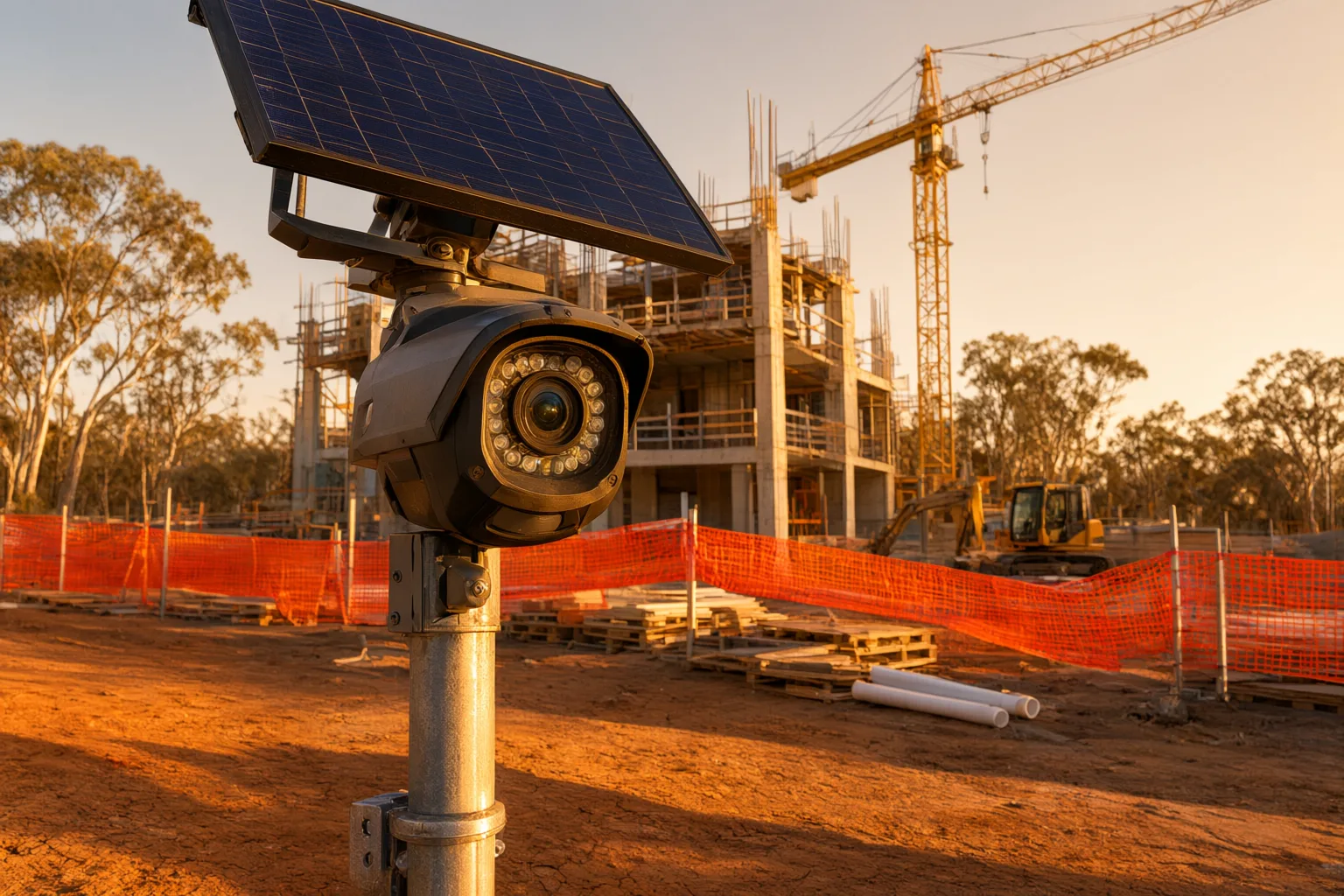
Modern solar security cameras combine photovoltaic panels, lithium battery banks and 4G connectivity into self-contained surveillance units. Professional-grade systems from manufacturers like Hikvision and Dahua feature ColorVu technology for full-colour night vision and AcuSense AI that distinguishes humans and vehicles from animals or debris.
These units mount on temporary poles, scaffolding or existing structures without any trenching or electrical rough-in. A quality solar camera with adequate panel sizing can operate indefinitely in most Australian climates, though extended cloudy periods in southern states may require larger battery reserves. The best systems include remote health monitoring so you know immediately if a unit goes offline.
The Case for Hardwired PoE Camera Systems
Hardwired Power over Ethernet cameras remain the gold standard for permanent, high-reliability surveillance. A single Cat6 cable delivers both power and data, enabling continuous 24/7 recording to an on-site NVR without battery concerns. For construction sites with established site sheds and mains power, hardwired systems offer unmatched stability.
PoE cameras support higher resolutions, longer infrared ranges and more sophisticated analytics than most solar equivalents. They're also significantly cheaper per camera once infrastructure exists. The trade-off is installation complexity—running cable across an active construction site requires careful planning to avoid damage from excavators, concrete pours and material deliveries.
Comparing Performance in Australian Conditions
Australian construction environments test security hardware brutally. Summer temperatures exceeding 40°C degrade battery performance and can shut down poorly specified solar units. Coastal sites face salt corrosion that attacks both camera housings and solar panel connections. Dust storms in western NSW and Queensland coat panels and lenses, reducing effectiveness without regular maintenance.
Hardwired systems prove more resilient in extreme heat since they lack batteries, but their cabling remains vulnerable to accidental damage. Solar units eliminate cable runs entirely, though their panels require periodic cleaning. Both benefit from IP66 or IP67-rated housings and professional installation that accounts for local conditions.
Cost Analysis: Upfront Investment vs Long-Term Value
Solar camera systems typically cost $800–$2,500 per unit installed, with premium 4G-enabled models at the higher end. This seems expensive until you factor in hardwired alternatives: trenching, conduit, cable and electrician fees often add $1,500–$4,000 per camera on sites without existing infrastructure.
For projects under six months or sites with evolving perimeters, solar delivers clear value. Longer projects with stable layouts increasingly favour hardwired systems as infrastructure costs amortise. Many builders now deploy solar units during early earthworks, then transition to hardwired cameras as site sheds and permanent power establish.
Making the Right Choice for Your Project
Select solar-powered cameras when your site lacks mains power, when you need surveillance operational within hours rather than days, or when your perimeter will shift significantly during construction. They're essential for remote infrastructure projects, road works and early-stage residential developments.
Choose hardwired PoE systems for established sites with reliable power, when you require continuous recording for insurance or dispute resolution, or when project duration exceeds twelve months. Consider hybrid deployments—solar units covering vulnerable access points and material laydown areas, hardwired cameras protecting the site office and fixed assets.
Whatever you select, insist on professional-grade equipment with Australian warranty support. Consumer solar cameras from hardware stores consistently fail under construction site demands, leaving your project exposed when it matters most.
Solar vs Hardwired Construction Cameras: Direct Comparison
| Factor | Solar-Powered | Hardwired PoE |
|---|---|---|
| Installation time | 2–4 hours per unit | 1–3 days including cabling |
| Upfront cost per camera | $800–$2,500 | $400–$900 plus cabling |
| Power source | Solar panel + battery | Mains via PoE switch |
| Recording capability | Motion-activated or scheduled | Continuous 24/7 available |
| Reliability in extreme heat | Battery degradation possible | Excellent, no batteries |
| Flexibility for site changes | Excellent—relocate easily | Poor—cable runs fixed |
| Maintenance requirements | Panel cleaning, battery checks | Minimal once installed |
| Best project duration | Under 12 months | Over 12 months |